
An Israeli soldier’s sledgehammer attack on a statue of Jesus Christ in a Lebanese Christian village has ignited a firestorm that tests the military’s moral authority in a region where religious desecration can spark catastrophic consequences.
Story Snapshot
- IDF soldier photographed striking Jesus statue with sledgehammer in Debl, southern Lebanon, during anti-Hezbollah operations
- Israeli military confirmed photo authenticity and launched formal investigation by Northern Command
- Prime Minister Netanyahu condemned the act in strongest terms, promising harsh disciplinary action
- IDF coordinating with Lebanese Christian community to restore the desecrated religious statue
- Incident occurred in occupied zone where tens of thousands of Christians were forced to evacuate
When Military Operations Cross Sacred Lines
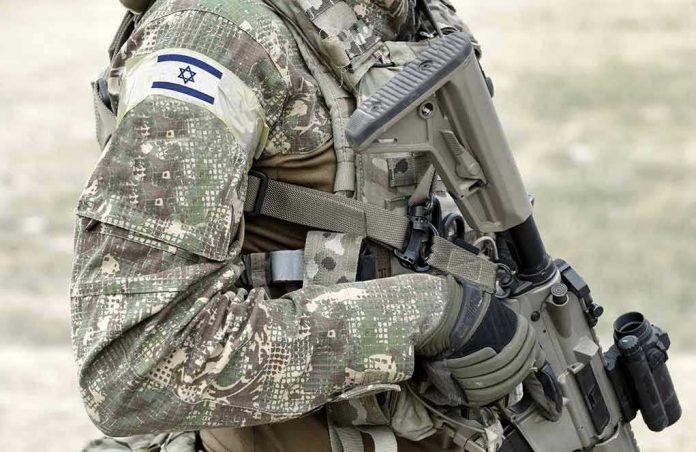
The photograph circulating on social media reveals an IDF soldier in combat gear bringing a sledgehammer down on a statue of Jesus Christ in the Christian village of Debl, southern Lebanon. The Israeli Defense Forces confirmed the image’s authenticity on Monday, treating the incident with what they termed “great severity.” The statue had already been toppled when the soldier decided to strike it, transforming an already vulnerable religious symbol into rubble. This wasn’t collateral damage from combat operations against Hezbollah infrastructure. This was a deliberate act captured on camera, shared widely, and now impossible to dismiss as wartime confusion.
Swift Condemnation From the Top
Prime Minister Benjamin Netanyahu posted his reaction on X within hours, stating he was “stunned and saddened” by the soldier’s conduct. His condemnation came in the strongest possible terms, promising that military authorities would impose harsh disciplinary action against those responsible. The IDF’s Northern Command simultaneously announced its investigation, emphasizing that the soldier’s behavior was “wholly inconsistent with IDF values.” Both statements reflect an understanding that this incident carries explosive potential beyond Lebanon’s borders, threatening relationships with Christian communities worldwide and undermining Israel’s claim to moral superiority in its counter-terrorism operations.
The Occupied Village Context
Debl sits in southern Lebanon near the Israeli border, where IDF forces have maintained occupation for several weeks while dismantling Hezbollah terrorist infrastructure. The operations forced tens of thousands of residents to evacuate, including the Christian families who call this village home. The IDF has consistently stated it harbors no intention to harm civilian or religious infrastructure during these anti-terror missions. That policy statement now rings hollow to the Christians whose sacred imagery lies shattered. The military finds itself coordinating restoration efforts with a community it displaced, trying to repair both a statue and shattered trust simultaneously.
Where Military Discipline Meets Religious Reality
The power dynamics reveal uncomfortable truths about occupation. Lebanese Christians in Debl are evacuees dependent on the very military force responsible for desecrating their religious symbol. The IDF holds complete military control while promising restoration and accountability. Netanyahu amplifies these promises through social media, aware that international scrutiny intensifies with each share of the damning photograph. The investigation proceeds through the military’s chain of command, but no timeline exists for its conclusion or for what “appropriate measures” actually means in practice. The Christian community waits, displaced and powerless, for justice defined and delivered by their occupiers.
The Broader Implications
This incident stands apart from typical combat damage precisely because of its deliberate nature and religious targeting. Southern Lebanon contains both Christian communities and Hezbollah strongholds, a reality that demands heightened sensitivity from occupying forces. The short-term fallout includes potential disciplinary action and rushed restoration efforts designed to contain diplomatic damage. Long-term consequences may prove more severe. International Christian communities now question whether IDF operations respect holy sites or merely tolerate them until individual soldiers decide otherwise. Military ethics in counter-terrorism operations face renewed scrutiny when the enemy is Hezbollah but the victim is Jesus Christ.
The IDF’s response emphasizes accountability and promises restoration, framing this as an isolated aberration by one soldier rather than systemic disrespect. That framing requires believing the military’s stated values align with its actions on the ground. The photograph suggests otherwise. Common sense dictates that military discipline either prevents such desecration or swiftly punishes it. The investigation will reveal which principle actually governs Israeli forces in occupied Lebanese territory, but the statue’s destruction has already delivered its verdict to watching Christian communities worldwide.
Sources:
IDF says image of soldier destroying Jesus statue in Lebanon is real, vows action – Times of Israel