

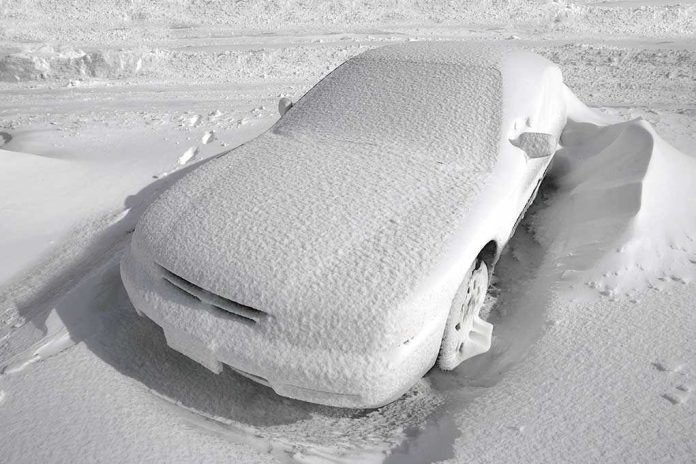
Moscow buries under heaviest January snowfall in 203 years, defying global warming predictions with record-breaking snow chaos that strands millions.
Story Snapshot
- Moscow records 92 mm precipitation, snowiest January since 1823 per MSU Observatory data.
- Snow depths hit 62-65 cm in central areas, closing airports and jamming traffic.
- Deep cyclones like Francis drive the event, with temperatures below average preserving massive snow cover.
- 13 million residents face shoveling, delays, and overwhelmed city services amid historic storm.
Record Snowfall Confirmed by MSU Scientists
Lomonosov Moscow State University Meteorological Observatory measured 92 mm of precipitation as of January 29, 2026, marking the snowiest January in 203 years of records dating to 1823. Head researcher Mikhail Lokoshchenko confirmed the data, noting deep cyclones and sharp weather fronts fueled sustained snowfall without thaws. Air temperatures averaged -7.7°C, 1.5°C below normal, locking in heavy accumulations. This surpasses 1920s peaks, highlighting exceptional meteorological conditions in Russia’s capital.
Timeline of the Historic Storm
Early January saw initial heavy snow from Cyclone Francis, with overnight dumps reaching 65 cm by January 9. Eyewitness accounts captured residents trapped by drifts against doors and cars immobilized. Mid-to-late month storms continued, peaking at 60-62 cm depths in central Moscow and VDNKh station by January 29 morning. MSU announced the record that day via TASS, as clearance efforts lagged behind ongoing flurries. No thaws allowed snow to pile relentlessly.
Moscow’s 13 million residents endured typical winter cold amplified by urban density. Commuter rail and dense traffic ground to halts, exposing vulnerabilities in central districts like Red Square and the Kremlin. City snow crews prioritized key paths but proved overwhelmed, mirroring earlier Kamchatka Peninsula emergency where drifts hit second-story levels.
Disruptions Grip the City
Airports shut down on January 9 amid the one-day record dump, stranding travelers. Trains delayed and evening traffic jams paralyzed commutes on January 29. Residents shoveled drifts while workers cleared iconic sites, but paths remained impassable. Economic hits included transport halts and clearance costs; aviation and rail sectors suffered most. Tourism at snow-blanketed Red Square drew crowds, blending hardship with historic fascination under -12°C winds.
Social media buzzed with reports of a “cold and unusually snowy month.” Vloggers documented chaos versus wonder, echoing 1920s events but exceeding them in scale. MSU emphasized precipitation as the key metric, with snow’s high air content explaining depths far beyond water equivalent.
Expert Insights Challenge Climate Narratives
Lokoshchenko attributes the record to cyclone-driven precipitation rises, countering simplistic warming tales by noting stable snow cover from no thaws. MSU press service stated January closes as the snowiest month, driven by expansive systems. Minor depth variances—60 cm in some reports, 62-65 cm elsewhere—reflect location specifics, with no major disputes across sources. Long-term, this signals shifting winter patterns with heavier precipitation.
City authorities focused on public safety, collaborating with MSU data for response. Media from TASS to RT amplified the story, validating MSU’s 203-year authority. Residents adapted amid mobility paralysis, underscoring urban preparedness needs without evident political fallout.
Sources:
Moscow’s January 2026 snowiest in two centuries, scientists say
Moscow records heaviest snowfall in over 200 years
Moscow snowfall reaches record levels