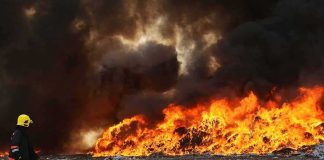

Iran says it smashed a U.S. radar in Bahrain; U.S. forces say nothing got through.
At a Glance
- Iran’s Revolutionary Guard claimed it destroyed a U.S. early-warning radar in Bahrain.
- U.S. Central Command said two Iranian drones were shot down with no damage.
- Bahrain reported intercepting several Iranian aerial attacks before impact.
- Video shown by Iran was not independently verified as the Bahrain strike.
Competing claims over a radar, a warning, and a denial
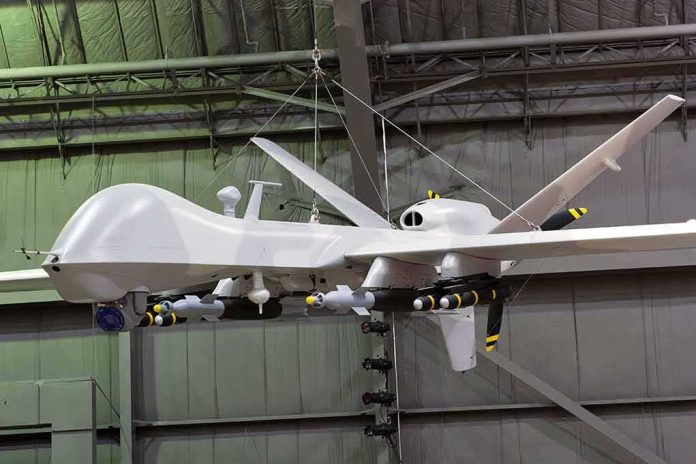
Iran’s Islamic Revolutionary Guard Corps said its aerospace forces launched a strike that destroyed a U.S. early-warning radar in Bahrain, framing it as payback for a hit on a telecom tower in southern Iran. U.S. Central Command pushed back hard, saying American forces intercepted two one-way attack drones headed toward Bahrain and that there were no injuries or damage. Bahrain said its air defenses stopped several attacks before impact and gave no confirmation of radar damage.
Iran’s claim came with a story line and footage. The Revolutionary Guard tied the strike to what it called U.S. aerial aggression in Sirik and cast the action as a warning to Washington. The Associated Press reported the U.S. interception account while noting Iran’s strike claim, showing this was a real attempted attack and not a fake location narrative. The Guard also presented video said to show attacks on a radar at Bahrain’s Al-Riffa helicopter base, but the clip was not authenticated.
What the evidence shows and what it does not
Public reporting identifies no independent proof that a radar in Bahrain was destroyed. No satellite photos, damage images, or on-site reports have surfaced in open sources to confirm a wrecked radar. The number of drones also conflicts across accounts. Some reporting cites an Iranian claim of six drones, while U.S. Central Command said there were two. The record does not resolve whether this was one wave, several waves, or simple miscounts across channels.
Central Command’s statement is direct and categorical: two drones launched, two drones shot down, no damage. Bahrain’s message backs that up in broad terms. Its forces said they intercepted several Iranian attacks before they reached their targets and remained at the highest readiness, but did not confirm any hit on a U.S. system. This official chorus narrows the space for Iran’s narrative with most major outlets leading on the interception claim rather than the destruction claim.
Why this radar matters and how to cut through the fog
An early-warning radar is not a decorative dish. It feeds air defense and flight safety. If it were disabled, nearby bases and routes would feel it fast. That is why the claim, if true, would mark a serious breach. This domain has a known pattern: launches are easy to confirm, effects are not. Governments share intercept counts quickly. They guard radar status and damage data under classification and security rules, which slows outside proof either way.
Independent checks can still bite. Satellite reviews have confirmed some Iran-linked damage at U.S. sites while finding other locations with no visible destruction, tempering hype from all sides. A Washington Post analysis sent to Congress tallied at least 228 damaged or destroyed items at U.S. sites in this war, a reminder that blanket denials later meet hard imagery at times. The smart read here is simple: treat Iran’s “destroyed” and the U.S. “no damage” as claims that need verifiable pictures, logs, or downtime data to settle.
Common-sense test aligned with American priorities
American conservative values prize peace through strength and straight talk about threats. On that score, Central Command’s on-record statement that nothing got through sets a clear line and supports deterrence. Bahrain’s account of multiple interceptions supports allied defense, which protects U.S. service members and regional partners. Iran’s video and rhetoric are classic information operations. Without verified damage, the better bet is on the side that shows intercepts and keeps systems running.
Sirens in Bahrain as Iran claims drone attack on U.S. base. CENTCOM: two Iranian drones intercepted, no damage. First such claim since September. Conflict began Feb 28, 2026. #Bahrain #Iran #MiddleEast pic.twitter.com/fPWzWrCmUN
— Bhartiya Drishtikon (@drishtikon_in) November 16, 2026
Two open loops remain. First, the drone count gap needs closing. Declassified radar tracks, engagement logs, or debris photos would settle whether there were two inbound drones or more. Second, the radar’s operational status after November 13 is the tell. If planes kept routing, if coverage stayed steady, and if no emergency maintenance appeared, that argues strongly against a successful strike. Until new imagery or records land, the public record backs interception over destruction.
Sources:
facebook.com, apnews.com, inquirer.com, arabtimesonline.com, aljazeera.com, aa.com.tr