
Prosecutors indicted a onetime Ilhan Omar bodyguard, then walked away when deportation loomed.
Story Snapshot
- A grand jury charged Abdullahi Mohamed with allegedly lying under oath tied to an immigration interview.
- The Justice Department later moved to dismiss, citing his expected removal from the United States.
- The timeline tracks: interview, indictment in April, removal proceedings in August, dismissal in September.
- Disputes remain over motive and links to any investigation involving Omar.
What prosecutors said happened and why it ended
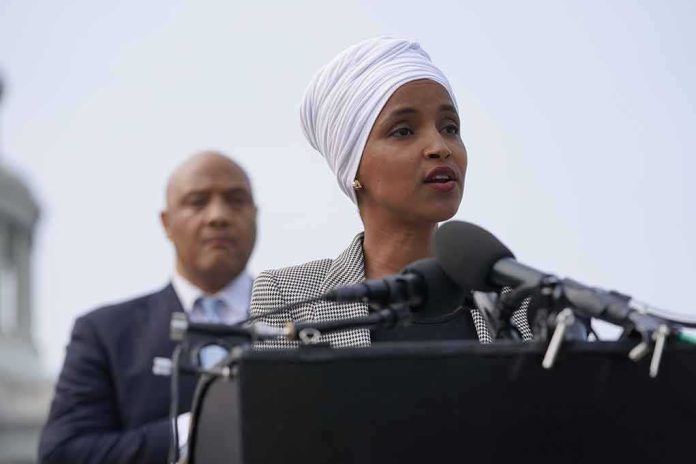
Federal prosecutors secured a grand jury indictment charging Abdullahi Mohamed with making false statements under oath. Reporting ties the alleged lie to an October immigration interview, where Mohamed was asked about any dealings with American politicians. He had previously worked briefly as a bodyguard for Representative Ilhan Omar during a trip abroad, a point that sat near the center of the probe’s questions. The Justice Department later moved to dismiss the case. The filing said no federal interest remained because Mohamed would likely be removed from the country.
The sequence fits a standard playbook: investigation after the interview, an April indictment, immigration removal actions in August, and a dismissal request in September. The scheduled October 26 trial never happened. That means no jury weighed the charge, and no judge ruled on the evidence in open court. The dismissal ended the case without a verdict. The government’s reason explained logistics, not guilt or innocence.
What is clear, what is not, and why that matters
Key facts are on the record through named reporting: a grand jury indictment, a false-statement allegation linked to immigration questioning, and a dismissal due to likely deportation. Missing pieces also matter. The public does not have the indictment text, the statutory citation, the case number, or the exact answers prosecutors say were false. Without that, the strength of the proof cannot be evaluated. The dismissal before trial left no sworn testimony tested by cross-exam, leaving the charge unproven either way.
Another gap involves identity details. Reports use two versions of the defendant’s name. They do not show if this is a transliteration issue or official alias history. That adds friction for anyone trying to trace the docket across systems. In high-profile matters, small inconsistencies like this fuel rumor mills. Clean records cure that. Until the underlying filings surface, the debate will run on summaries, not documents.
The Omar angle: claims, counterclaims, and the line that divides them
The most sensitive question is whether prosecutors targeted Mohamed to pressure him for information about Representative Omar. The New York Times reported that prosecutors sought information from him concerning Omar. Mohamed’s lawyer, Bruce Rivers, said the government tried for months to turn his client into an informant and claimed officials said the probe was being run from the White House. The Justice Department has been quoted as describing the charge as unrelated to any current investigations. These accounts do not fully align.
The plot is thickening for @Ilhan Omar.⚡️Her former bodyguard, Abdullahi Mohamed was indicted on felony charges in April for lying under oath during his green-card interview. 🪪
Prosecutors wanted him to flip on her BIGLY. They questioned him about Omar’s immigration history,… pic.twitter.com/JAzwQ4qzh7
— liveXclique (@liveXclique) November 12, 2026
Two things can be true at once: agents can pursue a false-statement case on its own facts, and they can also ask a defendant to cooperate on other matters. Cooperation asks happen every day in federal practice. The question for readers is whether the record supports the stronger claim that the indictment’s core purpose was leverage. On the public record so far, that remains an assertion from defense and commentary outlets, not a proven fact. That is why the paperwork matters.
What the dismissal does and does not prove
The dismissal says the government no longer saw value in trial because Mohamed would not be here to serve any sentence or supervised release. That is a practical call prosecutors make often. Courts have recognized that deportation can weigh against using resources to try a case to verdict. It does not, by itself, prove the charge was weak or strong. It simply ends the case without answers, which leaves space for spin on both sides.
Americans who prize equal justice should want clarity, not drama. The common-sense path is simple. Release the indictment and the motion papers. Show the interview record that anchors the alleged falsehood. Confirm the removal timeline. With documents in view, citizens can judge whether this was a narrow false-statement case overtaken by deportation, or a pressure play wrapped in process. Until then, stick to what is established, and be cautious with claims that outpace the record.
Sources:
thegatewaypundit.com, commondreams.org, dailymail.com