

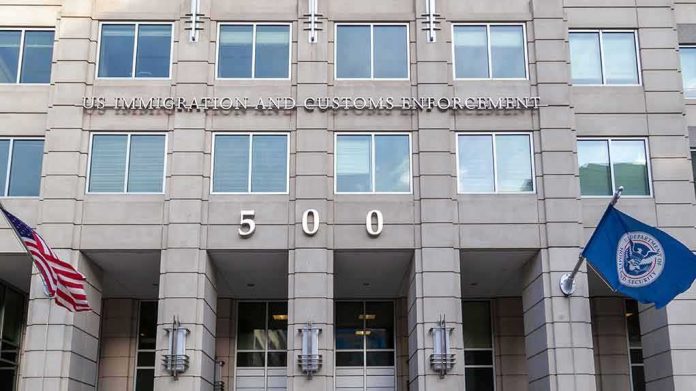
President Trump said Immigration and Customs Enforcement has begun enforcement steps tied to alleged immigration fraud by Representative Ilhan Omar, and the paper trail now shows the government treating it like a live case.
Story Snapshot
- Trump confirmed ICE “proceedings” connected to alleged immigration fraud by Rep. Ilhan Omar.
- U.S. Immigration and Customs Enforcement withheld records under a law-enforcement exemption that signals active enforcement proceedings.
- Vice President JD Vance said the Justice Department was looking into possible immigration fraud “right now”.
- Omar has denied wrongdoing and challenged claims about enforcement actions around her and her family.
What Trump Said And Why It Matters
President Trump told supporters that Immigration and Customs Enforcement has begun enforcement proceedings related to fraud claims against Representative Ilhan Omar. That statement puts the White House’s stamp on what had been scattered signals from agencies and media. It also raises the stakes for a sitting member of Congress because “proceedings” implies more than rumor. Even if cases take time to form, public confirmation from the president means the gears of government are turning.
Vice President JD Vance added a second signal in May, saying the Department of Justice was reviewing possible immigration fraud by Omar “right now.” That set a baseline that federal lawyers were at least reading files and testing charges. The vice president also said prosecutors would act if they found a crime. That is the standard rule of law response, and it pairs with the White House message that no one is above the law, including elected officials.
The Paper Trail: ICE’s FOIA Withholding
U.S. Immigration and Customs Enforcement refused to release records tied to an “immigration fraud investigation” involving Omar. The agency cited Freedom of Information Act Exemption 7(A), which is used to protect open or prospective law-enforcement matters from harm caused by disclosure. The Department of Justice’s own guidance says agencies must show a pending or contemplated proceeding and a risk of interference before using that exemption. That is a classic marker of an active enforcement posture.
Freedom of Information Act Exemption 7(A) does not prove guilt. It does show that investigators believe public release of specific files could mess with interviews, evidence, or next steps. Federal guidance describes it as a shield for live cases so agents can complete work without tipping off targets or tainting witnesses. The practical takeaway is simple: if ICE reaches for 7(A), agents are doing more than filing papers; they are working a case path.
Omar’s Pushback And The Enforcement Backdrop
Representative Omar has pushed back on several related points. She denied that the Justice Department was investigating her after the vice president’s comments. Her office has also raised concerns about immigration enforcement tactics in Minnesota, including claims that her son was improperly stopped. Homeland Security leaders rejected that claim and said they had no record of such a stop. The clash reflects a hard divide over how enforcement looks on the street versus in federal logs.
Omar also sought answers from Homeland Security Investigations after an agent parked outside one of her town halls. Her letter questioned why a federal agent ran an undercover operation near a public event without alerting local police. That episode fed her argument that enforcement tools can chill speech. The government’s view is that lawful operations continue wherever leads take them, even when public figures are nearby. Both views show how policing and politics can collide.
What “Proceedings” Can Lead To
Immigration fraud claims can spin off in many directions. If the Justice Department finds proof of a crime, it can bring charges. If the proof shows fraud in the path to citizenship, the department can seek to strip citizenship in civil court. The department has used denaturalization before in fraud cases, including when people hid key facts in applications. That pathway requires evidence and due process, but it exists and gets used when facts meet the standard.
🚨President Trump says “ICE ENFORCEMENT PROCEEDINGS” are being pursued against Rep. Ilhan Omar amid longstanding allegations of immigration fraud involving claims she married her brother — allegations Omar has denied.
Reports are also circulating that DOJ officials could be… pic.twitter.com/gBHQaKfyQt
— Annie🇺🇸 (@ag_0012) August 24, 2026
The public should expect a slow burn, not a quick end. Freedom of Information Act shields stay in place while agents interview people, pull records, and test leads. If the case advances, filings will make the next chapter public. If it does not, the shield lifts and the files often stay buried. One caveat applies: an investigation or enforcement step is not a conviction, and elected officials have the same rights as anyone else.
Sources:
thegatewaypundit.com, omar.house.gov, townhall.com, theguardian.com, foxnews.com, x.com, economictimes.indiatimes.com, realtalkdigest.com