
Four people are dead and roughly 850,000 customers lost power across the Southeast after Hurricane Isaias ripped through with fierce winds and flooding.
Story Snapshot
- Major outages hit Florida, Alabama, and Georgia, with hundreds of thousands in the dark.
- Winds toppled trees, snapped lines, and flooded roads across the Gulf Coast.
- Federal teams pre-staged rescue assets and supplies before impact.
- Officials tracked the storm and warned of surge, flood risk, and fast-changing hazards.
Wind, Water, And Widespread Outages
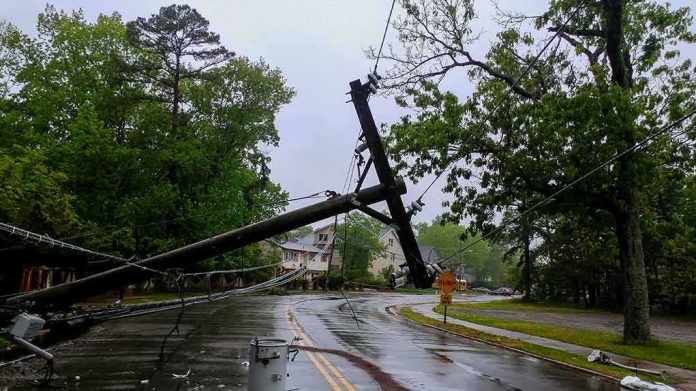
Crews across Florida, Alabama, and Georgia faced a mess of downed trees, broken poles, and flooded streets as Isaias pushed ashore and moved inland. Utilities reported a surge in outages as the wind field knocked branches into lines and pushed debris onto roads. CBS News tallied at least 834,061 customers without power at one point across the three states, with Florida taking the biggest hit. NBC News captured a similar wave of reports that climbed into the hundreds of thousands.
https://www.youtube.com/watch?v=63NadHj3EAw
The pattern looked familiar to Gulf Coast veterans. Strong winds do the fast damage; soaked soils and gusts finish the job by toppling trees. Flooded roadways slow restoration as bucket trucks and patrols reroute. Crews focus first on critical loads like hospitals, water plants, and 911 centers, then fan out to feeders and neighborhoods. That triage saves lives but tests patience. When a single broken crossarm can black out a subdivision, speed matters, but access and safety come first.
What Emergency Managers Did Before Landfall
Federal support moved early. The Federal Emergency Management Agency activated its National Response Coordination Center and its Region 4 hub. Search and rescue teams and incident management units deployed toward the impact zone to back up local responders. Florida officials signaled the same stance: prepare people, stage assets, and warn coastal communities about surge and inland flood threats. The governor’s office summarized ongoing response and recovery work as utilities and counties shifted from “ride it out” to “fix it fast”.
That posture aligns with lessons learned. Pre-staging cuts hours off the clock when every hour counts. It also reflects clear risk signals from meteorologists, who warned of damaging winds, short-fuse flooding, and a sprawling rain shield. The National Weather Service’s event record for Hurricane Isaias shows how close passes and landfalls can deliver serious impacts far from the eyewall, especially where trees overhang aging lines.
Death Toll, Damage, And The Anatomy Of A Blackout
Reporters confirmed at least four deaths tied to the storm as it crossed the region. Behind those numbers sit the common killers in wind events: falling trees, roadway hazards, and power-related accidents. Utilities track outages by customer accounts, not people, so every figure hides a larger headcount in dark homes and businesses. That is why restoration races the clock. Each hour without power risks medical gear failures, food spoilage, and traffic dangers at unlit intersections.
The outage math moved fast because the storm moved fast. As bands swept through counties, the lights went out in bursts, then came back in chunks as crews isolated faults, reclosed feeders, and swapped damaged hardware. Differences between counts from newsrooms and aggregators reflect timing, geography, and which utilities reported in each refresh window. The signal, not the noise, is clear: a large, regional blackout hit hard and all at once.
Common Sense Takeaways For Households And Leaders
Families do better when they plan for 72 hours without electricity. Keep a battery radio, charge packs, and a basic toolkit. Trim trees away from service drops before hurricane season, not after a watch is posted. Never run generators indoors or in a garage. Local leaders should map vulnerable feeders, clear rights of way, and speed permits for hardening. Conservative instincts favor resilience built close to home: strong roofs, buried laterals where cost-effective, and stocked pantries beat speeches every time.
Gulf Coast cleanup beings following Hurricane Isaias | LINK IN BIO pic.twitter.com/YCROpn5d7Y
— wdsu (@wdsu) October 11, 2026
Utilities should publish easier outage dashboards that show restoration by circuit and critical sites cleared. Counties should drill joint debris and line-clear teams so chainsaws and linemen arrive together. State leaders can push cost-share grants for trimming and pole replacements where repeat failures stack up. Federal partners did their job by staging people and gear; the rest is local muscle memory. When wind meets weak limbs, the grid loses. When people prepare, they do not.
Sources:
feedpress.me, nbcnews.com, cbsnews.com, bbc.com, firstcoastnews.com