

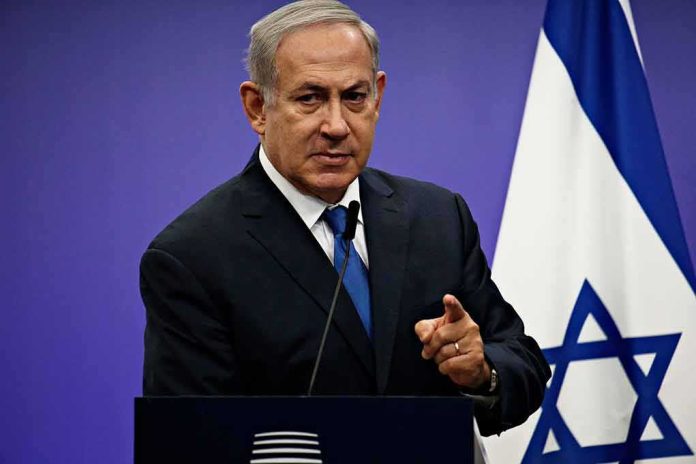
Two leaders who agree on Iran’s danger just split on when to hit it again—right now or not yet.
Story Snapshot
- Reports say Prime Minister Netanyahu urged President Trump to restart strikes on Iran right after U.S. midterms.
- Trump signaled talks with Iran should continue for now, while keeping force on the table.
- The gap is over timing and leverage, not goals: pressure by bombs versus pressure by deals.
- No official transcript confirms the call details, which rely on unnamed sources.
What Each Leader Reportedly Asked For
Israeli media and follow-on reports say Prime Minister Benjamin Netanyahu pushed President Trump to launch a fast, wide air campaign against Iran soon after the November 3 elections. One account described a “quick but extensive” set of strikes and said Netanyahu feared talks would ease pressure on Tehran if they dragged on. Another outlet echoed that timing and motive, linking the ask to anxiety that Qatar-led talks would sap leverage. Trump did not publicly confirm that ask and called the call “very good”.
Trump’s public line put brakes on immediate action. He said Iran wants to talk, talks are going fine, and he is not in a hurry. He framed delay as a way to save lives while warning that the hammer remains if talks fail. He also pointed to ongoing pressure and said much of Iran’s capability had already been hit. That mixes deterrence with diplomacy: talk now, strike later if needed.
Why The Timing Fight Matters
Iran policy always balances risk, time, and proof. Netanyahu’s camp sees delay as relief for Tehran, which could restore strength, hide assets, or pocket concessions. That logic says only real fear of force keeps Iran in line. Trump’s camp is weighing costs and benefits before midterms and beyond. He holds military power in reserve while trying to lock in terms through talks. That approach can widen options without handing Iran a free pass if deadlines and red lines are clear.
Conservatives value peace through strength and a hard-nosed read of adversaries. The question is which path best serves that. If talks stall or become a stalling tactic, a rapid strike makes sense. If talks yield verifiable limits and cut Iran’s reach, patience pays. Both sides claim leverage. Only proof—on enrichment, missiles, proxies, and compliance—settles the bet. Until then, a credible threat should stay visible enough to shape Tehran’s choices, but not so automatic that it removes U.S. freedom to choose.
What We Know, What We Don’t
Several outlets cite unnamed officials who say Netanyahu urged immediate strikes and worked with senior U.S. officials to build the case. These reports also say Trump did not commit on the call. The overlap across sources suggests a real push from Jerusalem and a real pause from Washington. Yet no public transcript, readout, or on-record confirmation captures exact words or a final decision. That leaves the core dispute credible but not fully nailed down.
Trump’s own comments are on record. He said talks continue, Iran wants to talk, and he is not rushing. He added that the United States will bring the hammer if Iran fails to deal in good faith. He also referenced envoy work toward an agreement. These statements back a dual-track plan: build pressure, test talks, and strike only if required. That stance aligns with a common-sense view that force should be decisive, not just loud.
How This Fits The Long Pattern
The United States and Israel often share the same aim with Iran—reduce threats, stop nuclear advances, and deter proxy attacks—while clashing on timing and sequencing. This friction is not new. Past cycles have swung between negotiations and strikes, with each side trying to keep leverage without triggering a wider war. Today’s split looks like that same pattern: allies arguing over when to press the gas, not over which road to take.
Netanyahu pushes for Trump administration to carry out new strikes on Iran, officials tell AP https://t.co/CLE0XapsNj pic.twitter.com/H7wbQhH7ZG
— Eyewitness News (@ABC7NY) November 3, 2026
The key test ahead is verification. If Qatar-led talks deliver clear, checkable steps that cut Iran’s threat, Trump’s caution gains points. If Iran stalls, cheats, or steps up proxy fire, Netanyahu’s urgency gains weight. Congress and allied capitals should demand declassified summaries on enrichment, missile lines, and proxy orders. The public deserves to see enough to judge risk. Strength and restraint are not opposites. Smart statecraft keeps both ready and uses each at the right hour.
Sources:
news.sbs.co.kr, www3.nhk.or.jp, spectrumlocalnews.com, ibtimes.com