

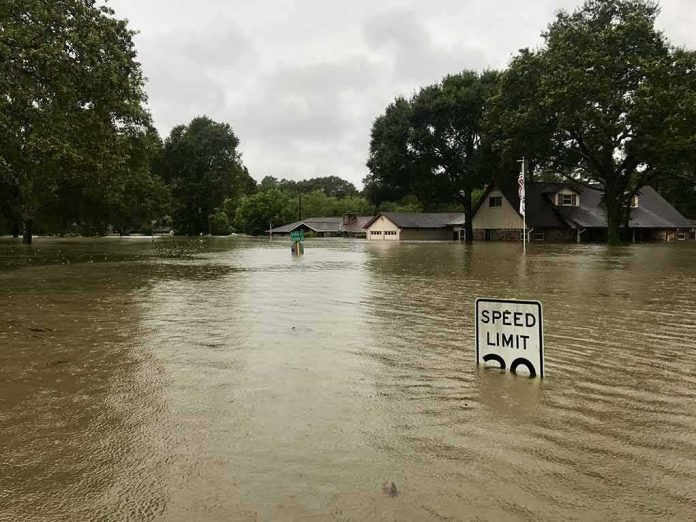
Port St. Lucie declared a local State of Emergency as floodwater shut major roads and stalled daily life.
Story Snapshot
- City leaders issued a State of Emergency to speed resources and coordination.
- The National Weather Service warned flooding was occurring or imminent.
- Major corridors, including Port St. Lucie Boulevard and California Boulevard, closed.
- Officials urged residents to avoid travel and never drive through standing water.
Emergency Declared To Unlock Speed And Support
The City of Port St. Lucie formally declared a local State of Emergency on November 2, aligning with St. Lucie County. The declaration allows faster access to help and tools, from barricades to mutual aid. City leaders framed the step as practical, not political, to get crews where they were needed faster and to keep people safe. The city also canceled a Planning and Zoning Board meeting and moved its agenda to December 1, a sign of the disruption.
The National Weather Service issued a flood warning for St. Lucie County through the morning of November 3. The alert said flooding was either happening or about to happen in low spots and flood-prone areas. Meteorologists pointed to excessive rainfall on saturated ground and warned that water would take hours to drain through urban systems. Forecasters also said further flash-flood warnings might be needed if heavy rain held over the same neighborhoods.
Roads Underwater And Travel Curtailed
City updates listed widespread closures that cut off everyday routes. California and Savona boulevards, Port St. Lucie Boulevard at Aviation Avenue, and eastbound Prima Vista Boulevard west of Airoso Boulevard were among the major shutdowns. Many smaller streets were closed as well. Barricades went up as crews assessed standing water, clogged inlets, and blocked lanes. The city told residents to limit trips to what was essential and stressed a simple rule: never drive through standing water.
Drainage systems faced more water than they could move. Flat ground, saturated lawns, and paved surfaces pushed runoff into streets and swales. That mix is common in South Florida flood events, where rainfall intensity, duration, terrain, and drainage capacity often decide which blocks flood and which stay passable. Regional guidance lists all those factors as drivers of inland flooding, not rain totals alone.
What Made This Event So Disruptive
The timing, coverage, and repetition of downpours mattered. Showers stacked over the same areas, so water had no time to leave before the next burst arrived. The National Weather Service warned exactly about that setup and the lag in urban drainage. That lag kept lanes closed into the evening and overnight, even after the heaviest cells moved on. City leaders used the emergency powers to shift staff, put up signs, and clear trouble spots faster.
Public safety guidance stayed strict and clear. Officials told drivers to turn around from flooded lanes and to avoid trips unless necessary. That advice matches long-standing best practice and common sense. Water hides road damage, masks deep dips, and can float a car in a few inches if current builds. These are small rules with big consequences, and they align with a conservative view of personal responsibility and community duty: make safe choices so first responders can reach true emergencies.
How To Read A Flood Warning The Right Way
A flood warning signals a real hazard, not a weather curiosity. It means conditions on the ground are risky and can change fast. The National Weather Service used direct language about current or imminent flooding, saturated ground, and the chance of added warnings if rain persisted. That guidance is the signal to act: adjust commutes, check storm drains by your curb if safe, and keep kids away from ditches that can fill in minutes.
ATTN: Temporary shelters are open for those who experienced flooding in their homes.
Northport K-8 School: 250 N.W. Floresta Drive, Port St Lucie, 34983.
Havert L. Fenn Center: 2000 Virginia Ave, Fort Pierce, 34982, opening at 1 p.m.
Visit https://t.co/hrN601Acja pic.twitter.com/KLSldj6VQz
— St. Lucie County (@StLucieGOV) November 3, 2026
Residents asked how rare the rain was and whether local drainage kept up. Officials will sort that out in after-action reviews. What is already clear is the chain of cause and effect that clogs any growing coastal city: heavy bursts on soaked ground, broad pavement, and limited slope send water to the lowest point first. That is why smart planning, steady maintenance, and practical household steps—like clearing yard debris before a storm—pay off when the sky opens.
Sources:
facebook.com, cityofpsl.com, forecast.weather.gov