
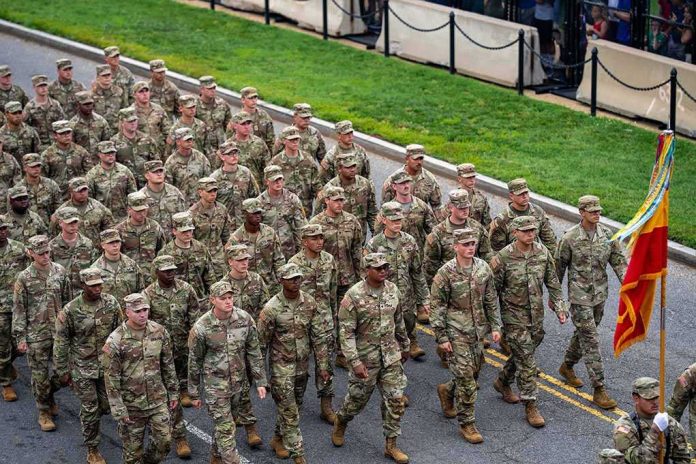
Six U.S. soldiers are preparing religious-accommodation requests to avoid serving on the firing squad for Nidal Hasan’s December execution at Fort Hood.
Story Snapshot
- A named advocate says at least six soldiers plan to seek exemptions.
- The Army set a date, place, time, and method for Hasan’s execution.
- Pentagon leaders described a public execution, with talk of a livestream.
- Army policy allows religious accommodations when it does not harm readiness.
Religious-exemption push begins before selection notices
Michael L. Weinstein, who leads the Military Religious Freedom Foundation, said he spoke with six soldiers who plan to file preliminary religious-accommodation requests to avoid selection for the firing squad. He said more may follow as details firm up. His account arrives before public evidence of any official selection for the execution detail. The requests aim to get in line early, not to protest the sentence, but to avoid direct participation on religious or conscience grounds.
The timing matters because the Army has set specifics that transform a general concern into a concrete order on the horizon. Reports cite an execution order signed on October 6, with President Trump’s approval noted days earlier. The plan calls for execution by firing squad at Fort Hood on December 3 at 1 p.m. Central Time. That clarity creates identifiable duties, potential rosters, and a window for soldiers to seek reassignment.
Policy lane: accommodation allowed, not guaranteed
Army guidance states commanders may approve reasonable accommodations for religious practice unless it causes undue hardship, including adjustments to schedules and duty rosters. The Inspector General explains that soldiers must notify their immediate commander, state the belief, and request the specific accommodation; units then evaluate mission impact and readiness. That process gives soldiers a formal path. It also gives commanders a clear test: can the unit meet the mission without forcing a violation of conscience?
That test collides with the rare nature of military executions. Firing squads are not routine details. Units can often swap roles without harm. On its face, replacing a few riflemen appears administratively simple and fully consistent with discipline. That argues for approval where beliefs are sincere and the unit can find volunteers. Conservative common sense says the government should punish the guilty while avoiding needless conflict with religious scruples when the mission allows both.
Visibility raises the moral stakes for participants
Senior leaders described a public event. The Pentagon signaled plans to livestream the execution, and Defense Secretary Pete Hegseth said the public would be able to watch. Wire service reporting also described a stream, though separate comments by Vice President JD Vance added uncertainty about the exact format. Even with that wrinkle, talk of a broadcast shifts participation from a quiet duty to a national spectacle, which can intensify claims of moral injury and heighten requests to step aside.
At least six soldiers are planning to file for preliminary religious exemptions to avoid participating in the firing squad execution of Nidal Mikal Hasan, a nonprofit leader told The Sun.https://t.co/2bnRy94rCe
— The Washington Sun (@washingtonsun) October 9, 2026
The site and target add weight. Hasan, a former Army psychiatrist, killed 13 people at Fort Hood in 2009; many victims wore the uniform. The plan to execute him at the same installation places soldiers in a role that some may see as both just and yet spiritually fraught. For some faith traditions, taking a life, even under lawful order, triggers strict limits of conscience. Others draw a firm line between combat and an execution team. The moral math is not abstract; it moves through the trigger finger.
Procedure gaps and the selection question
Reporting says the Army’s execution regulation outlines the prisoner’s handling but does not spell out whether firing-squad service is voluntary, how soldiers are chosen, or how identities are protected. That silence invites commanders to rely on custom and judgment. Weinstein argues this uncertainty fuels early filings, since soldiers want assurance before any roster appears. Clarity from the chain of command could narrow conflict: define volunteer preference, permit swaps, and shield identities where lawful.
Advocates point to the difference between opposing war and objecting to a task. Retired Major General Steven Lepper reportedly said the rules recognize conscientious objection to war, not single-assignment refusals. Yet Army religious-accommodation policy is broader than conscientious objector status; it allows work-arounds when mission impact is low. A small, trained pool of volunteers would solve both sides of the ledger: the sentence proceeds, and sincere objectors step aside without drama.
What happens next inside the chain of command
Commanders will likely ask chaplains and legal advisors to review each request. They will weigh sincerity, mission needs, and unit cohesion. They will check whether qualified volunteers can fill out the team. They will also consider the broadcast plan and any privacy measures, because public exposure can deepen the claimed burden. The best outcome keeps focus on justice for the 2009 murders while staying faithful to the promise of religious liberty that America offers those who swear the oath.
Sources:
twitchy.com, npr.org, reuters.com, english.elpais.com, euronews.com, thenationalnews.com, nbcdfw.com, taskandpurpose.com, afp.com, api.army.mil