

Senator Rand Paul had Dr. Anthony Fauci’s lawyer removed from a Senate hearing, then pressed Fauci with a 1,141-page diary release that sharpened old questions into new stakes.
Story Snapshot
- Paul ordered Capitol Police to remove Fauci’s attorney during the tense hearing.
- Paul released 1,141 pages of Fauci’s pandemic-era diary entries before the session.
- A subpoena compelled Fauci’s appearance after a prior agreement fell through.
- Paul’s referrals to the Department of Justice keep the focus on records and truthfulness.
How the Hearing Broke Down, Minute by Minute
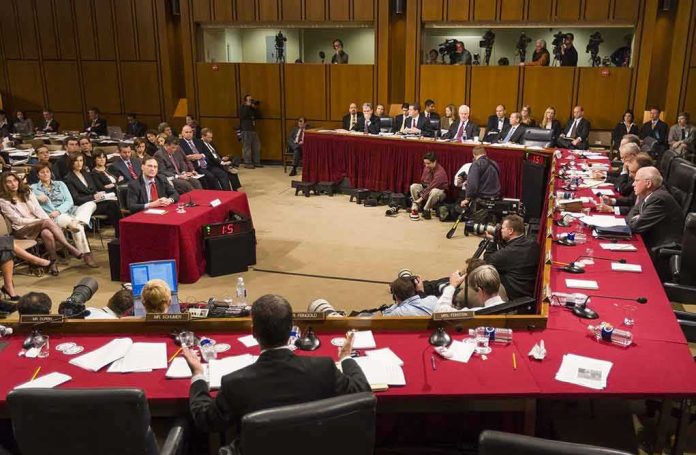
Senator Rand Paul, who chairs the Homeland Security and Governmental Affairs Committee, opened with control of the room and the rules. He directed Dr. Anthony Fauci’s counsel not to join at the witness table. When the lawyer spoke out and kept speaking, Paul called Capitol Police. Officers escorted the lawyer out, and the hearing moved on with fewer voices and higher stakes. The moment set a tone: Paul would run a tight process and frame the day around records, subpoenas, and answers.
The removal capped weeks of escalation. Paul had served a subpoena after saying Fauci backed out of a prior agreement to testify. He also posted Fauci’s pandemic-era diary entries days before the hearing—1,141 pages that, at times, track policy debates in real time. That document drop fueled pointed questions about what Fauci knew, when he knew it, and how that mapped to his public statements, especially on the virus origin debate that still divides Congress and the public.
The Diary Drop and What It Aims to Prove
Paul used the diary to underline tensions he sees between Fauci’s internal notes and later remarks. Supporters of the release point to entries that suggest early doubts about a market origin narrative, which Paul says clashes with Fauci’s tone in public forums. The diary also provided timestamps that Paul paired with emails and past testimony to argue a pattern on origins, funding definitions, and scientific messaging. Fauci has long rejected those claims in prior hearings and media exchanges.
Paul’s team says the timing matters. They cite the diary to claim officials shaped a narrative while minimizing conflicting signals. That assertion mirrors a broader oversight theme: when records pile up, the fight shifts from single facts to credibility and process. Skeptics will ask whether the diary is cherry-picked. Backers will call it a roadmap to what leaders really thought. Both reactions were visible in the committee room even before the first question landed.
Subpoenas, Referrals, and the Stakes of Recordkeeping
The subpoena signaled that the committee would not accept missed dates or shifting schedules. The Hill and Semafor reported that Fauci’s appearance came after Paul said a planned session fell apart, prompting the formal demand to testify. Paul has also renewed referrals to the Department of Justice. Those referrals argue that contradictions and record issues deserve legal review, a stance that his committee press shop and conservative media have amplified in recent weeks.
Procedural terrain intensified the scrutiny. A former Fauci aide, David Morens, faces charges tied to alleged efforts to dodge public records requirements. That case, reported in April, added fuel to Paul’s broader claim that key pandemic communications were mishandled or hidden. The legal system will sort that case. But in an oversight setting, its existence gives Paul leverage to ask tougher questions about email practices, private accounts, and deletions, and to press witnesses on departmental compliance culture.
Why This Clash Resonates Beyond One Hearing
Congressional oversight often becomes a contest over narrative and trust. Paul’s move to eject an attorney underscored authority and rules in the room. The diary release raised the cost of vague answers. Fauci has defended his integrity for years and says the process is politicized and stripped of context, as his legal team has argued in public letters. That push and pull recurs whenever high-profile science and policy meet raw politics.
In a dramatic moment after Fauci repeatedly involved the Fifth amendment, Chairman Rand Paul had Fauci’s attorney removed from the hearing room for attempt to speak.
His lawyer also cited the retired scientists’s Fifth Amendment right. W @adamcancryn https://t.co/aQZkULMdxA
— Sarah Owermohle (@owermohle) July 29, 2026
Common sense asks simple questions that cut through spin. Were records kept and shared as the law requires? Do the diary timestamps match public claims at key moments? If not, why not? American conservative values demand transparency, equal rules for all officials, and clear accountability when facts shift. The committee cannot redo 2020. It can lock in the record now. That, not the fireworks, is what decides whether the public ever gets a full accounting.
Sources:
facebook.com, foxnews.com, hsgac.senate.gov, youtube.com, politico.com, thehill.com, npr.org, abc17news.com