

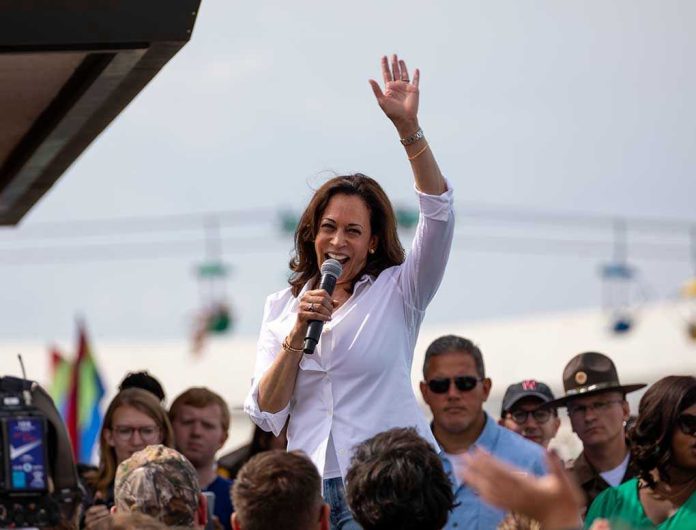
Kamala Harris mapped a late-October blitz across swing-state ground, pairing herself with down-ballot Democrats in a sprint built to matter now and echo into 2028.
At a Glance
- Harris scheduled a multistate push October 21–30 to boost Democratic nominees.
- Stops featured named candidates and specific events, not vague drop-ins.
- The tour followed a Michigan kickoff backing Senate nominee Abdul El-Sayed.
- Harris said her focus is the midterms: “midterms, midterms, midterms”.
A documented sprint with named races and concrete stops
The Associated Press described a schedule that Harris’s office shared for October 21–30. It included Nevada, Mississippi, New Hampshire, Wisconsin, Georgia, and a virtual event with Florida. The plan paired her with specific Democrats. Nevada listed Aaron Ford; Mississippi listed Scott Colom; New Hampshire listed Chris Pappas; Wisconsin listed David Crowley; Georgia listed Senator Jon Ossoff. The detail matters. Named candidates and dates show a real push, not a soft “support Democrats” press line.
The trip was not only rallies. The tour listed a Culinary Workers Union meeting in Nevada, a reproductive-care discussion in New Hampshire, voter-protection sessions in Georgia, and the Fulton County Democratic Party gala. Those choices signal where Democrats think marginal votes, message testing, and earned media can still move outcomes. Union halls turn out workers. Abortion-rights talks frame suburban debates. Voter-protection events drive legal prep and volunteer energy.
Michigan as the first scene and the message frame
Harris started her midterm push with a Tuesday trip to Michigan for Democratic Senate nominee Abdul El-Sayed. The Associated Press reported that after Michigan she aimed toward Nevada and Georgia, building a corridor through key battlegrounds. When asked about her own future, she cut it off with one line: “Right now – midterms, midterms, midterms.” The words set expectations. The focus, at least for this stretch, was to help other Democrats win in 2026, not to announce 2028 plans.
Michigan holds extra weight because Republicans, led by President Trump, have pressed the state map hard. Any Democrat who returns to that turf signals a will to contest every vote. That may steady donors and volunteers. It may also test messages for independents who tilt on pocketbook issues, crime, schools, and border policy. Campaigns study audience reaction at such stops and refine scripts within hours.
Why these states and events point beyond one week
The itinerary overlaps with states that matter in national races. Nevada matters for union muscle. Georgia tests suburban turnout and rural resistance. New Hampshire listens for tone and stamina. Wisconsin is the Midwest fulcrum. Florida, even as a virtual stop, offers a media market megaphone. This pattern is normal in American politics. High-profile figures help allies and also keep their own profile current. The available reporting covers the activity; it does not by itself prove long-term intent.
Research on political endorsements offers mixed guidance on impact. Some studies show endorsements can lift attitudes and turnout. Other work finds little effect on voter behavior and warns of backlash when the messenger polarizes. The safe bet is this: targeted events that build lists, train volunteers, and generate local news usually beat one big rally with thin follow-up. Harris’s schedule, with union, policy, and voter-protection stops, fits that more durable playbook.
What this means for the campaigns on the ground
Down-ballot Democrats get three assets from a figure like Harris. First, free press in crowded markets. Second, a fresh hook for fundraising and list growth. Third, a field bump if the visit recruits canvass captains or legal observers. Campaigns judge success on metrics they can count by week’s end: small-dollar spikes, volunteer shifts filled, doors knocked, and local coverage tone. The schedule’s detail suggests staff aimed to convert attention into capacity, not just applause.
Vice President Kamala Harris is embarking on a 2026 midterm campaign tour from October 21 to October 30 to support Democratic candidates.
Here's her schedule so far: pic.twitter.com/bXxaLCdata
— Fabi 🪷 (@kamala_things) October 14, 2026
Conservatives will see a different scoreboard. Many will say voters want safer streets, cheaper groceries, and a secure border first. If a tour does not speak to those basics with plain answers, it can harden opposition. That is fair. American common sense values results over rhetoric. The burden sits on every candidate Harris backed to show how their plans help families keep more of each paycheck and keep their neighborhoods safe. Campaign stops create the stage; policy outcomes win the night.
Sources:
twitchy.com, santacruzsentinel.com, unb.com.bd, economictimes.indiatimes.com, washingtonexaminer.com, act.kamalaharris.com, kamalaharris.com, cambridge.org, tandfonline.com