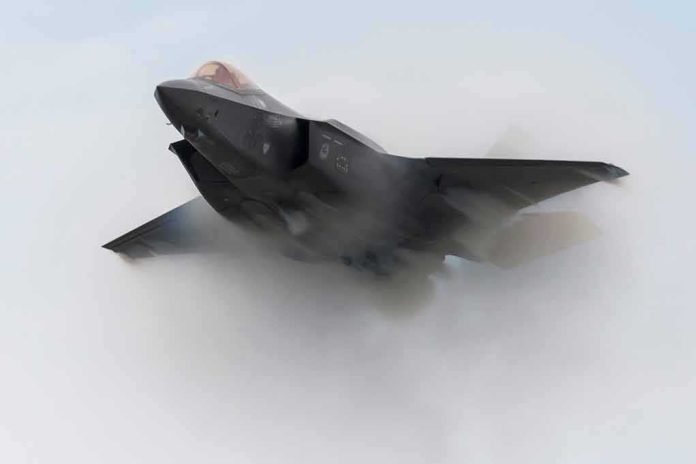
A single “Made in USA” photo of Canada’s F-35 lit the fuse on a secrecy fight Ottawa insists is lawful.
Story Snapshot
- Canada is refusing F-35 records, citing national defence protections under law.
- Opposition critics claim the government hid true costs and misled Parliament.
- A recent review found planning gaps and urged fuller cost reporting.
- U.S. officials slammed Canada’s delays and opacity on the F-35 file.
What Canada Says The Law Allows
National Defence points to Canada’s Access to Information Act, which lets departments withhold records if release could harm the defence of Canada or allied states. Treasury Board guidance states section 15 authorizes refusals when disclosure could injure international affairs or defence, and that officials must apply this exemption case by case. This is not a loophole; it is the design. Federal court commentary has long grouped this as one of the core secrecy shields in national security files.
Annual reports show this defence exemption gets used often across security agencies, not rarely. The Communications Security Establishment reported section 15 as one of its top-used tools to protect information tied to defence and international affairs in recent years. The Department of National Defence’s own reporting shows a similar pattern over time, with section 15 among the most applied exemptions in its files. That does not prove each refusal is wise, but it does explain why requests hit a wall so often.
Where Critics Say Secrecy Crosses The Line
Opposition figures and analysts say Ottawa has gone beyond safety to shield political risk. A long-running critique holds that governments under-reported or obscured F-35 costs and cut Parliament out of full scrutiny. A policy analysis tied the “real cost” fight to a broader battle over releasing financial data to legislators, while also citing the Auditor General’s findings that the early procurement process lacked proper due diligence and used bad estimates. That mix fuels doubt when new records get withheld.
Pressure now comes from allies too. A senior United States defense official blasted Canada’s review delays and lack of transparency, saying politics seemed to outweigh readiness and joint defence obligations. That charge stings because the F-35 is at the center of North American air defense. When you buy into a shared fleet and a shared mission, allies expect straight answers on timelines, sustainment, and money. Canada’s slow-roll posture invites friction that did not need to happen.
The Cost And Planning Gap That Keeps Boomeranging
The Office of the Auditor General recently concluded National Defence still had not developed all the plans needed to bring the F-35A into service. That is not a minor paperwork slip. Without complete plans, costs drift, facilities lag, and training timelines slide. Transparency becomes harder because there is less that is final to disclose. This is the classic procurement spiral: delays drive uncertainty, uncertainty drives secrecy, secrecy drives mistrust, and mistrust hardens politics.
Meanwhile, steps continue in the background. Reporting last fall said the government began paying for key components for 14 more F-35s while the larger review continued. That split-screen—quiet progress with public opacity—keeps critics on edge. It also supports a common-sense view held by many conservatives: buy what the mission needs, tell taxpayers what it costs in plain numbers, and stop hiding the ball behind process talk. If the price is high but justified, make the case and own it.
What Responsible Transparency Looks Like Now
Canada does not need to publish data that helps adversaries or exposes allied secrets. But the government can meet both security and accountability by drawing a brighter line. First, commit to standardized cost reporting that matches what the Auditor General called for—lifecycle, infrastructure, training, sustainment, and upgrades, not just airframes. Second, put schedule and facility milestones on a public dashboard with quarterly updates. Third, define what section 15 covers in this program context, in writing, so refusals feel principled, not political.
That approach respects the law’s injury test and the public’s right to know where billions go. It also reduces room for the charge that Ottawa uses secrecy to dodge hard questions. The F-35 is not a boutique toy; it is a core tool for defending the Arctic, meeting North Atlantic Treaty Organization duties, and flying with the United States. Citizens who fund that mission deserve straight talk. The government has the legal shield it needs. It should also show the backbone to be candid when it can.
Sources:
19fortyfive.com, search.open.canada.ca, canada.ca, rcmp.ca, laws.justice.gc.ca