

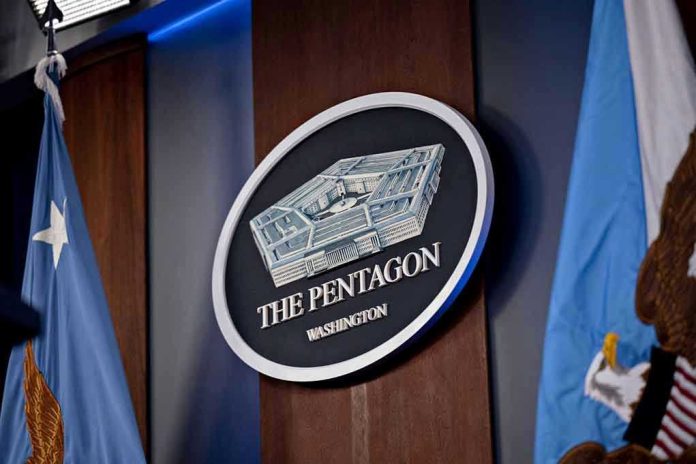
Washington just linked arms with Caracas to hunt narco-terrorists, and the first joint strike already drew blood.
Story Snapshot
- Defense Secretary Pete Hegseth announced a U.S.-Venezuela security partnership focused on counter-narcotics and regional defense.
- Official reports tie the partnership to ongoing operations under Operation Southern Spear.
- A later report credits a U.S.-Venezuelan coordinated airstrike with killing the leader of Tren de Aragua.
- Human-rights monitors say Venezuela’s security apparatus remains largely unchanged, raising guardrails and risks.
What Was Announced, And Why It Matters
Defense Secretary Pete Hegseth said the United States will deepen military cooperation with Venezuela to stop narcotics flows and target violent networks. The policy slots into Operation Southern Spear, which the U.S. government describes as a regional effort to disrupt drug pipelines, defend the homeland, and stabilize the Western Hemisphere. That mission places partner-led operations at the center of the plan, with the United States acting as the catalyst and coordinator rather than the occupier.
President Trump’s national security team framed the approach as part of a larger hemispheric push. Public records tie top officials to early 2026 actions in Caracas under Operation Absolute Resolve. Those events show the White House expected kinetic effects and diplomatic leverage to move in step. The message was simple: push back crime and terror at the source before it hits U.S. streets. That is a standard that most Americans see as common sense.
From Pledge To Proof: The First Joint Hit
A later oversight report offered hard evidence that cooperation did not stop at the podium. Investigators recorded a claimed U.S.-Venezuelan coordinated airstrike that reportedly killed Héctor Rusthenford Guerrero Flores, known as Niño Guerrero, described as the leader of the gang Tren de Aragua. That claim, if accurate, signals more than training and handshakes; it shows targeting, timing, and trust under pressure. It also sets a public benchmark for future results.
Operation Southern Spear’s written aims match this outcome. The mission calls out narco-terror networks and promises to protect regional partners while defending U.S. borders. That alignment matters. Strategy without operations is a wish. Operations without strategy is a drift. Here, the paper trail and the strike narrative point in the same direction: partner-led hits that break criminal power and deny safe havens tied to drug pipelines.
The Document Gap And What We Still Do Not Know
Public records do not yet show the signed text of a bilateral agreement. There is no posted treaty number, rules of engagement, annex on intelligence sharing, or funding schedule. That gap does not erase the operations on record, but it clouds the timeline and fuels second-guessing. The clean fix is daylight: publish the terms, define authorities, and set milestones the public can score. Precision beats spin, every time.
The ground truth inside Venezuela also needs proof beyond slogans. Officials spoke of territory long held by cartels and terror groups. The record shows at least one coordinated strike and broad counter-narcotics goals, but not maps of areas recovered, nor dates of transfer to state control. If the partnership delivers real clearance and hold, release the before-and-after data. If not, recalibrate and explain the plan to close the gap.
Human-Rights Headwinds And Conservative Guardrails
United Nations investigators say Venezuela’s security and intelligence services kept the same structures and practices despite political changes. They also report that armed colectivos were not disarmed. The United Nations Human Rights Office describes no meaningful reform of the repressive apparatus. These findings argue for strict conditions, transparent oversight, and hard limits on assistance to abusive units. Values and victory both demand that discipline.
American conservatives can back a simple test: results with accountability. Help partners hit narco-terrorists who poison our communities. Demand clean chains of command, real human-rights compliance, and clear end-use of gear and intel. If a unit violates the standard, cut it off. If the mission fails to reduce illicit flows and violence, change tactics fast. Strength couples moral clarity with measurable gains, not endless process.
How This Fits The Bigger Play In The Americas
The Pentagon briefed a broader Americas Counter Cartel Coalition built around partner-led operations. The logic is sound: neighbors who own the fight, backed by U.S. targeting, mobility, and surveillance, can move faster than distant bureaucracies. That model avoids big-footprint interventions and keeps pressure on networks that slip across borders. It is also easier to sustain at home if it shows real drops in drugs, killings, and cross-border crime.
Congress and the public should now ask for a scoreboard. Publish quarterly metrics: high-value targets removed, labs and routes destroyed, homicide trends, drug seizure shifts, and community-level security gains. Tie assistance to those markers. Sunlight will steady allies who perform and expose those who only pose. If the Caracas partnership delivers, expand it. If it stalls, redirect help to units and local partners who can move the needle.
What To Watch Next
Watch for the release of the agreement text and any annexes. Look for joint training calendars, intelligence-sharing protocols, and rules of engagement that protect civilians. Track whether follow-on strikes degrade Tren de Aragua’s cash flow and control. Demand updates on reform benchmarks inside Venezuela’s forces. Success means fewer drugs in U.S. towns, safer streets in Venezuelan cities, and partner units that fight hard and stay within the law. That is the standard to hold.
Sources:
youtube.com, media.defense.gov, jifco.defense.gov, defense.gov