

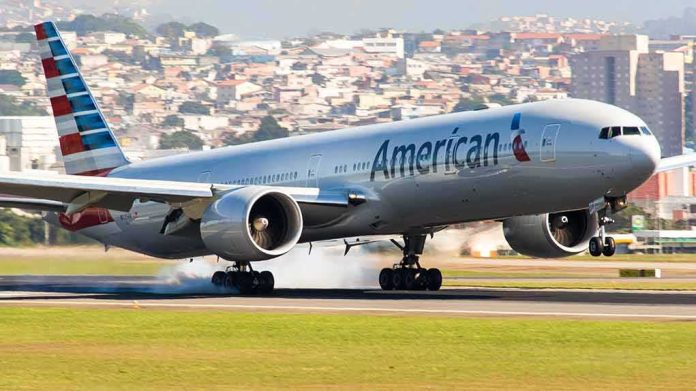
American Airlines Flight 496 shut down a left engine after takeoff, declared “Mayday,” and landed safely in Orlando with Senator Ashley Moody on board.
Story Snapshot
- Flight 496 from Tampa to Washington diverted to Orlando after an engine problem.
- Moody’s office said the plane had an engine failure and made an emergency landing.
- The Federal Aviation Administration (FAA) reported a safe landing near 3 p.m. and opened a review.
- Air traffic audio described a left-engine shutdown and emergency declaration.
What happened in the air and why Orlando
American Airlines Flight 496 departed Tampa bound for Washington, D.C., then reported an engine problem shortly after takeoff. The crew declared an emergency and diverted to Orlando International Airport. Reports cite a left-engine shutdown and a “Mayday” call as the pilots worked the checklist and set up for landing. Orlando offers long runways, robust fire and rescue coverage, and on-site American Airlines maintenance. That combination is exactly what crews want when one engine goes quiet. The jet landed safely near 3 p.m. local time.
Senator Ashley Moody’s office said the aircraft suffered an engine failure and had to make an emergency landing in Orlando. Multiple outlets identified the flight as American Airlines 496 on the Tampa-to-Washington route, diverted soon after departure. The Federal Aviation Administration said the plane landed safely and that it would examine the event, which is standard practice after an in-flight engine issue. Reports described about 178 passengers aboard, consistent with a full narrow-body load.
The cockpit playbook when a turbine quits
Transport jets are built to fly safely on one engine. The pilots’ first job is to fly the aircraft, trim out the yaw, and confirm which engine misbehaved. The second job is to run a short set of memory actions and then the full checklist. The third job is to divert to the best field. That means long pavement, clear weather if possible, strong rescue coverage, and company maintenance. Orlando checks every box. Shutting down a damaged engine protects the airplane and buys time to land.
Reports mention a “Mayday” call and a deliberate left-engine shutdown. That language tracks normal, by-the-book behavior when a crew has reason to secure an engine and head for a closer airport. The aim is not drama. The aim is margin. A single-engine jet lands at a higher speed and needs more runway. Orlando’s length and rescue posture cut risk. Flight 496 touched down without injury reports in the immediate coverage, and the agency review began, as usual for such events.
Politics rides coach; safety flies the plane
Moody’s presence drew headlines, and her schedule took a hit. Her office said she caught the next available flight to Washington but missed planned Senate votes because of the diversion. That detail matters for the news cycle, but it does not change the safety story. The crew prioritized a secure landing over an on-time arrival, which reflects the culture of commercial aviation. Conservative common sense backs that order: protect lives first, then worry about calendars.
Republican Senator Ashley Moody (R-FL) was aboard an American Airlines flight on Monday that was forced to make an emergency landing in Orlando, following a reported midair engine failure.https://t.co/yT1gpFs2Nq
— Katie Liane (@TheKaterPotater) November 17, 2026
Engine problems on airliners are rare but not unheard of. The National Transportation Safety Board has documented several cases where a crew shut down an engine and diverted without injuries. These events underline a core design truth: the aircraft can fly, climb, and land on one engine when handled by trained crews. The 2018 Southwest case, though far more severe, shows how investigators later map cause and recommend fixes to prevent repeats.
What comes next and what to watch
The Federal Aviation Administration review will look at maintenance logs, engine health data, inspection results, and crew actions. American Airlines maintenance will inspect the affected engine, document any part damage, and return the aircraft to service only after sign-off. Media reports used both “engine issue” and “engine failure.” That wording gap reflects early information, not a policy fight, and it will narrow once inspectors identify parts and wear patterns.
Readers should focus on three markers. First, whether the airline replaces components or the whole engine before the jet returns to routes. Second, whether the Federal Aviation Administration or the National Transportation Safety Board issues a notice tied to a specific part or maintenance task. Third, whether any fleet-wide inspections follow. Each step signals how serious the root cause was, and how the system turns a close call into safer flying for everyone.
Sources:
thegatewaypundit.com, snntv.com, aerocorner.com, thedailybeast.com, foxnews.com