
Trump greeted Vladimir Putin with “He’s my friend” in Shenzhen, then sat down for talks on Ukraine, nukes, and power.
Story Snapshot
- Trump publicly called Putin “my friend” as they met in Shenzhen.
- Talks with Putin and China’s Xi Jinping ran about 90 minutes on core security topics.
- Trump urged China’s help to end the war in Ukraine before the trilateral session.
- The summit produced a symbolic peace declaration but no concrete arms deal.
What Trump Said, What Cameras Caught
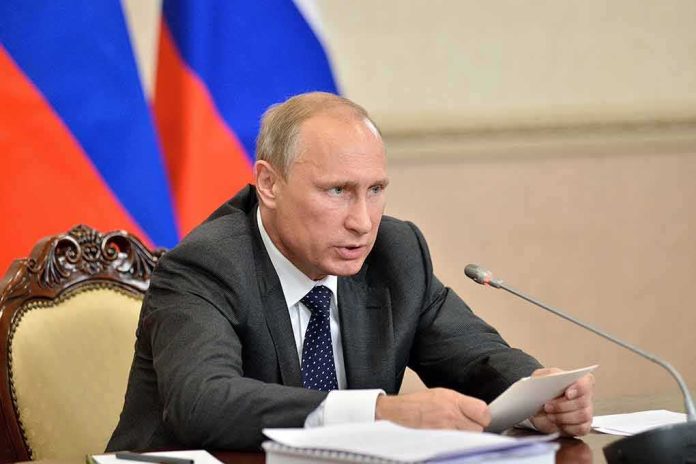
Reporters heard Trump spot Putin, ask “Who is he?” and answer his own question with “He’s my friend.” Russian media video captured the light exchange and the handshake. The words were brief, but they set the tone. Trump has praised his rapport with Putin before, saying in 2019 they had a “very, very good relationship.” The Shenzhen line extended that pattern into a moment the whole world could replay.
The line matters because it framed a hard meeting as a friendly one. Supporters argue warmth can open doors. Critics say smiles cannot hide clashing interests. Both can be true. What counts is whether friendly words help deliver results that protect American security, reduce nuclear risk, and cut the bloodshed in Ukraine. Words are free; peace is not. That gap became the test for what followed in the room.
Inside The Shenzhen Agenda
Trump held separate talks with China’s Xi Jinping and said Washington and Beijing should help end the Ukraine war. He then joined Putin and Xi for a trilateral that ran about an hour and a half. The list was heavy: Ukraine, Iran, nuclear weapons, trade friction, and artificial intelligence. The meeting broke history’s glass but not its locks. The parties announced no new arms limits, inspections, or enforcement plans tied to a timetable.
Photos showed easy body language among the three. The Kremlin said Putin left the bilateral session with Trump in an “excellent” mood. Warmth did not equal a breakthrough. The leaders later issued a peace-flavored declaration that read more like tone than treaty. The release did not include verifiable steps, inspection rights, or compliance triggers that usually mark real arms or ceasefire progress.
The Deliverables And The Deficit
Reuters called out the contrast: friendly words, no concrete deal. That split is not rare in summitry. Good optics can build a runway, but planes need fuel, flight plans, and pilots. Shenzhen gave the runway. It did not show the fuel. For conservatives who value peace through strength, results define success. That means leverage, written terms, inspections, and clear costs for cheating. None appeared in the public record that day.
Trump’s tone fit his long-standing bet on personal diplomacy. He often says deals start with a relationship. History shows both wins and whiffs on that bet. Past United States–Russia summits delivered major cuts like the Strategic Arms Limitation Talks and the Intermediate-Range Nuclear Forces Treaty. Others produced little but photos. The base rate is mixed. Talk can help, but only if pressure and verification follow.
Ukraine, Nuclear Risk, And The Path Ahead
Ukraine sat at the center. Trump pressed China to help push for an end to the war, then faced Putin with that aim on the table. That approach reflected a simple logic: if Beijing holds sway in Moscow’s war economy, Beijing can also influence the path to a pause. The meeting did not reveal a ceasefire map, prisoner exchange plan, or humanitarian corridor schedule. The public record showed no bridge from intention to implementation.
"Rather than restoring America’s centrality in great power diplomacy, the Trump-Xi-Putin trilateral in Shenzhen may underscore how far Washington’s position has eroded since the triangular diplomacy of the 1970s" https://t.co/qHwiHk5gMo
— Transatlantic Policy Center 🇺🇦 (@AU_EuropeCenter) November 19, 2026
On nuclear risk, the leaders discussed weapons but did not announce a ceiling, a counting rule, or new verification. That silence matters. The last generation’s breakthroughs all came with math, paperwork, and inspectors. The Shenzhen talks did not. The friendly line still drew notice because it signals how Trump wants to work the problem: build rapport, keep channels open, and press for a deal later. The question is when later becomes now.
Why The Optics Still Matter
Putin’s return to a central stage after the 2022 invasion of Ukraine gave the moment extra charge. Trump’s greeting played worldwide, offering Moscow a clip of status and ease. The Kremlin welcomed the mood and flagged Ukraine as a topic, which hinted at room for continued contact. That door can serve U.S. interests if it yields hard terms that cut risk and save lives. It can backfire if it softens pressure with no trade-off in return.
One Clear Standard, Moving Forward
Measure Shenzhen by a conservative yardstick: outcomes over atmospherics. Ending a war or lowering nuclear danger takes verifiable steps. The Shenzhen summit set a tone, not a treaty. If the friendship talk helps land a ceasefire, a swap, or a real arms limit, then it will look like smart statecraft. If it does not, it was a photo that bought time and spent leverage. The next readouts will tell which path we are on.
Sources:
youtube.com, reuters.com, rmb.reuters.com, people.com