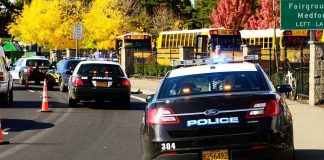


Twelve officers ended their shift in ambulances because a prayer rally’s exit turned into a street clash.
Story Snapshot
- Police say counterprotesters pushed toward a peaceful rosary rally as it ended.
- Officers formed a chain and used pepper spray to keep the groups apart.
- Twelve police were injured during the operation, according to multiple reports.
- Investigations opened into possible crimes tied to the confrontation.
A Peaceful Prayer Rally Met A Hostile Exit
Police and local media report that the “public rosary against abortion” in Göttingen had been lawfully registered and stayed peaceful through its conclusion. The trouble began as participants tried to leave. Counterprotesters moved toward the prayer group, and officers stepped in. Police created a human chain to block contact and manage the exit route. That is standard practice when tensions rise fast around assemblies with opposing sides.
Police then described force used against them. They reported pressure and violence directed at officers during the standoff. Officers responded with physical pushes and pepper spray to prevent a breach and hold the separation line. Local radio reported more than 200 coercive measures during the operation, which signals a serious, sustained effort rather than a brief exchange of words. That context explains why the injury count did not stop at one or two.
Twelve Injured Officers And A Street Lesson
Across outlets, the number lands the same: twelve officers injured. That figure appears in national and local reporting and was tied to the same police operation that escorted the pro-life group away from the square. Several ambulances were on scene. These details matter because they push the story out of the “scuffle” category and into the realm of a public-order incident that strained resources and required chemical irritants to hold the line.
Police also opened investigations into possible offenses connected to the confrontation. Reported lines of inquiry include disorder offenses and coercion tied to attempts to block the assembly’s departure. That track squares with German law, which protects peaceful assemblies and punishes efforts to break them up. Germany’s Federal Constitutional Court has upheld sanctions against those who use violence or serious disruption to thwart a lawful assembly.
Why The Departure Phase Turns Dangerous
Clashes often happen at the end, not the start. The reason is simple: exits compress space and mix groups. Police doctrine in Germany puts facilitation first and force last, but it also allows strong separation when officers see concrete danger. That is what the chain and pepper spray show here. This is not unique to Göttingen. It fits a broader pattern where tension spikes when routes narrow and a hostile contingent tests the cordon.
Some readers will ask who threw the first shove. The current record leans on police statements and a consistent injury count, not a full body-camera file dump. That is normal in early reporting. Still, the facts that matter for public order line up: the rally was peaceful until departure, counterprotesters pressed toward them, police intervened with force, and twelve officers ended up hurt. Common sense and conservative values point to a clear standard: you can protest speech you hate, you cannot mob people to shut them down.
Accountability, Transparency, And Next Steps
Good policing welcomes sunlight. Full incident logs, body-worn footage from the exit corridor, and de-identified injury summaries would settle arguments about sequence and scale. Prosecutors should move fast where evidence shows criminal coercion or assault. City leaders should also review the separation plan for future events: wider buffers, clear exit corridors, and earlier dispersal timing reduce risk. The right to pray in public and the right to protest both stand tallest when the rules are firm and enforced.
Sources:
lifesitenews.com, politischeverfolgung.de, tagesschau.de, youtube.com