

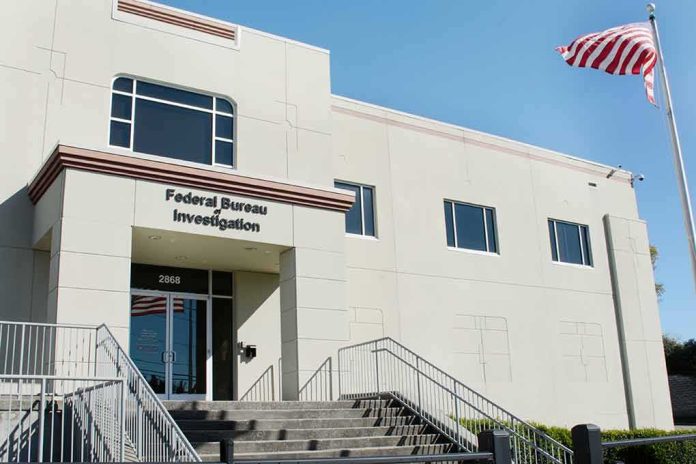
A federal judge said the FBI could not move into the Reagan Building because Congress had already told the agencies to pick somewhere else.
Story Snapshot
- Congress limited the site to three suburbs; the Reagan Building was not on the list.
- A judge blocked any action or spending to shift the headquarters into the Reagan Building.
- Maryland’s lawsuit argued the administration ignored the law and funds limits.
- Greenbelt’s earlier selection stands as the lawful baseline for the project.
What The Judge Actually Stopped
U.S. District Judge Theodore Chuang blocked the administration’s plan to move FBI headquarters to the Ronald Reagan Building in Washington, D.C., and barred any spending to make that move happen. He found the selection broke measures Congress passed in 2022 and 2023, so the government lacked authority to redirect money to the D.C. site. That injunction matters. Courts do not freeze federal projects unless the record shows a likely legal problem and risk of harm if work continues.
The judge’s order landed after Maryland and Prince George’s County argued the administration violated clear rules. They said federal law required consultation with the state and locked the site choice to the suburban shortlist. They asked the court to void the Reagan Building plan and restore the Greenbelt selection. The filings framed the case as simple: when Congress decides a site pool and funds a path, agencies must follow that path, not invent a new one midstream.
Why The Reagan Building Was Off-Limits
Congress directed the General Services Administration to select from three suburban locations: Greenbelt, Maryland; Landover, Maryland; or Springfield, Virginia. The Reagan Building was never in the competition. The General Services Administration reaffirmed in 2023 that only those three sites were under review, which set the legal fence line for this decision. A move back into downtown Washington stepped outside that fence. The judge ruled that leap exceeded agency authority under the statutes at issue.
Supporters of the D.C. move pointed to safety and modernization. The Federal Bureau of Investigation announced the Reagan Building plan on July 1, 2025, and said it would close the J. Edgar Hoover Building and relocate staff. Director Kash Patel called it a historic step and pitched a safer workplace. Those goals may be valid, but they do not override Congress’s site limits without new law. Agencies must seek authority first, not after the fact.
The Greenbelt Baseline And The Funding Lock
The General Services Administration selected Greenbelt in 2023 after a multi-year review. That set a baseline the administration later tried to reverse. Maryland argued Congress had funded the path to a suburban campus and did not authorize diversion to the Reagan Building. The judge agreed that the government could not lawfully repurpose hundreds of millions of dollars to a site Congress did not approve, and he blocked the redirection of $555 million tied to the switch.
Critics have long claimed the earlier process had flaws, including a panel’s Springfield recommendation that was overruled. Oversight letters and an inspector general review flagged process concerns. Those issues deserve sunlight, but they cut both ways. If anything, they support a reset inside the same legal guardrails, not a jump to a non-listed site. The remedy for a messy process is a cleaner process within the law, not ignoring the law’s map.
What This Means For Separation Of Powers
Congress writes the checks and sets the rules on where big federal buildings go. Agencies execute within those lines. The ruling reinforces that boundary. Even a President who runs on speed and savings must bring Congress along when statutes restrict choices. That is not bureaucratic nitpicking. It protects taxpayers from ad hoc pivots and ensures communities compete on fair terms set in daylight, not on late-stage swaps.
A federal judge blocked the Trump administration’s plan to move FBI headquarters (related to a proposed shift involving a Maryland or DC site).
— Burke Garrett (@BGarrett) August 18, 2026
Next steps likely include appeals and more record building. The administration can return to Congress to seek new authority for a D.C. site. It can also refine cost and security data for the suburban options and re-run scoring within the legal list. Maryland will press to finalize Greenbelt and obligate funds so late reversals are harder. The fastest legal path forward remains the one Congress already paved: pick from the three, document the choice, and spend as appropriated.
Sources:
oag.maryland.gov, usnews.com, bizjournals.com, yahoo.com, gsa.gov, judiciary.house.gov