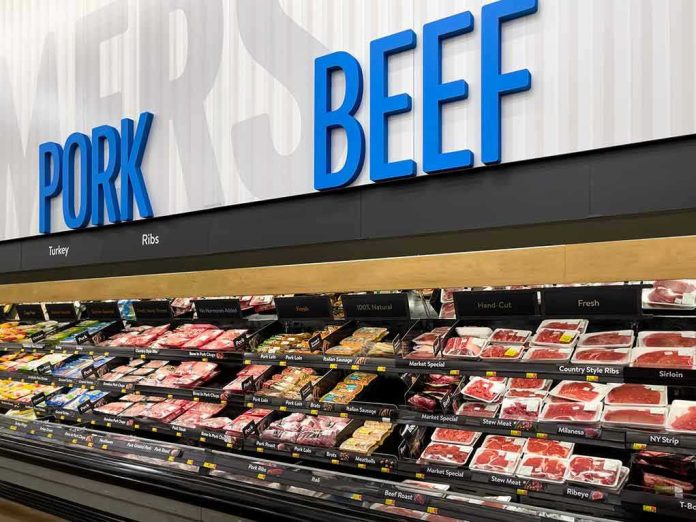
The real story behind record Memorial Day beef prices is not your grill—it’s a once-in-a-lifetime squeeze on the American cattle herd colliding with policies and costs that have been building for years.
Story Snapshot
- Beef prices are hitting record highs as the United States cattle herd sits at its lowest level in roughly three quarters of a century.[3]
- Drought, high feed and borrowing costs, and regulatory and trade decisions have pushed ranchers to liquidate herds instead of rebuild them.[3]
- Holiday demand adds sizzle to the spike, but the real fire comes from long-term supply contraction and rising production costs.[3]
- Consumers still overwhelmingly choose meat, especially beef, which keeps pressure on a tight market and exposes the cost of policy mistakes.[2]
Record Beef Prices Did Not Start At The Meat Counter
Shoppers staring at ten-dollar-a-pound ribeye the week of Memorial Day feel like someone flipped a switch at the supermarket. The switch actually flipped years ago on the ranch. Reports show the United States cattle herd at a seventy to seventy-five-year low, after years of drought scorched pastureland and forced ranchers to sell breeding cows just to survive.[3] When a ranch sells a cow, it is not just losing one animal; it is losing every calf that cow would have produced over the next decade.
That long biological clock is what makes beef different from, say, chicken. A chicken barn can ramp up production in months. Rebuilding a beef herd takes years. Ranchers must hold back heifers for breeding instead of sending them to the sale barn, which pulls even more beef off the short-term supply.[3] That is why record prices now reflect decisions driven by drought, feed costs, and financing pressure that began well before your neighbor bought his first bag of charcoal.
Holiday Demand Is The Match, Not The Firewood
Memorial Day does play a role. Financial site WalletHub estimates about sixty-five percent of Americans plan to barbecue, with families spending more and total meat purchases topping billions of dollars.[2][3] That wave of burgers and brisket puts short-term pressure on the meat case. But holiday demand hits every year. What makes this year different is that the usual seasonal surge is landing on top of a structurally tight supply, where the herd has already shrunk, feedlots are not as full, and imports cannot fully plug the gap.[3]
Consumer behavior is also not cooperating with the laws of cheap substitutes. Industry analysts say Americans are eating more meat than ever, and meat department sales have set records, with the overwhelming majority of households buying meat for daily meals.[2] Pork and poultry offer some relief and are cheaper per pound than beef, yet shoppers still rank beef as their preferred protein.[2] When demand stays strong even as prices rise, the textbook answer is simple: the market clears at a higher price, and the cookout gets more expensive.
The Hidden Price Tags: Feed, Fuel, Interest, And Rules
Price tags in the meat case hide a long list of line items that have nothing to do with the butcher’s margin. Ranchers and processors report steep increases in feed, transportation, labor, and borrowing costs, all of which have climbed sharply in the last several years.[3] When the cost of corn and hay rise, the trucker’s diesel bill jumps, and bank interest rates climb, every pound of beef carries those costs along the chain. Basic common sense says producers cannot permanently eat those increases; they pass them along or go out of business.
Trade and regulatory moves have added their own friction. Industry coverage points to tariffs on Brazilian beef, a major supplier of imported ground beef, and restrictions or disruptions on livestock imports from Mexico that historically supplied a significant share of feeder cattle. Proponents of those measures usually argue for food security, disease control, or punishing bad actors abroad. Those goals may be valid, but when policymakers constrict imports while domestic herds shrink, they should not feign surprise when retail prices jump.
Market Power, Policy Choices, And The Conservative Question
Some reports highlight another uncomfortable factor: a small handful of giant packers control a large share of beef processing and have faced collusion allegations in recent years. Critics argue that concentrated market power lets these firms widen margins when supplies tighten, amplifying price spikes for consumers. The companies deny wrongdoing, and past settlements do not prove present abuse, but the combination of scarcity and concentration naturally breeds suspicion in a country that values fair competition.
Beef prices are near record highs heading into Memorial Day weekend due to low cattle supply and high demand, pushing consumers toward budget-friendly grilling alternatives. https://t.co/ID9h1LuXiN
— ConsumerAffairs (@ConsumerAffairs) May 22, 2026
A conservative lens asks two blunt questions. First, are we allowing markets to work by letting producers respond to price signals, or are we layering on drought, regulation, trade friction, and central bank policy in ways that choke supply while demand stays strong? Second, are we maintaining a level playing field where family ranchers and smaller processors can compete, or are structural advantages and bureaucratic burdens quietly pushing them out? High beef prices expose the cumulative cost of those choices.
What Memorial Day Beef Prices Are Really Telling You
Record Memorial Day beef prices are not a random shock or a one-week gouge; they are a loud message from a strained system. Years of drought and high input costs pushed ranchers to shrink herds. Trade and regulatory decisions tightened the noose instead of loosening it. Consumers continued to choose beef anyway. The result is a market where a simple family cookout has become a line-item in the household budget. That might be inevitable biology, but much of it is preventable policy.
Sources:
[2] YouTube – Beef prices hit all-time highs ahead of Memorial Day
[3] Web – Beef prices soar as Americans prepare for Memorial Day cookouts