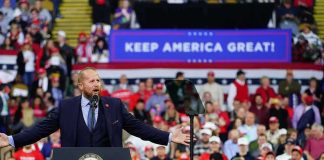

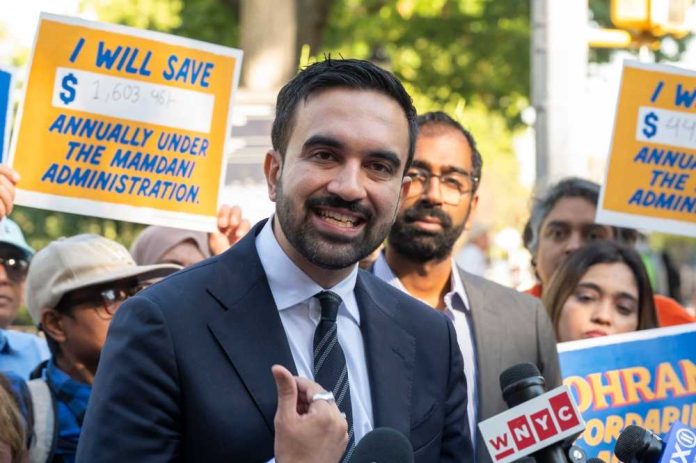
A single partisan headline turned a mayor’s boycott of an Israel parade into a dramatic story about “sabotaging” a United States Navy spectacle that never happened.
Story Snapshot
- New York City Mayor Zohran Mamdani skipped the city’s long-running Israel Day Parade, breaking decades of political tradition.
- A Red State article claimed he “gutted” the biggest United States Navy parade in 50 years, but cited no concrete proof.
- Mainstream and international outlets agree the only contested event was the Israel Day Parade on Fifth Avenue, not a Navy parade.
- The gap between those reports shows how modern politics can turn one boycott into a story of “sabotage” against the military.
Mamdani’s boycott, and what actually happened on Fifth Avenue
New York City’s Israel Day Parade is not some fringe street fair. For more than sixty years, the city’s mayor has marched down Fifth Avenue with thousands of Jewish New Yorkers and supporters of Israel. Mayor Zohran Mamdani broke that tradition. He stayed away from the parade, saying he had promised during his campaign that he would not attend and that he opposed the current Israeli government’s policies toward Palestinians. That decision put him at the center of a storm.
Major outlets reported the same core facts. The Associated Press said Mamdani would not join the annual parade honoring Israel because of his support for Palestinian rights, noting this broke a decades-long custom. The New York Times wrote that organizers believed he was the first mayor to skip the event since it began in 1964. German and other foreign media covered the boycott as a protest against Israel’s Gaza policy and a shock to New York’s Jewish community. The controversy was real, and the parade was clearly about Israel.
Security support and the line between boycott and sabotage
Mamdani did more than boycott. At a news conference, he said he would not march, but he also insisted the city would keep the parade safe. Reports note he spoke about weeks of preparation and a strong police presence to make sure the event ran smoothly and peacefully. That is a key point for anyone who cares about public safety and basic fairness. Boycotting an event is one thing. Sabotaging it would mean blocking permits, pulling cops, or cutting services to make it fail. No evidence shows that happened.
Jewish organizations and Israeli officials reacted strongly to his absence. Critics accused Mamdani of turning his back on “tens of thousands of Jews and supporters of Israel” at a time of rising antisemitic incidents. Some framed his decision as moral cowardice. Others argued an American mayor should stand by a key ally. Yet even those angry voices focused on symbolism and solidarity, not on claims that he tried to shut down or gut the parade’s operations. The fight was over values, not logistics.
From Israel Day Parade to “biggest Navy parade in 50 years”
Into this already hot debate stepped a partisan outlet with a very different story line. Red State ran a piece titled “Zohran Mamdani Accused of Sabotage: How NYC’s Mayor Gutted the Biggest US Navy Parade in 50 Years.” The headline is explosive. It suggests a massive United States Navy event, the largest in half a century, somehow crippled by the mayor. For many readers, any accusation of undermining the military triggers deep anger. It taps into patriotism and fear that national institutions are under attack.
But that dramatic framing hits a hard wall: the reporting underneath it never shows a real United States Navy parade. There is no named Navy official, no permit documents, no cancelled route maps, and no police logs proving such a parade existed, much less that Mamdani changed it. The rest of the media, from local television to international outlets, talk only about the Israel Day Parade on Fifth Avenue. They describe marchers, Israeli politicians, counter-protesters, and the mayor’s absence from that event. The “biggest Navy parade” appears only in the partisan headline, not in verifiable records.
How partisan accusations turn protest into “sabotage” of national institutions
This gap matters beyond one New York story. When a politician takes a stand that angers one side, there is a strong temptation to escalate the charge. A boycott of an Israel parade might upset many voters, but calling it “sabotage” of the United States Navy carries a far heavier punch. Research on the Louis DeJoy controversy around the United States Postal Service in 2020 shows how rumors of “sabotage” can spread even when critics lack solid proof of intentional damage. The word itself paints a leader as an enemy within, not just as someone with different views.
@johnkonrad Zohran Mamdani Accused of Sabotage: How NYC’s Mayor Gutted the Biggest US Navy Parade in 50 Years https://t.co/Ldugn1Jvbf
— streiff (@streiffredstate) July 13, 2026
Studies of misinformation and partisan media show that such accusations can erode trust in mainstream news and deepen political divides. Social platforms reward outrage, so a headline tying a progressive mayor to harm against the military gets clicks, even if the details are thin. From a conservative, common-sense perspective, this style of attack cuts both ways. It is fair to hammer Mamdani for snubbing a key ally’s parade and for his stance on Israel. But tying that choice to a phantom Navy parade, without hard proof, weakens serious criticism by mixing real issues with invented drama.
Sources:
redstate.com, thehill.com, reddit.com, youtube.com, nbcnewyork.com, abc7ny.com, facebook.com, eipartnership.net, misinforeview.hks.harvard.edu