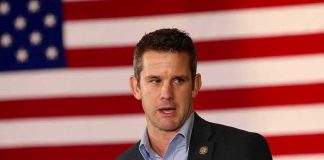

A little-read food magazine interview from 2023 just blew up Wisconsin politics by exposing how the Democrats’ leading candidate for governor once survived a teenage bipolar spiral, self-harm by cutting, and a lithium overdose—and now wants to abolish prisons and Immigration and Customs Enforcement.
Story Snapshot
- Francesca Hong’s own 2023 interview describes a severe teen mental health crisis, including bipolar diagnosis, cutting, hospitalization, and a lithium overdose.
- That unearthed interview is now driving a “too unstable to govern” narrative against Wisconsin Democrats’ frontrunner.
- Hong also backs radical goals such as abolishing prisons and Immigration and Customs Enforcement, plus past calls to defund police.
- The clash is over whether her mental health history and far‑left agenda make her unfit to be governor in a swing state.
How a niche food magazine turned into a political weapon
Wisconsin State Representative Francesca Hong, a Democratic Socialist and former chef from Madison, is the polling leader in the Democratic primary for governor in this critical battleground state. In 2023, she gave a long, personal interview to Meal Magazine, a small outlet focused on food and culture. That piece stayed mostly under the radar until conservative media and activists dug it up this summer and began quoting it as proof she is “too mentally fragile” to lead the state.
In the Meal Magazine interview, Hong described what she called a “mental breakdown” at age 18. She said she did not walk at her high school graduation because she spent a week in a child psychiatric hospital. She talked about feeling like nothing had meaning, feeling numb, and being scared by how little she could feel. That is the passage now being screenshotted, clipped, and replayed across social media and partisan sites.
What Hong said about bipolar, cutting, and lithium
The most explosive lines come later in the same interview. Hong told the magazine that during that crisis she began self‑harming “to feel something” and confirmed that it was cutting. She then said, “I was diagnosed with bipolar disease. I was taking SSRIs and I’d overdosed on lithium.” Lithium is a standard mood stabilizer used to treat bipolar disorder, and an overdose can be serious. That single paragraph is now the anchor for posts claiming she admitted to being “mentally ill” and dangerous.
None of these mental health details were leaked medical records. They were Hong’s own public words, given voluntarily three years before she ran for governor. Conservative writers argue that this makes the story fair game and undermines any claim that her history is private. From an American conservative, common‑sense view, when a candidate chooses to share something this serious in print, voters are justified in asking whether those issues are truly behind her and how they might affect her judgment under pressure.
The radical policy agenda wrapped around the mental health story
The controversy is sharper because the mental health history is not the only concern. Hong has built her brand on “abolitionist” ideas. She has called defunding police a first step toward abolishing them and has voiced support for abolishing prisons, while acknowledging a governor cannot do that alone. In newer commentary and questionnaires, critics say she backs abolishing Immigration and Customs Enforcement and supports policies they see as soft on crime and border security.
She has also attacked decisions by hospitals that stopped performing experimental gender procedures on minors, calling their caution “cowardly.” For many center‑right voters, this combination matters more than her diagnosis itself. The worry is not just that she once had bipolar disorder, but that she now pairs a past of self‑harm and hospitalization with an agenda that weakens law enforcement, empties prisons, and champions radical cultural experiments on kids. Seen through that lens, her history feeds a story about judgment rather than mere stigma.
How the right is framing Hong, and how the left is pushing back
Sites such as The Gateway Pundit and The Post Millennial set the tone by tying Hong’s bipolar story to her “abolish ICE and prisons” rhetoric in one breath. Commentators at American Thinker and on social media repeat the same key facts—diagnosis, cutting, hospitalization, lithium overdose—and argue they show she is “too mentally fragile to become governor.” They highlight her own quote about being near an anxiety attack in a Culver’s because there were “too many old white people” as evidence of bias and emotional volatility.
Progressive defenders respond that the crisis happened about twenty years ago, when Hong was a teenager, and that she has since built a career, a business, and a political life. To them, this is a story of resilience and openness about mental health. They accuse conservatives of weaponizing a long‑ago illness to smear a candidate whose real “crime” is being a successful democratic socialist in a state President Trump won. They argue that if recovery means anything, it must mean someone can move past a diagnosis and still serve in high office.
The real question for Wisconsin voters
There is no serious dispute about what Hong said in 2023; the Meal Magazine transcript is clear. The fight is over what those facts mean. One side says a person who has cut herself, overdosed on lithium, and been hospitalized for bipolar disorder should never be one bad news cycle away from the governor’s desk. That view lines up with a traditional, stability‑first idea of leadership: when nuclear plants, riots, or terror threats are on the line, you pick the steadiest hand you can find.
The other side says judging her solely on a teenage breakdown keeps the old stigma around mental illness alive and ignores two decades of life since. Common sense suggests something in between: voters should weigh both the seriousness of her past and the clarity of her present. When you add in her radical plans to reshape policing, prisons, and immigration enforcement, the mental health story becomes part of a broader question: is Francesca Hong a bold reformer whose pain forged empathy, or a risky ideologue whose history and agenda together are a bridge too far for a purple state?
Sources:
thepostmillennial.com, thegatewaypundit.com, womenshealth.com.au, x.com, meal-magazine.com, youtube.com, facebook.com, en.wikipedia.org