
An American congressman says armed Israeli settlers held his delegation on a West Bank road while Israeli soldiers stood with the gunmen, not with the Americans.
Story Snapshot
- Congressman Ro Khanna says armed settlers blocked his van and detained his group for over an hour.
- Khanna claims Israeli soldiers backed the settlers instead of protecting a visiting U.S. delegation.
- Israeli military officials deny detaining anyone and say they dispersed civilians and reopened the road.
- The clash exposes deeper questions about U.S. policy, settler power, and basic rules of safety for American officials abroad.
An American lawmaker stopped at gunpoint on a deserted West Bank road
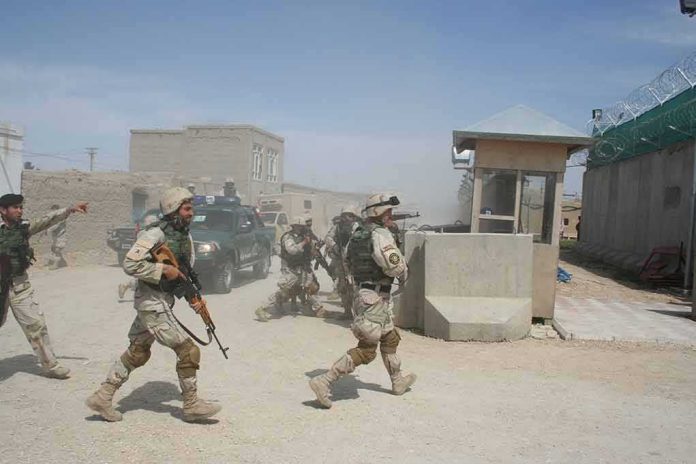
Congressman Ro Khanna, a Democrat from California, traveled to the southern West Bank to visit a Palestinian village that residents had abandoned after repeated attacks by Israeli settlers. His team expected tense stories, not direct confrontation. Khanna says that as his group drove near the empty village, masked men with M4 rifles surrounded their van and blocked the road, refusing to let them pass. The gunmen were described as Israeli settlers using American-made rifles.
Khanna’s aide, Cameron Kasky, says the group was held for more than an hour on that road. They called the United States Embassy in Jerusalem and asked for help while stuck between armed civilians and a foreign military. Kasky says officers who appeared to be Israeli police eventually arrived and ended the standoff, allowing the Americans to leave. This was not a protest or a meeting gone wrong. It was a roadside detention that the congressman describes as happening at gunpoint.
Khanna’s charge: soldiers sided with settlers, not with Americans
Khanna did not mince words about what he saw. He says the settlers “detain us. They block off the road. And then they call the Israel Defense Forces and the Israel Defense Forces is on their side, not on the side of the Americans.” He claims soldiers came, spoke with the settlers, and instead of clearing the way, helped maintain the blockade. In his telling, Israeli troops even moved a vehicle to further block the road, extending the detention.
That detail matters because it moves the story from rogue civilians to official involvement. Armed citizens blocking a road is one level of danger. Foreign soldiers standing with those citizens while an American congressional delegation waits in the van is another. To many Americans, especially conservatives who value strong borders and clear security rules, the idea that the military of a close ally would not protect U.S. officials is both shocking and unacceptable. Khanna casts the episode as a “huge mistake” by Israeli forces.
The Israeli military denies detaining anyone and offers a different story
The Israel Defense Forces issued a statement rejecting Khanna’s description. Military spokespeople say they received a report that Israeli civilians were “unlawfully blocking the vehicles of foreign nationals and members of the media.” According to the military, soldiers were sent to the scene, “quickly dispersed the Israeli civilians, and reopened the blocked road.” They insist the troops did not help block the road and did not detain the visitors at any point.
The military also says the identity of at least one armed person is under review. That language suggests that Israeli authorities do see something wrong with what the civilians did. Yet the official account still softens the core concern. It frames the incident as a brief blockage fixed by soldiers, not as a prolonged detention where an American lawmaker felt abandoned. This gap between Khanna’s experience and the formal statement raises hard questions about accountability that many Americans would expect to be answered when taxpayer money supports a foreign military.
A flashpoint in a larger pattern of settler power and security disputes
This confrontation did not happen in a vacuum. The United States State Department’s human rights reporting describes a pattern where Israeli settlers in the West Bank often face little punishment for violence or intimidation against Palestinians. Israeli security forces regularly detain Palestinians for long periods, while settlers are rarely held, though there have been a few cases of administrative detention for Israeli citizens. Khanna’s roadblock fits into that broader picture of uneven enforcement and contested security roles.
U.S. Rep. Ro Khanna said Saturday that he was detained by settlers and the Israeli military in the occupied West Bank and released only after calls to the American Embassy in Jerusalem.https://t.co/ThWjP6gTc8
— NBC Los Angeles (@NBCLA) July 12, 2026
Khanna’s trip highlighted a village emptied after threats and attacks, and then his own group was stopped near that same area. For Americans on the right and the left, one common-sense expectation cuts through the political noise: an ally should keep visiting U.S. officials safe and free to travel. If armed civilians can hold a congressman’s group for an hour and the soldiers on scene are accused of standing with the gunmen, not guarding the guests, then something in the security system is badly off. That is why this story is not just about one road in the West Bank, but about the basic terms of the U.S.–Israel relationship.
Sources:
feedpress.me, jpost.com, thehill.com, versa.cardozo.yu.edu, facebook.com, instagram.com