
Senator Ted Cruz is not hinting at regime change in Iran; he is saying it out loud, and then some.
Story Snapshot
- Cruz said the United States should aim for regime collapse in Iran.
- He said Washington should arm Iranian protesters so Iranians, not American troops, would do the fighting.
- He paired that idea with continued military pressure, economic pressure, and a blockade on Iranian oil sales.
- The debate is not about whether Cruz wants a tougher Iran policy. It is about how far that policy should go, and how much chaos it might unleash.
Cruz’s Strategy Is Openly Regime-Change Politics
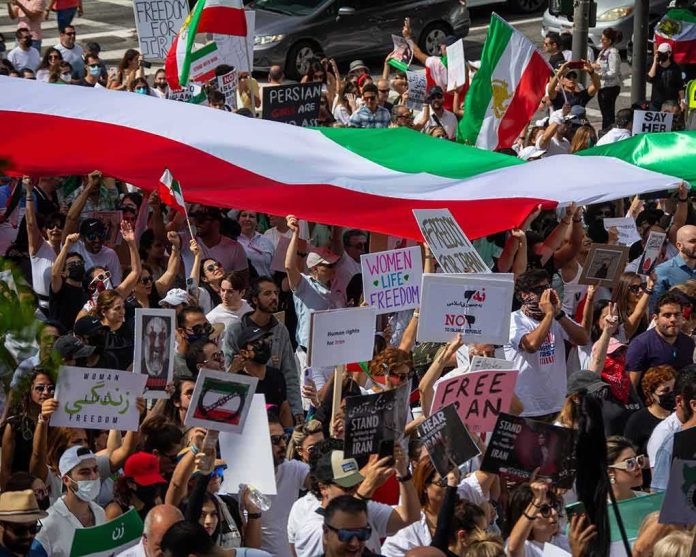
Cruz’s remarks leave little room for doubt. In his own Senate press release and in a CBS News interview, he said the goal should be to “collapse the regime,” and he tied that goal to arming Iranians who oppose their government. He also said he had urged President Trump and Israel to provide weapons to protesters, arguing that this would let Iranians overthrow their own rulers without American boots on the ground.
That is a sharper message than simple hawkishness. Cruz is not only calling for pressure. He is describing a full squeeze: strikes on military targets, more economic punishment, and support for internal revolt. He even said he does not care who comes next in Tehran, so long as the next ruler is not “an Islamist who hates America and is actively trying to kill Americans.” That line shows the core of his thinking: overthrow first, sort out the aftermath later.
Why He Thinks Pressure Can Break Tehran
Cruz has repeated the same frame across several appearances. He has said Iran is “weak,” “teetering,” and possibly near collapse, and he has argued that more pressure could tip it over. He has also compared his approach to the Cold War strategy that helped bring down the Soviet Union, presenting regime collapse as a normal tool of U.S. statecraft rather than a reckless break from it.
That comparison matters because it tells you how Cruz wants the public to see the issue. He is not selling a long, slow containment plan. He is selling a faster outcome. His case depends on a simple chain: squeeze harder, empower opposition, keep military pressure high, and the Iranian system may crack from the inside. The appeal is obvious. If it worked, the United States would avoid a large ground war. The danger is just as obvious. If it fails, the region absorbs the blast.
The Risk Is Built Into the Plan
The supplied record shows that this is not a clean or cost-free idea. Reporting tied to Cruz’s comments notes that he wants continued strikes and a blockade, not just speeches and sanctions. Separate reporting also shows that Iran has already answered U.S. action with retaliation, including missile attacks on American-linked targets. That makes the escalation risk easy to see. Pressure meant to weaken Tehran can also trigger a wider fight.
BREAKING: As U.S.-Iran talks continue, Sen. Ted Cruz said the Trump administration should arm Iranian protesters, arguing that the U.S. objective should be the "collapse" of Iran's current regime.#Breaking #Iran #US #Geopolitics
— Market Brief by DF (@BriefByDF) August 7, 2026
There is also a practical problem. Cruz’s argument rests heavily on his own confidence that the regime is close to cracking. The materials provided here do not include an independent intelligence estimate, a legal finding, or a war-game showing that collapse is likely, or that arming protesters could be controlled once weapons move into a live conflict zone. That does not prove he is wrong. It does mean his plan is built more on conviction than on public proof.
What This Says About Trump-Era Iran Policy
The fight over Cruz’s comments reflects a deeper split in American politics. One camp sees maximum pressure as the last, best shot at forcing change in Tehran. The other sees it as the same old trap: a grand promise of liberation followed by a bigger mess. Cruz clearly belongs to the first camp. He wants the United States to act hard, act fast, and help the Iranian opposition do the rest.
For Trump, that leaves a familiar test. Pressure can sound decisive on television, especially when the words are “regime collapse.” But the real measure is what happens after the slogans fade. If the plan depends on armed street revolt, sustained strikes, and a blockade, then the question is not whether it sounds tough. The question is whether it stays in control once the first shot is fired.
Sources:
cbsnews.com, cruz.senate.gov, youtube.com, newsmax.com, facebook.com