
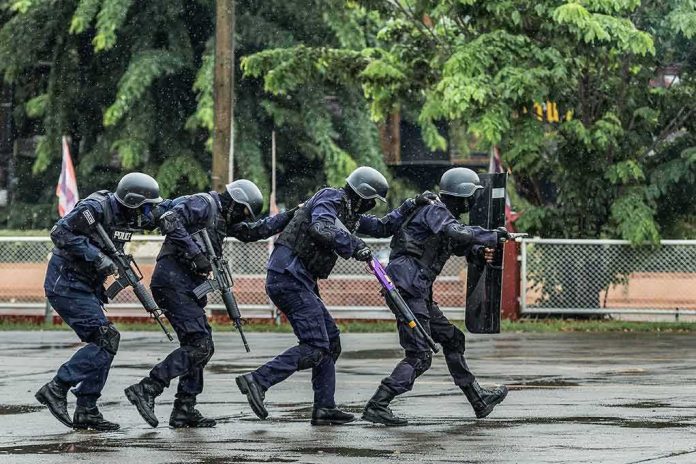
Police shot and wounded an armed, aggressive man outside Sweden’s Royal Palace during a Tuesday evening response in central Stockholm.
Story Snapshot
- Police answered calls about a man acting aggressively with a weapon near the Royal Palace.
- Officers fired live rounds; the man was hit and taken to a hospital by ambulance.
- Injuries were described as serious but not life-threatening, police said.
- Authorities stated there was no danger to the public after the shooting.
What Police Say Happened Outside the Palace
Stockholm police said they arrived at the Royal Palace on Tuesday evening after reports of a man acting aggressively with a weapon. Officers used their service firearms during the operation. The man was struck and transported to a hospital by ambulance. Police on scene assessed his condition as serious but not life-threatening. They also stated there was no ongoing threat to bystanders in the area after the shooting. The alert came just after 6:30 p.m., local media reported.
One outlet reported the man may have held a knife, but police did not publicly confirm the exact weapon. Officials focused their early statements on the threat and the response rather than the specific item in his hand. The scene sits at the heart of Stockholm’s old town, where security presence is constant and ceremonial guards draw crowds. The setting explains the fast response and the careful wording police used while the operation continued.
Why The Response Fits Sweden’s Use-of-Force Profile
Sweden sees relatively few police shootings compared with many countries, which makes each incident stand out. Research on police shootings shows that officers often encounter sudden violence during routine calls, like disturbances, where threats can escalate in seconds. That pattern aligns with a report of an aggressive person with a weapon in a crowded, symbolic place. The legal frame for police firearms in Sweden centers on self-defense, lawful authority, and emergencies where people face imminent harm.
Early coverage also tends to lean on official statements for the first draft of events. Studies of media framing around police force show that initial reports highlight threat, procedure, and safety to stabilize public order. That explains the clear emphasis on “no danger to the public” and the restrained detail on the weapon itself. The goal is to calm the scene and avoid panic near a national landmark, while investigators sort facts and collect evidence for a fuller record.
What We Know, What Matters, and What Comes Next
The firm points are straightforward. Police answered a call about a dangerous situation. Officers fired, hit the suspect, and got him to the hospital. The injuries were serious but not considered life-threatening. The area was cleared of further threat. These are the anchors that support public trust after a tense moment in the capital’s ceremonial core. They also track with common-sense priorities: stop the threat, protect bystanders, and secure immediate medical care.
Some outlets reported the injury was to a leg and suggested the weapon was a knife. Police have not specified that publicly, and they are not required to do so during an active operation. The essential question is simpler: did officers face a credible threat that justified live fire? Based on the police account at this early stage, the answer is yes. That view aligns with American conservative values of law, order, and the duty to neutralize danger without delay when lives may be at risk.
Sources:
express.co.uk, nampa.org, ground.news