

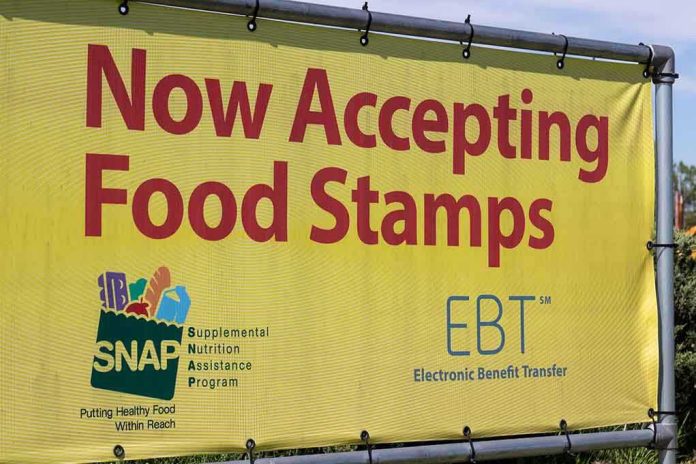
Rep. Nancy Mace introduces a bold new measure to curb SNAP fraud by requiring photo identification on EBT cards, stirring nationwide debate.
Story Overview
- The FAIR Act mandates photo IDs on SNAP EBT cards to minimize fraud.
- The bill restricts card use to the person whose photo is on it, with some exceptions.
- Retailers must verify the card photo before completing a transaction.
- Efforts aim to protect taxpayers and streamline resources for eligible recipients.
Addressing SNAP Fraud
Nancy Mace has introduced the FAIR Act, a legislative proposal aimed at reducing fraud within the Supplemental Nutrition Assistance Program (SNAP). The bill requires photo identification on all Electronic Benefit Transfer (EBT) cards, restricting their use to the cardholder whose picture appears on the card. This measure seeks to align the program with other ID-required activities, such as purchasing age-restricted products or voting, providing a “common sense” solution to protect taxpayer dollars.
The bill’s introduction comes amid heightened concerns over SNAP fraud, with federal data indicating hundreds of thousands of fraudulent claims and unauthorized transactions. Notably, South Carolina alone has reported several thousand cases of stolen benefits. This initiative aims to address these issues by ensuring that SNAP benefits reach the individuals who are genuinely in need, thus restoring public confidence in the program.
Operational and Implementation Details
The FAIR Act includes several operational requirements, such as placing a photo on the EBT card, requiring retailers to verify this photo at the point of sale, and allowing additional photo cards for other authorized household members. The USDA is tasked with implementing this change within an 18-month window. Massachusetts serves as a precedent, where photo EBT cards are already in use. This move seeks to standardize such measures nationally, minimizing state-level disparities.
However, the implementation of photo EBT cards is not without challenges. States and retailers must assess the costs and systems changes necessary to comply with these new requirements. Retailers, in particular, are concerned about the potential increase in transaction times and the added responsibility of verifying cardholder identities.
Potential Impact and Reactions
In the short term, this proposal is likely to spark a national debate over the balance between SNAP integrity and accessibility. If passed, states may need to prepare for significant administrative adjustments, including new card issuance processes and retailer training programs. The bill could also influence broader welfare reform discussions and farm-bill negotiations.
Nancy Mace targets fraud with bill to require photo on SNAP EBT cards https://t.co/zUOUNxYhQB
— Fox News Politics (@foxnewspolitics) December 5, 2025
Long-term implications of a national photo-ID requirement could reshape the SNAP landscape, embedding identity verification more deeply into everyday transactions. While this may reduce some impersonation or unauthorized card use, it also risks introducing friction at checkout, particularly for multi-adult households or recipients lacking access to compliant identification.
Stakeholder Perspectives
The FAIR Act affects a wide range of stakeholders, including SNAP recipients, retailers, and state agencies. For low-income households, new processes for card issuance and photo capture may pose challenges, especially for those without easy access to official identification. Vulnerable groups, such as seniors and people with disabilities, may face both added scrutiny and tailored accommodations.
Advocacy groups express concerns about potential stigmatization and access barriers, while taxpayer and anti-fraud advocates support stronger safeguards. Industry experts argue that while photo requirements can deter some misuse, they may be less effective against organized fraud schemes such as trafficking or skimming. Retailers, meanwhile, emphasize the need for balance between fraud prevention and maintaining efficient customer service.