
Capitol Police say they pulled a full-size guillotine from a pickup truck parked beside the Supreme Court, then hauled the driver away for carrying a dangerous weapon.
Story Snapshot
- U.S. Capitol Police say they seized a guillotine from a truck near the Supreme Court.
- Officers arrested a 35-year-old California man on a dangerous weapon charge.
- Federal law bans dangerous weapons on Capitol grounds, not just guns.
- Police often treat unusual objects as weapons near sensitive federal sites.
What Police Say Happened On East Capitol Street
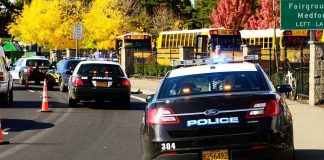
United States Capitol Police reported spotting a guillotine in the bed of a pickup truck along the 100 block of East Capitol Street on Tuesday afternoon. Officers moved in and arrested 35-year-old Philan-Tam-Duy Le of Julian, California, on a charge of carrying a dangerous weapon. Police say the truck was parked alongside the Supreme Court and that they seized the guillotine from the vehicle before taking the driver into custody. Local outlets and national press echoed the core police account.
Police statements did not claim any injury or assault linked to the device. The top-line allegation centers on possession of a dangerous weapon on or near restricted federal grounds. Capitol Police often publish brief arrest summaries within hours. That cadence shapes the early public frame. It also underscores how routine patrol work still carries high stakes on Capitol Hill, where odd gear can trigger swift action in a sensitive zone.
Why A Guillotine Can Be A “Dangerous Weapon” In D.C. Law
Federal law bans people from carrying firearms, explosives, incendiaries, or dangerous weapons on Capitol grounds without authorization. The statute uses broad language by design. It covers more than guns and knives and gives officers room to act when they see a tool or device that can injure people or damage property in that setting. Congress and the courts have long backed such discretion around the Capitol complex to keep threats away from lawmakers and the public.
Capitol Police habitually rely on that statute for cases that involve unconventional items. Prior arrest reports list swords, bows, and large blades found in vehicles near the complex. Those cases did not hinge on whether the object looked strange. They turned on whether the object fit the legal box of a dangerous weapon at a high-security location. The guillotine case fits that same enforcement pattern, even if the object draws extra attention because of its historic meaning and size.
How This Fits A Broader Security Pattern On The Hill
Since the Capitol attack in 2021, officers on the Hill have acted faster on unusual risks and tools. Agencies, auditors, and lawmakers have pushed for stronger readiness and clearer use-of-force policies. Capitol Police updated core guidance in 2023. The result on the ground is more proactive stops, quicker decisions, and a lower tolerance for odd gear near the complex. That posture shows up in weekly arrest logs as officers intercept both common and rare weapons near federal buildings.
Media coverage of “novel” objects near the Capitol often spikes before technical details arrive. Readers see the headline first and the legal frame second. The statute, not the spectacle, decides outcomes. American conservative values stress order, equal enforcement, and respect for lawful authority. On that score, the facts line up: police saw a device that could cause grave harm, found it in a public place next to the Supreme Court, and enforced a clear federal rule designed to prevent mayhem.
What We Know Now, And What Comes Next
Capitol Police named the suspect, the location, the time window, and the charge. Reporters confirmed the basic account through the official release and scene details. The next steps usually include a first court appearance, formal charging decisions, and any defense claims. As with all arrests, a charge is an allegation, not a conviction. But the core policy question is settled law: you cannot bring a dangerous weapon onto or near Capitol grounds. The guillotine was seized, and the driver was booked under that rule.
U.S. Capitol Police arrest a man who they say was carrying a guillotine in the bed of a pickup truck. https://t.co/7F4up17WxJ
— NBC News (@NBCNews) August 26, 2026
Some readers will ask whether the guillotine was “real” or theatrical. Police framed it as a dangerous weapon, not a prop. On federal property, form often follows function, and function follows context. A device built to inflict severe harm earns no free pass because it is unusual. The Capitol complex is not a stage set; it is a seat of government. Common sense says leave the blades at home. The law says the same thing, in plainer words, with real teeth.
Sources:
mediaite.com, latimes.com, uscp.gov, wjla.com, wusa9.com, uscode.house.gov