

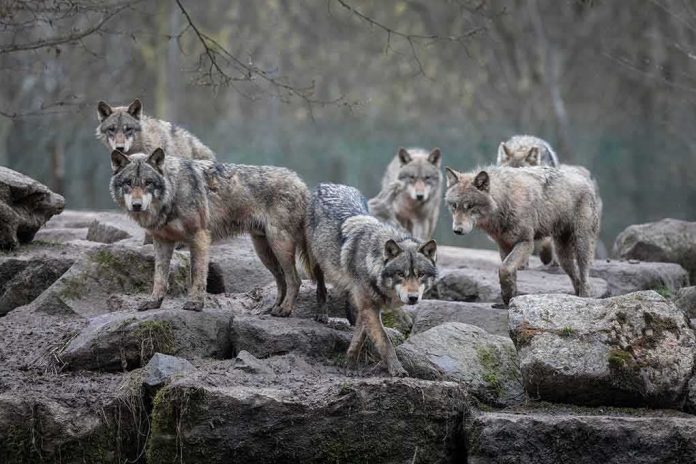
Police say a wolf attacked an eight-year-old girl inside a Brandenburg wildlife park, and everything that followed tells a stark story about safety and speed.
Story Snapshot
- Police attributed the attack to a wolf at Wildpark Johannismühle near Baruth/Mark.
- The attack happened around 9:30 a.m. inside an enclosure with two other children and a park employee present.
- The girl suffered serious injuries and was flown by rescue helicopter to a Berlin hospital.
- The park said it is cooperating fully with authorities and closed after the incident.
What Happened And Where
Police in Brandenburg said a wolf injured an eight-year-old girl at Wildpark Johannismühle in Baruth/Mark. The site sits in the Teltow-Fläming district, south of Berlin. Officers opened an investigation at the park soon after the emergency call. Reporters identified the location and confirmed the active police work at the scene. The police later told Deutsche Presse-Agentur that the attack came from a wolf, which moved the story from rumor to official attribution.
First responses focused on care for the child. Rescue teams moved fast to stabilize her and called in a helicopter. The girl was flown to Unfallkrankenhaus Marzahn, a major trauma center in Berlin. Outlets aligned on the injury description as serious. They also agreed on the transport by air, which signals urgency and standard trauma protocol for suspected bites with heavy bleeding or deep tissue damage.
The Timeline Police Gave
Police described a clear window. The attack occurred at about 9:30 a.m. The child was inside an enclosure with two other children and a park employee. That detail matters more than it first seems. It puts adults and peers within sight and sound when the attack started. It also raises normal safety questions that police said they are examining, including whether negligence played a role in access or supervision inside the enclosure.
Officials did not name the child, the park worker, or the specific animal involved. They also did not say if one wolf or more than one was present. Early alerts used a broader phrase, “at least one wild animal,” before the police named a wolf to the press. That kind of shift is common in fast-moving cases, where first responders report what they see and later narrow it with more information from the scene.
The Park’s Immediate Response
Wildpark Johannismühle said it is working fully with every authority involved. That signals access to records, staff, and any site data that can show how an enclosure visit took place and why. The park also closed after the incident, which is a normal step when investigators need time and space to review gates, barriers, keeper logs, and any relevant safety procedures tied to guided visits or educational programs.
Police are looking at the basics that always matter in animal-contact cases. Who approved entry into the enclosure. What the written rules say. How barriers work. Whether a stand-off space or double-gate system existed and was used. These points determine not only what happened but how to prevent a repeat. The answers also shape any follow-up by regulators or prosecutors.
Why This Case Hits A Nerve In Germany
Public debate on wolves in Germany often centers on free-ranging packs near farms and villages. Studies covering 2002 to 2020 note no fatal wolf attacks in Europe during that period, and they stress how rare verified attacks are overall. Many past cases worldwide involved unusual triggers like rabies or feeding by people. Incidents inside parks, however, sit in a different bucket, where enclosure design and human practices can dominate the risk picture.
A young girl has been attacked by a wolf in a German wildlife park, police have said, adding that the eight-year-old was seriously injured https://t.co/kfnjeC6eFE
— RTÉ News (@rtenews) October 28, 2026
The pattern matters to parents and policymakers alike. Free-ranging wolves tend to avoid people. Managed settings add new factors: human presence, feeding routines, and physical barriers that must work every time. When parks invite learning and close viewing, they also take on a duty to control contact points, especially with children. American conservative common sense says rules, training, and clear lines of authority should be tightest where the stakes are highest, which includes any child near a large predator.
What To Watch Next
Expect police to collect statements from the staff member and the two children who were present. Investigators often review access logs, radio traffic, and any camera footage near entry points. Medical documentation can also shape findings if doctors record bite patterns that match a wolf’s dentition. The park’s safety policies will come under a microscope, along with how they were applied that morning. Those steps point to practical fixes, not just blame.
Sources:
insiderpaper.com, sueddeutsche.de, tagesspiegel.de, op-online.de, merkur.de, spiegel.de