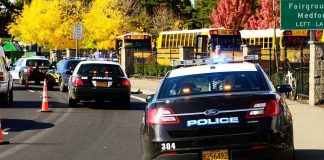


A student paused a phone recording in a boys’ locker room, handed it to staff, and within a day police arrested the school’s head football coach, according to authorities.
Story Snapshot
- Students found a phone recording in a Tracy High School locker room and turned it in.
- Police said the phone belonged to head coach Jeffrey Pribble, who was arrested the next day.
- Locker rooms carry strong privacy protections under court rulings and school policy.
- Officials say the case involves recording in a high-privacy space on campus.
Police: Students’ Find Leads Directly to Coach’s Arrest
Tracy Police Department said students at Tracy High School discovered a cellphone actively recording in a boys’ locker room while they were changing. The students paused the recording and turned the device over to staff. Police said the phone belonged to head football coach Jeffrey Pribble, 48, and officers arrested him less than 24 hours later on suspicion of recording students in a private area on campus. The arrest followed interviews and the recovery of the device, according to local reporting.
Reporters and parents described shock and anger as details spread across the community. Multiple outlets confirmed the arrest and its link to the locker room discovery, citing police as the source. School officials referenced student privacy policies and said they were working with law enforcement. Coverage from regional television and local digital news matched the core timeline: student discovery, staff handoff, police confirmation, and the coach’s arrest within a day.
Why Locker Rooms Are Treated as Highest-Privacy Zones
Courts have ruled again and again that video in locker rooms crosses clear constitutional lines. A federal appeals court held that placing cameras where students change violates the Fourth Amendment right to privacy. Judges called such surveillance “inherently intrusive” and outside reasonable school searches. School law guidance is just as clear: districts can use cameras in public areas like halls, but not in bathrooms or locker rooms, where students have strong privacy rights. These lines exist to protect kids’ dignity when they undress.
District policies echo the law. Tracy Unified’s handbook bars recording devices in ways that invade privacy and warns that security video aims at safety in public spaces, not changing areas. That context matters. If officers confirm the phone recorded students in a locker room, the legal path points to state voyeurism statutes and related offenses. Common sense aligns with the law here. Parents have every right to expect that no one, staff or student, records their kids while they change at school.
What Police and Schools Typically Do Next
Police usually seize the device, secure any files, and seek warrants for full forensic review. Detectives may interview students, staff, and coaches to map the timeline. Prosecutors then decide charges based on evidence of recording in a private space, the ages involved, and state law. School leaders often place the employee on leave, restrict campus access, and coordinate counseling and Title IX support for students who were exposed to the camera or may appear in footage.
A cellphone allegedly recording inside a Tracy High locker room led to the arrest of football coach Jeffrey Pribble, according to police.
The district placed Pribble on administrative leave, while principal Jon Waggle addressed the incident.https://t.co/w7JUISd5QZ
— Dylan Ackermann (@DylanAck10) September 12, 2026
Expect policy checks as well. Most districts tighten supervision, add locker room walkthroughs, and retrain staff on device rules. Risk managers publish simple steps: keep phones out, inspect spaces daily, and give students clear ways to report concerns without fear. Those actions do not need a new task force or a fancy gadget. They need adults with keys, clipboards, and a routine. Families want proof that the most private rooms on campus are treated like it.
The Stakes: Privacy Is Not Optional in Schools
Hidden recording in a locker room is not a “tech mistake.” It is a breach of the core trust that lets parents send kids to school. The Constitution, state law, and district policy all point in the same direction because the harm is obvious and lasting. This case also shows how fast a simple act by brave students—pause, hand it in, speak up—can trigger real accountability. That is the right cultural norm: see something wrong, stop it, tell an adult, call the police.
Sources:
nypost.com, kcra.com, stocktonia.org, archive.org, cbsnews.com, resources.finalsite.net, abc10.com, localnewsmatters.org, mason.gmu.edu