
DFW Airport dropped its restroom wudu plan within hours of Governor Greg Abbott’s warning shot.
Story Snapshot
- DFW considered adding two ablution stations inside Terminal D restrooms, then backed off after Abbott intervened.
- Abbott ordered a review of state grants and said government airports cannot favor one religion.
- DFW has hosted ablution facilities near its Terminal D chapel since 2019 without controversy.
- A state filing and reports cited a $300,000 price tag for the new plan, which faced fast backlash.
What changed at DFW in one tense news cycle
Dallas Fort Worth International Airport floated a facilities tweak that became a cultural flashpoint. A state filing showed plans to add one ablution station in a men’s restroom and one in a women’s restroom in Terminal D. Reports pegged the renovation at about $300,000 and tied it to Islamic pre-prayer washing, called wudu. Governor Abbott blasted the idea as illegal religious favoritism at a government airport and ordered a grant review. DFW then said it would not move forward with the proposal.
Airport leaders had framed the idea as an internal service evaluation, not a new religious policy. They noted DFW already offered an ablution station on the international side for years without issues, and they would weigh safety, customer service, and cost before any approval. The filing’s funding claims shifted in the media scrum, and the airport stressed the proposal was not yet approved. After Abbott’s move, the practical debate turned into a legal one, and the project died on the vine.
The overlooked fact: DFW already built wudu capacity in 2019
DFW added two ablution stations in 2019 when it relocated the Terminal D interfaith chapel near Gate D40. The airport announced those stations for ritual purification at the chapel’s entrance. Travelers used them for years without the national headlines that hit this summer. That history matters. It shows the airport considered this a standard amenity near a multi-faith space, not a new endorsement of one religion. The difference now is location and optics: bathrooms on the concourse instead of the chapel wing.
Supporters of the restroom plan argued a sink built for feet prevents slip hazards and keeps counters and floors drier. That claim fits common sense in high-traffic restrooms with international flyers on tight connections. The state filing and coverage placed the cost at about $300,000 for the buildout. Critics did not dispute the sanitation case; they challenged the premise of designing a restroom fixture for a single faith, inside a publicly owned airport. That political framing beat the facilities framing in a day.
Abbott’s legal line and the conservative reading of fairness
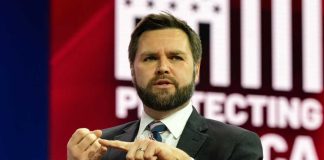
Abbott’s statement set a bright line: government-owned airports cannot favor one religion over others. He called DFW’s plan illegal and sent a message with teeth by directing a review of state grants and referring airports for federal review. That is a classic equal-treatment stance. Public institutions must avoid signaling endorsement or offering faith-specific perks with public resources. The law often allows religion-neutral accommodations; the fight is when form and placement look exclusive rather than open to all.
Dear Republicans,
Do not fall for the propaganda claiming there are no wudu stations already in Dallas or Houston airports.
That is simply untrue.
DFW Airport has had fully functional ablution (wudu) stations in its Terminal D interfaith chapel since 2019.
Houston’s Bush… https://t.co/6z2hv9xEl5 pic.twitter.com/Nl52PZpFhf
— Amy Mek (@AmyMek) August 15, 2026
How strong is the legal footing? Airports across America host chapels and interfaith rooms as neutral spaces, and courts tend to uphold those arrangements when they serve all comers. DFW’s 2019 design sat within that tradition near a multi-faith chapel. Moving ablution fixtures into general restrooms branded for one practice created the appearance problem. Based on the facts, Abbott’s fairness argument tracks with common sense and the rule that public venues should not privilege one creed’s ritual in shared spaces.
What this skirmish teaches other airports
This episode is a playbook. Step one: a small facility idea appears in a state filing. Step two: the label “Islamic foot-washing” ricochets online. Step three: elected leaders turn a facilities choice into a public-values test. The fix for airports is simple but strict. Keep faith-related fixtures inside or adjacent to clearly neutral, shared chapels. If adding any ritual-specific feature beyond that zone, publish a full accommodation plan showing how every major faith’s needs get equal treatment, with clear costs and funding sources.
Airports serve the world, but they answer to local taxpayers. The winning path respects both. Build neutral spaces that welcome many. Meet safety and cleanliness goals with design that serves anyone, regardless of faith. If a fixture clearly maps to one ritual, keep it with the chapel or present a parallel, faith-agnostic feature set. That approach avoids culture-war ambushes, prevents slippery floors, and keeps the focus where it belongs: moving people, not moving political lines.
Sources:
townhall.com, dailysignal.com, foxnews.com, dfwairport.com, youtube.com