

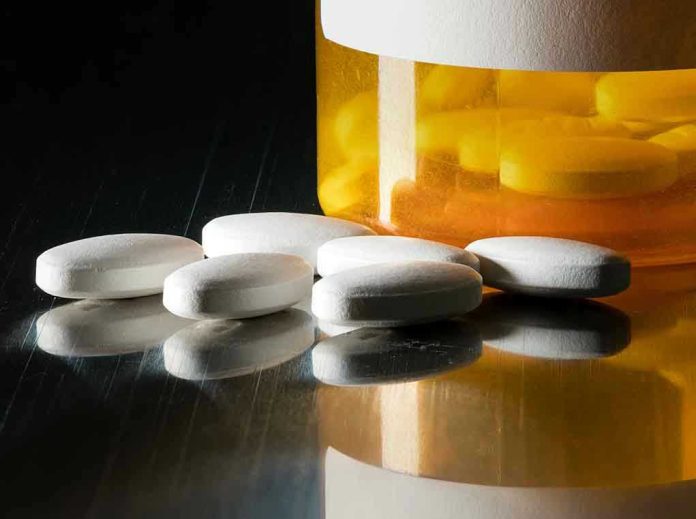
Despite widespread fears about fentanyl-laced marijuana, there has never been a verified case of intentional cannabis contamination, while fentanyl alone kills 199 Americans daily through contaminated cocaine, heroin, and counterfeit pills.
Story Overview
- Fentanyl caused 72,776 deaths in 2023, representing 69% of all drug overdose fatalities
- Marijuana use has expanded to 55 million Americans with minimal overdose risk
- Federal agencies confirm fentanyl contamination occurs in cocaine and heroin, not cannabis
- One lab-confirmed cannabis case in 2021 was determined to be cross-contamination, not deliberate mixing
- Fentanyl is destroyed when burned, making smoking contaminated marijuana ineffective for overdose
The Fentanyl Crisis Reaches Unprecedented Scale
Fentanyl overdose deaths have transformed the American drug landscape since 2013, marking the deadliest phase of the opioid epidemic. This synthetic opioid, up to 100 times more potent than morphine, now drives nearly seven out of ten overdose fatalities nationwide. West Virginia leads with a staggering death rate of 69.2 per 100,000 residents, while states like Nebraska report just 3.3 deaths per 100,000 people.
The crisis disproportionately impacts specific populations, with Black Americans experiencing the highest overdose rates at 32.1 per 100,000 people. Adults aged 24-44 comprise more than half of all fentanyl deaths, reflecting a generation caught between prescription opioid restrictions and increasingly dangerous street alternatives. Unlike prescription medications, illicit fentanyl carries unpredictable concentrations, making every use potentially fatal.
Marijuana’s Expanding Acceptance Contrasts Sharply
While fentanyl devastates communities, marijuana has followed an opposite trajectory toward mainstream acceptance. Fifty-five million Americans now use cannabis regularly—exceeding the 36.5 million tobacco smokers by more than 50 percent. State-level legalization continues expanding, creating regulated markets and generating tax revenue while virtually eliminating marijuana-related overdose deaths.
The safety profile difference between these substances couldn’t be starker. Marijuana users face potential long-term mental health concerns, particularly those beginning use before age 12 who show twice the likelihood of developing mental illness. However, acute overdose risk remains negligible compared to fentanyl’s immediate lethality with doses as small as 2 milligrams.
The Contamination Myth That Won’t Die
Despite persistent social media warnings about fentanyl-laced marijuana, federal agencies and state health departments have found no verified intentional contamination cases. The DEA’s 2024 National Drug Threat Assessment identifies fentanyl mixing with cocaine, methamphetamines, xylazine, and other opioids—but notably excludes cannabis from this dangerous trend.
New York State’s Office of Cannabis Management reports zero confirmed cases of fentanyl contamination in regulated cannabis products. One laboratory-confirmed incident in 2021 was determined to result from cross-contamination rather than deliberate adulteration. The MATTERS Network emphasizes that fentanyl’s chemical properties make it ineffective when burned, meaning smoking contaminated marijuana would destroy the synthetic opioid before absorption.
Where Real Contamination Threatens Lives
The actual fentanyl contamination crisis occurs in cocaine, heroin, methamphetamine, and counterfeit prescription pills manufactured in illicit laboratories. Drug traffickers mix fentanyl into these substances to increase potency and reduce costs, often without users’ knowledge. This practice has transformed previously predictable drug supplies into potential death sentences.
Oregon exemplifies this trend, where illicitly manufactured fentanyl deaths nearly quadrupled from 223 to 843 fatalities between 2020 and 2022. Maine experienced similar devastation, with fentanyl-related overdoses increasing dramatically since 2017. These statistics reflect supply chain contamination in traditional opioid markets rather than expansion into cannabis products.
Sources:
USAFacts – Are fentanyl overdose deaths rising in the US?
Maine Drug Data Hub – The Fentanyl Epidemic
MATTERS Network – Fentanyl in Cannabis
Oregon Health Authority – Fentanyl Facts
Drug Abuse Statistics – Marijuana Addiction
Congress.gov – 118th Congress House Event