
A flood of bomb threats forced diversions, fighter-jet escorts, and full aircraft searches across Europe, yet no explosives were found.
Story Snapshot
- Airlines diverted and searched multiple flights after anonymous bomb warnings.
- Authorities reported no explosives on any inspected aircraft.
- One Wizz Air jet landed in Budapest after an escort by a fighter jet.
- Officials have not linked the threats to a single source.
Europe’s Skies Jolted, Procedures Hold
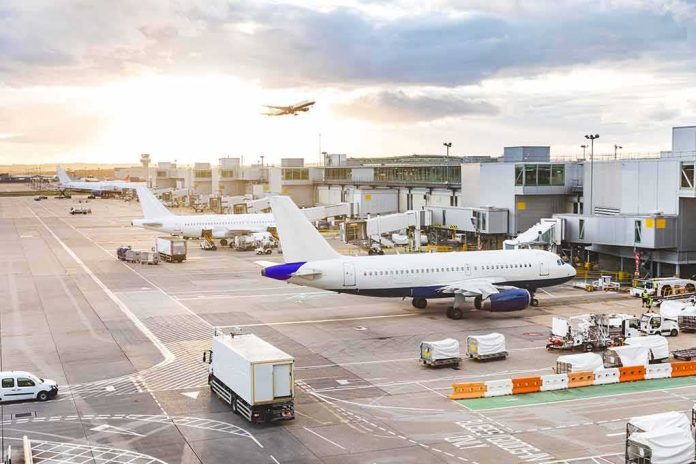
Airports and airlines across Europe acted fast after a wave of bomb warnings hit multiple flights. Crews diverted planes, closed taxiways, and called in police and military support. Officials reported that searches found no explosive devices, but the alerts still triggered full security playbooks. This response matches aviation rules: treat every credible warning as real, then clear the plane after checks. The result was delays, diversions, and tense hours for crews and passengers across several countries.
Flights run by LOT, Scandinavian Airlines, Wizz Air, and Ryanair faced diversions, inspections, or both. One aircraft received an escort by the Italian Air Force until landing, according to officials cited in the Associated Press. Airlines and airports then conducted methodical searches of cabins, holds, and baggage. Passengers and crew were screened again before releases. These steps are disruptive by design. They put safety ahead of schedule so a hoax cannot slip into a real tragedy.
Confirmed Incidents, Common Outcome
LOT reported that a Warsaw-bound flight diverted to Modlin, where police searched the plane and found no device. The airport paused operations, then reopened after the all-clear. Ryanair jets that landed in Rome from Dublin and Lisbon were inspected after anonymous warnings; police said they found no explosives on either plane. These cases mirror others across the week: strong responses, full searches, and negative results once checks ended.
A Wizz Air flight from London Luton made an emergency landing in Budapest after a threat. A Hungarian fighter jet escorted the aircraft. Wizz Air later said security checks found nothing. Authorities in Bulgaria and the Czech Republic reported similar outcomes across impacted flights: no explosives or suspicious items on board. The pattern is clear. The threats caused real disruption, but the searches uncovered no devices on any of the inspected aircraft.
Why Bomb Hoaxes Still Matter
Aviation treats every bomb warning as if it is real until proven otherwise. That mindset comes from hard history and sober math: the cost of a miss is catastrophic. Standard procedures call for immediate coordination among the airline, the airport, and security services. Diversions shift risk away from crowded hubs. Searches reset confidence step by step. These moves may feel heavy. They are meant to strip hoaxers of the chance to gamble with lives while still causing chaos.
This week’s clustering stood out more than the tactics did. Aviation security experts describe such threats as uncommon on passenger flights, and the number of impacted journeys in a tight window suggests a deliberate actor rather than random coincidence. That is a pattern judgment, not a charge. Officials have not identified who sent the warnings or tied them to a single group. The effect, however, was concrete: diversions, military escorts, airport holds, and shaken travel plans.
Facts First, Speculation Last
Officials and airlines said the searches found no explosives. Authorities have not named a perpetrator or given a shared origin for the warnings. Reports varied on the total count because incidents spanned several days and countries. That spread explains the shifting tallies. What does not change is the operational record: named flights diverted, police searched aircraft, and airports imposed controls. Those facts stand on airline statements, police updates, and ministry briefings.
9 AM Top-of-the-Hour News
Bomb threats have caused diversions and emergency landings for at least 25 flights across Europe.: “The series of warnings Thursday affected flights between Italy, Ireland, the UK, Spain, Bulgaria, Romania, Poland, Finland, Austria, Denmark, Belgium,… pic.twitter.com/nHNxX9coEh
— Worldwide News Network (@WorldwideNNX) November 5, 2026
The lesson is practical and conservative in spirit: protect life first, keep systems resilient, and deny bad actors cheap wins. Every hoax diverted a plane, tied up crews, and burned fuel and money. Yet the disciplined response also denied the hoaxers their bigger goal. No one let routine or fatigue lower the bar. That is how civil aviation stays trustworthy under stress. Expect investigators to keep tracing messages and timelines while airlines harden their filters and drills.
Sources:
facebook.com, edition.cnn.com, cbsnews.com, bbc.com, scmp.com, bbc.co.uk, washingtonpost.com