

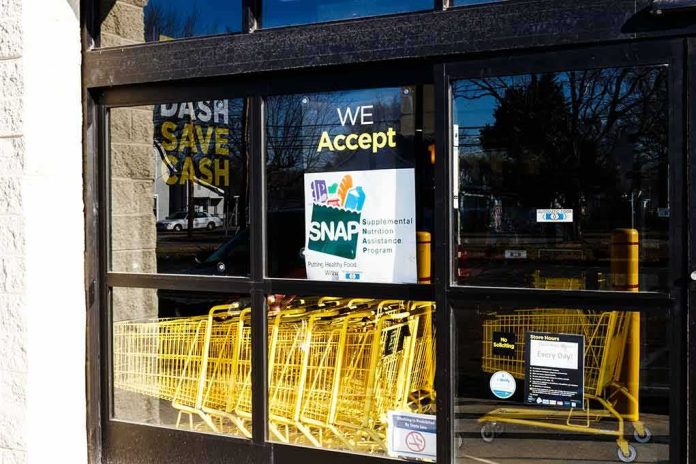
The city under Lady Liberty just turned itself into America’s biggest cash machine for welfare, and the scale is unlike anything New York has seen in thirty years.
Story Snapshot
- New York City paid about $2.7 billion in direct cash welfare to roughly 865,000 residents in one year
- Cash assistance spending is up more than 70 percent since 2022, making New York a national outlier
- Supporters say direct cash is the fastest way to prevent homelessness and hunger; critics see a huge new dependency state
- The Statue of Liberty now stands over a city testing how far a modern welfare state can go before taxpayers walk away
New York City Quietly Became America’s Biggest Cash Welfare Hub
New York City’s welfare system crossed a historic line in the year ending May 30, 2026. City records reviewed by multiple outlets show about $2.7 billion in direct cash grants went out to 864,999 people over those twelve months, a level not seen since the early 1990s reforms under Mayor Rudy Giuliani. This is not food stamps or Medicaid. It is straight cash assistance, usually delivered on a card or through biweekly checks meant to cover rent, utilities, and basic needs.
The sharp rise did not happen slowly. Fox News Digital, using city data, reported that cash assistance outlays hit roughly $2.6 billion in calendar year 2025, reaching that same 864,999 recipient count and marking about a 71 percent increase since 2022. The City Council’s finance committee presentation shows a $2.65 billion cash assistance budget for fiscal 2025 alone, supporting nearly 600,000 ongoing cases by that spring. New York has, in practice, rebuilt a large-scale welfare state inside one city.
Why Direct Cash Became New York’s Tool Of Choice
City officials did not expand cash welfare in a vacuum. Across the United States, more than 100 local direct cash programs have launched in recent years, many backed by pandemic relief dollars and private donors. These pilots generally send a steady amount of cash, often between $300 and $1,000 a month, to low-income residents with few strings attached. Mayors and policy staff argue cash is simpler, faster, and respects poor families’ ability to decide what they need most.
Research gives that argument some real weight. A learning brief on a Denver homelessness cash pilot found that a one-time unconditional transfer, followed by monthly payments, reduced homelessness and improved housing stability while saving money overall. Other studies show expanded cash like the Child Tax Credit reduced food hardship among families with children. For conservatives who value results over bureaucracy, these outcomes matter. If a dollar handed directly to a struggling parent does more than a dollar spent on a program office, shifting toward cash looks like common sense.
The Inflation Checks And The Bigger State-Level Cash Wave
New York City’s welfare surge also sits inside a broader state push for direct payments. Governor Kathy Hochul’s administration funded an “inflation refund” program in the state’s 2026 budget that mailed checks to 8.2 million residents without any application. Those checks, typically between $150 and $400, added up to over $2 billion in direct cash assistance. Combined with New York City’s welfare spending, that means residents at the bottom and middle of the income scale are seeing more government cash than at any point in recent memory.
Nationally, public welfare spending by state and local governments had already climbed to $862 billion by 2021, about 23 percent of all their direct general spending. The federal government layers roughly $1.1 trillion in welfare and anti-poverty programs on top of that, with another $700-plus billion from states and localities. When critics talk about “America’s welfare state,” New York’s aggressive move toward cash sits inside a system that already absorbs about one-third of the country’s entire economy.
Does Bigger Cash Welfare Help People Or Lock Them In?
The key question for a conservative, or any taxpayer, is not “Is poverty bad?” It is “Does this model fix it or freeze it?” Economists looking at the full history of social spending find that transfers do reduce measured poverty. One Richmond Federal Reserve brief notes that when you count benefits, the poverty rate fell from about 25 percent in the 1970s to around 15 percent today. A Cato Institute study goes further and argues that if every benefit is counted correctly, true material poverty could be under 3 percent.
Lower material hardship does not mean people escape welfare. The Richmond analysis warns that the system has failed to lift people out of poverty permanently. That matches the common-sense concern many conservatives voice: aid that makes it easier to survive but harder to move up can trap families for generations. When one city now sends cash to nearly a million residents, the risk is building a permanent class of dependents who can never quite afford to leave the system or the city’s high-cost housing market.
Liberty, Taxpayers, And The Risk Of A Welfare Capital
All of this unfolds in the shadow of the Statue of Liberty. The symbol is freedom, personal responsibility, and opportunity earned. Yet the numbers now describe a different kind of “welcome”: a city where government checks cover the gap between wages and rent for hundreds of thousands of people every month. For residents in crisis, that can be the difference between a bed and the sidewalk. For taxpayers and business owners, it looks like a city betting its future on endless redistribution instead of growth.
Conservative values focus on strong families, hard work, and limited government. Direct cash can fit that vision if it replaces bloated bureaucracies and helps people bridge short rough patches. It clashes with that vision when it becomes a way of life funded by ever-higher taxes in a city already losing businesses and wealthy residents. New York has chosen to test how far a modern welfare state can stretch in one dense, expensive city. Whether that choice leads to more independence or more dependence is the real fight now beginning under Liberty’s torch.
Sources:
townhall.com, legalinsurrection.com, citymeetings.nyc, newsbreak.com, foxnews.com, youtube.com, community.solutions, bloomberg.com, huduser.gov, pmc.ncbi.nlm.nih.gov, acf.gov