
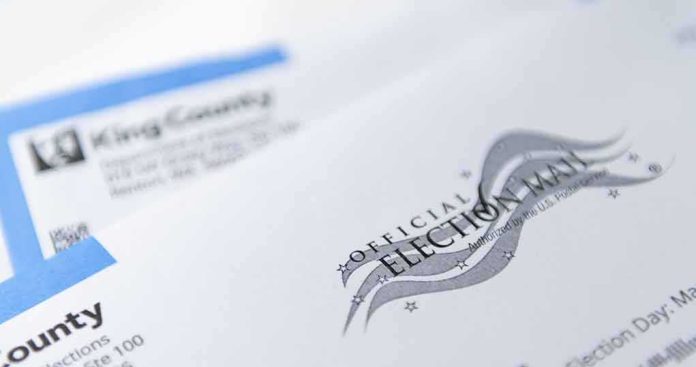
The Justice Department says more than 20,000 likely noncitizens landed on California’s voter rolls—and it wants their ballots set aside now.
Story Snapshot
- Federal prosecutors sued California to isolate ballots tied to flagged registrations.
- Officials delivered a list of about 20,000 names to the state two days before filing.
- California leaders dispute the data and demand proof that any illegal votes were cast.
- A federal court will now decide what happens to those ballots in November.
What The Justice Department Alleges, And What It Wants
The Department of Justice filed suit in federal court in Los Angeles. Prosecutors claim they identified more than 20,000 “likely noncitizens” registered to vote in California. They asked a judge to order the state to set aside any federal-election ballots linked to those names until citizenship can be confirmed. The department says it worked with Homeland Security investigators and gave state officials a list with names, birth dates, and addresses before suing.
Prosecutors argue that counting those ballots without checks would harm the integrity of the election. They say federal law allows court action to protect eligible voters by removing ineligible registrations and by stopping votes cast in violation of the rules. The department also says California refused to act on the list within a short deadline. That refusal, they argue, forced an emergency request to the court days before ballots get counted.
How California Responded And Where The Fight Lands
California’s Secretary of State says the federal government has not provided proof that the people on the list are noncitizens or that any of them voted. State officials also say they asked for the data and methods behind the list, and did not get them. The state frames the suit as a late, disruptive push. It says the request lands close to ballot counting and risks a wrongful purge that could sideline legal votes.
Reporters who reviewed court filings say federal lawyers delivered the list and then sued two days later. The lawsuit seeks to block counting of ballots tied to those registrations until checks finish. That aggressive timeline is now a central issue. A court must weigh election integrity against rules that limit sweeping voter-list changes close to an election. Past cases show heavy scrutiny when purges happen near Election Day.
What We Know About The Data—And The Pitfalls
The list of about 20,000 names appears to come from record matching across government files. That method often flags people who later became citizens, people with similar names, or records with typos. Researchers and courts have warned for years that these matches can create many false positives if used at scale without careful review. California officials point to that risk to explain why they demanded the underlying method first.
🗳️ JUST IN: Federal agents arrested 28 green-card holders across California this morning, accused of claiming U.S. citizenship to register and, prosecutors say, voting in past elections.
DOJ calls it "Operation Protect the Vote," days after suing California over 20,000+… https://t.co/gufOAkZs4m
— ThePeoplesAdOne (@ThePeoplesAdOne) October 19, 2026
Two things can be true at once. Noncitizen registration can occur through errors or confusion, and illegal voting must be taken seriously. At the same time, bad matching can wrongly tag citizens as ineligible. American conservative values call for both election integrity and due process. The sound path is fast, targeted verification that protects every legal vote and stops any illegal one—without mass errors that sideline citizens or fuel distrust.
What To Watch Next—Practical Stakes For November
The judge’s first choice will set the tone: allow counting while checks continue, or set aside ballots tied to the list until verification finishes. If the court narrows the order to a test sample, that would reveal the list’s error rate fast. A high error rate would undercut broad relief. A low error rate would back stronger action. Expect the court to demand transparent, auditable steps and clear timelines, so votes are not stranded after Election Day.
Sources:
facebook.com, justice.gov, freep.com, politico.com, abc7.com, us.headtopics.com, calmatters.org