

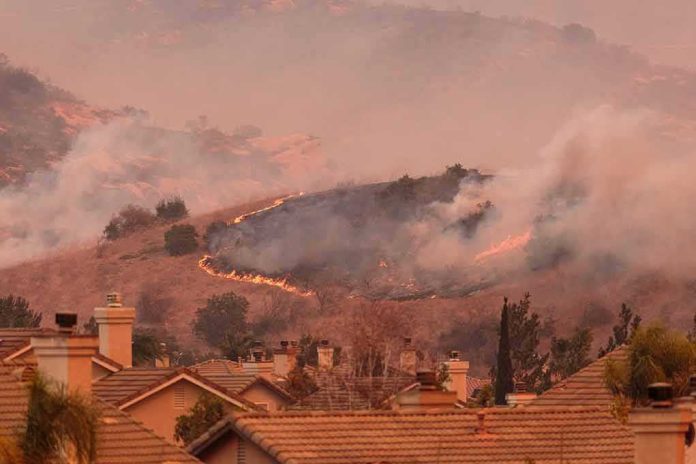
A wind-driven wildfire hit Malibu as officials cut power on key circuits to keep fallen lines from sparking more flames.
Story Snapshot
- Firefighters attacked the Bryson Fire in Malibu as Santa Ana winds ramped up.
- A Red Flag Warning covered Malibu with gusty winds, low humidity, and heat.
- Officials warned of targeted power shutoffs on named circuits to reduce ignition risk.
- Residents were told to prepare for possible evacuations and long outages.
Winds, Warnings, And A Fast-Moving Start
Crews moved on the Bryson Fire in Malibu as gusty Santa Ana winds pushed flames through dry brush. Local television confirmed firefighters were working an active incident on Tuesday evening, not a drill or a flare-up long cooled. City alerts and regional weather updates matched the scene on the ground. The National Weather Service had a Red Flag Warning in place for Malibu and the Santa Monica Mountains, citing strong winds, low humidity, and heat that make sparks jump and fires race.
The setup favored fast spread and hard decisions. Forecasters called for several days of increasing winds, with peak gusts strong enough to topple limbs and stress lines. City messaging told residents this was not a normal breeze. The warning window stretched through the week, raising the odds that any ignition could get ahead of resources before sunset or during a corridor-closing gust. That is when embers leap canyons and spot fires start behind you.
Power Cut Strategy: Where And Why It Happened
Officials and the local utility used a simple rule: remove the spark when the sky loads the fuel. The City flagged planned shutoffs in central and western Malibu and named the Cuthbert, Galahad, Maguire, and Merlin circuits. The goal was clear—lower the risk that wind-damaged equipment would start new fires while crews worked the Bryson Fire and stood ready for more calls. This is the Public Safety Power Shutoff playbook, used across California when wind meets brittle ground.
The plan came with trade-offs the City spelled out. Power might stay off longer than the wind event itself. After gusts eased, crews would still need to patrol lines and inspect gear, a process that can add at least eight hours before lights come back on. Cell coverage could fade. Traffic signals could go dark. Families relying on medical devices needed backup plans, not wishful thinking.
What Residents Were Told To Do Right Away
City alerts told residents to get practical and move fast. Charge phones. Top off vehicles. Review evacuation routes. Pack essentials and meds. Watch official channels for zone updates. People who are older, have disabilities, or keep horses were urged to leave early if they felt at risk rather than wait for a siren. The City issued a 5 p.m. alert to prepare for possible evacuations and to keep bags by the door. That is the kind of advice that saves minutes when minutes count.
Officials did not post a blanket evacuation order in the available reports. The posture focused on warnings, readiness, and fast movement if conditions shifted. That aligns with a layered approach many California communities now use: lift readiness before the smoke is at the porch. It treats time as the rarest resource in a wind event. It also respects that clogged roads and downed signals are the enemy of safe exits when a ridge lights up.
Why This Approach Fits The Risk, And Where It Stings
Santa Ana seasons reward planning and punish delay. Cutting power on high-risk circuits lowers the chance that a falling branch plus a live wire equals a new ignition line. That is common sense when you see the same winds push fire uphill at freeway speeds. The California Public Utilities Commission says these temporary shutoffs aim to reduce fires from electrical equipment, even as the agency notes the burden they place on daily life and on vulnerable residents.
Some readers ask how many homes lost power and for how long. Reports pointed to thousands of customers under consideration across Los Angeles County and more than 10,000 under shutoff at one point, but did not give a firm Malibu-only count in the initial window. That number matters to families juggling work, school, and medical needs. Still, when gusts can reach highway speeds, the first measure of success is fewer sparks on the worst days, not a perfect customer tally at hour one.
What To Watch Next As The Winds Shift
The Bryson Fire response will move through familiar steps: line building, patrol, and mop-up if weather allows. Power restoration will trail the wind and the inspections that follow. Residents should expect updates on evacuation readiness, open routes, and restoration timing through official city channels. Preparedness remains the best hedge. Keep go-bags fresh. Know two ways out. Plan for dark signals and spotty cell service. Those habits turn a bad hour into a survivable night.
Sources:
nypost.com, ktla.com, foxla.com, x.com, lamag.com, yahoo.com, dailynews.com, npr.org