
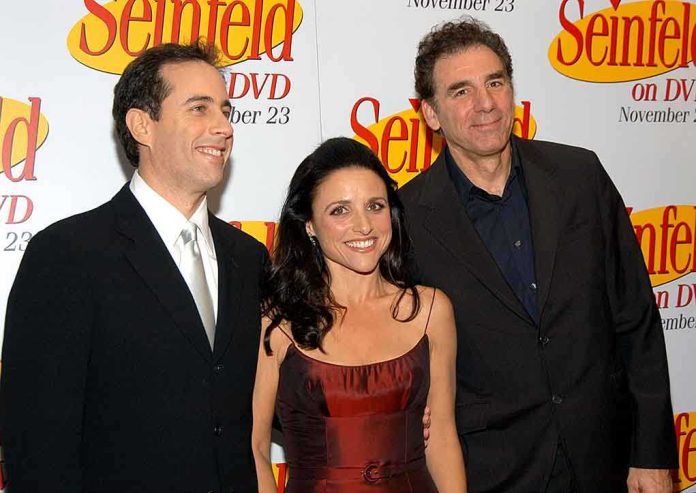
Jerry Seinfeld turned a noisy protest into a viral lesson on message discipline, and the agitators handed him the microphone.
Story Snapshot
- Protesters interrupted Seinfeld’s Chicago Theatre show and accused him of backing genocide.
- Seinfeld mocked the chants, joked about sending their ticket money to Israel, and kept the crowd.
- Clips spread online fast, but the exchange spotlighted tactics over evidence.
- Research shows disruptive protest buys attention but often triggers backlash.
What Played Out Inside the Chicago Theatre
Pro-Palestinian activists broke into Seinfeld’s set with chants and accusations that tied him to Israeli abuses. One shouted about tens of thousands of Palestinian deaths and blamed United States taxpayers. Seinfeld did not retreat. He fired back with sharp sarcasm, even quipping, “It’s a genocide. I’m into it,” before joking he would send their ticket money to Israel. Security removed the protesters as he danced and kept the show moving, which the audience rewarded with cheers in the circulating clips.
Organizers linked to local activist groups claimed the disruption and said they targeted public figures who defend Israel. They framed the stage as a platform, not a comedy room. The video strategy worked on reach; the footage ricocheted across platforms and drove more coverage. Yet the exchange itself leaned on volume, not sourcing. No report tied the shouted death tolls or the “taxpayer funded” claim to specific records in that moment.
Why Seinfeld Drew the Fire
Seinfeld has been openly pro-Israel since the Hamas-led attacks of October 7, 2023. Reports say he visited Israel, met hostage families, and has blasted the “Free Palestine” slogan as a cover for hostility toward Jews. He even compared that rhetoric to the Ku Klux Klan’s open bigotry, which his critics cite as proof he dismisses their cause. That record explains why activists see him as a symbol worth confronting, even if it does not show him endorsing harm to civilians.
His Chicago response matched his past stance. He mocked the premise that he backs racism or genocide and flipped the moment into a fundraising gag: “I’m going to find out how much your ticket was. I’m sending it to Israel”. Commentators argued that if protesters paid to disrupt, they funded the very thing they oppose and robbed paying patrons of a show. That frame sticks because it is concrete, easy to repeat, and grounded in common sense about public order.
The Strategy Cost of Disruption
Political science offers a clear read on the trade. Disruptive protests earn attention and force issues into the news, but they often reduce public support for the protest group and its demand. Experimental studies show that these tactics can lift issue salience by double digits while creating a measurable backlash against the protesters’ position. The Chicago scene fit the pattern: the video exploded, but Seinfeld controlled the punchline.
Jerry Seinfeld danced on stage as pro-Palestine protesters interrupted his Chicago show, confronting him over his support for Israel.#viral #Comedy #Show #Chicago #US #Seinfeld #Racist #support #Israel #ProPalestine #Protest #disrupt pic.twitter.com/NDbwegb2bb
— British Muslim TV (@BritishMuslimTV) October 14, 2026
That control came from specificity. The activists’ claims leaned on big numbers and moral charges, but they did not present sources in the room. Seinfeld offered something tangible and ironic: a dollar path from a heckler’s ticket to an Israeli cause. The crowd could grasp that in a beat. For a movement trying to win undecided adults, this is the risk. Attention without proofs lets opponents brand you as loud, not persuasive.
Where Conservative Common Sense Lands
The facts show a private event disrupted by people who bought tickets to block others’ night out, and a performer who kept order with humor. That aligns with a basic American value: free speech does not include the right to hijack a venue you do not own. Critics of the protesters also point to the shouted casualty figures and funding claims. Without sources on the spot, they read more like slogans than evidence, which weakens trust in a serious debate.
Seinfeld’s sharper accusation—that “Free Palestine” signals permission to hate Jews—draws heavy blowback. But he has stayed consistent and public about that view, and he is not hiding behind vague terms. Agree or not, clarity beats coyness in politics. If activists want to beat him, they need specifics stronger than a chant, and a stage where the audience chose them.
What This Means Next
Expect more of these collisions. Celebrities are now political megaphones, yet they do not answer to elections. That makes them tempting targets and hard opponents. If activists aim to change minds, the research says they should pair attention-grabbing moments with receipts: sourced numbers, clear asks, and a plan that respects bystanders. Otherwise, the star will own the edit, the crowd, and the story’s moral center—exactly what happened in Chicago.
Sources:
foxnews.com, ibtimes.co.uk, abc11.com, newarab.com, ndtv.com