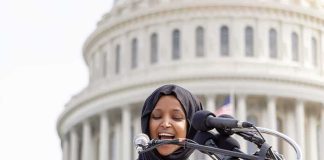

The White House told Chicago’s mayor to drop race-based reparations and fix murders first, and the blast landed.
Story Snapshot
- Mayor Brandon Johnson linked federal policy to unmet demands of descendants of enslaved people
- Johnson set up a 40-member reparations task force and a “Repair Chicago” intake effort
- The White House called race-based payouts illegal and urged focus on homicides
- A nearby test case in Evanston faces a federal equal-protection challenge
Chicago’s Push Meets a Federal Wall
Mayor Brandon Johnson said Washington helped the rich and shorted Black families. He tied that charge to reparations, naming schools, housing, health care, transit, and jobs as overdue demands. The White House hit back fast. A spokesperson said any program that gives money based on race breaks the law and told Johnson to focus on cutting Chicago’s homicide rate instead. That response made the fight about legality and safety, not just history and policy design.
Johnson did more than talk. He signed an executive order for a 40-member task force to study “historical harms” to Black Chicagoans and propose remedies. He also launched “Repair Chicago,” a portal to collect lived experiences that could guide policy. Those steps built a paper trail inside city hall. They did not, however, reveal a final plan, a price tag, or who would qualify. The absence of those details now weighs on public debate.
The Legal Tripwire: Race-Based Eligibility
The White House framed the core issue as simple equal treatment. The spokesperson said the Trump administration rejects “divisive, racist policies” and will enforce the same rules for everyone regardless of race. That stance matches a federal move against Evanston’s reparations program. Evanston offers $25,000 housing grants to eligible Black residents and certain descendants tied to a 1919–1969 window of local discrimination. Plaintiffs argue that rule is unconstitutional racial sorting.
The Department of Justice echoed that view in public comments and court papers, calling Evanston’s approach race discrimination and citing the Equal Protection Clause. Civil rights chief Harmeet Dhillon said, “Simply handing out money based on race… is not the answer”. A federal judge allowed the lawsuit to proceed this spring, signaling the claim is serious enough for full review. That ruling does not decide the case, but it raises the stakes for any Chicago plan that leans on race-first rules.
What Johnson Claimed, What He Must Prove
Johnson argued that federal policy fueled “the largest upward transfer of wealth” to the ultrarich at the expense of Black descendants and then cited public goods that remain underfunded. That is a forceful charge but not yet a map. The public record tied to his remarks does not list the federal measures, the distribution math, or a legal theory that pins payment duty on Washington, not Illinois or Chicago. Without that, critics can dismiss the claim as rhetoric, and courts will look for a tighter link.
A design choice sits at the center of the legal minefield. Remedies can key off race, ancestry, residence in a harmed area, income, or proof of specific injury. Evanston chose race and ancestry. Courts will test whether that choice tracks past, government-caused harm closely enough to pass equal-protection review. Chicago’s task force could lower risk by tying benefits to documented harms in time and place, open to any resident who shows injury, rather than to race alone. That path aligns with common-sense fairness and reduces legal exposure.
Crime, Credibility, and Conservative Scrutiny
The White House’s pivot to Chicago’s homicide rate was blunt politics with a policy edge. Public safety is the first job of city hall. Voters who fear crime are less open to complex payouts, however framed. A mayor who cannot show gains on murders will struggle to sell a costly new program. From a conservative lens, equal treatment under law, order on the streets, and targeted help for proven victims beat broad, race-based cash transfers every time.
BREAKING: White House declares race-based money programs illegal in direct hit at Chicago Mayor Brandon Johnson's reparations push.
— TradeLabsAi (@TradeLabsAI) October 15, 2026
There is also a momentum problem. Johnson’s task force and “Repair Chicago” portal show activity, not results. No published report, cost estimate, or eligibility rule has been placed on the table for scrutiny. Meanwhile, the Evanston fight supplies a ready-made cautionary tale. If Johnson wants staying power, he needs crisp evidence of government-caused harm, a remedy design that avoids race-first gates, and measurable wins on violent crime. That mix would speak to law, budget, and basic fairness at once.
Sources:
youtube.com, noticias.foxnews.com