

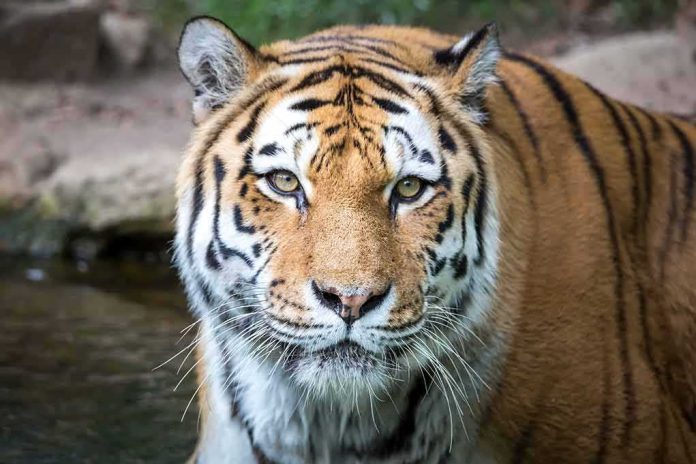
A man climbed into a tiger enclosure at a British wildlife park Saturday afternoon and did not walk out alive.
Quick Take
- Police say a man entered the tiger enclosure at Yorkshire Wildlife Park near Doncaster around 1:35 p.m. Saturday and was attacked.
- Emergency crews tried to save him, but he died at the scene despite their efforts.
- The tiger was not hurt and stayed inside its enclosure; officials say the public faced no wider danger.
- The park shut down for the rest of the weekend while officers and staff worked to piece together what happened.
What Police Say Happened At The Scene
South Yorkshire Police said officers got the call at 1:35 p.m. on Saturday, October 10. A man had gone into the tiger enclosure at Yorkshire Wildlife Park. The tiger attacked him soon after. Paramedics rushed in and worked to save his life, but he was pronounced dead at the scene despite their efforts.
Officers have not released the man’s name, age, or where he was from. They also have not said publicly how he got into the enclosure, whether he climbed a fence, slipped past a barrier, or found some other way in. Some tabloid reports describe him as having jumped in, but that detail has not come from police or the park itself.
The Tiger Stayed Put While The Park Emptied Out
Police confirmed the tiger was not injured and remained inside its enclosure after the attack. That detail mattered immediately, because it meant staff did not need to track down a loose animal during an already chaotic afternoon. Officers said there was no wider risk to the public once the scene was secured.
Still, the park cleared out fast. Visitors were evacuated as emergency crews worked, and officers stayed on site to carry out their investigation. Yorkshire Wildlife Park confirmed a “serious incident” had occurred and said its emergency response procedures kicked in right away.
A Park Statement And A Weekend Shutdown
Yorkshire Wildlife Park told the public it was working closely with authorities “to ascertain exactly what happened.” That kind of careful, lawyer-reviewed language is standard after a fatality on private property, and it reflects a business protecting its own interests as much as it reflects transparency. The park announced it would stay closed through Sunday, October 11, while the investigation continued.
Early reports Saturday described the man as seriously injured before later updates confirmed he had died. That shift is normal in a fast-moving breaking story, not a sign that anyone got the facts wrong on purpose. Newsrooms update as hospitals and police confirm outcomes, and this case followed that familiar pattern.
How This Fits Into Britain’s History With Big Cats
Fatal tiger incidents at UK zoos are rare, but this is not the first one. Keeper Sarah McClay died in a tiger attack at South Lakes Wild Animal Park in 2013, and keeper Rosa King was killed by a tiger at Hamerton Zoo Park in 2017. Both of those cases involved staff working near the animals, not a visitor entering an enclosure on his own.
A coroner’s report on the Hamerton case later found the escaped tiger could have reached zoo visitors and only “by chance” did not attack anyone beyond the keeper. That history shows containment and public safety are two separate questions. A tiger staying inside its enclosure after an attack answers one of them, not both.
What Happens Next In The Investigation
South Yorkshire Police said inquiries were ongoing at the scene, and further details are expected as the investigation moves forward. A formal inquest process typically follows a death like this in England, which would eventually examine the exact cause and circumstances in more depth.
For now, the confirmed facts are straightforward. A man entered a tiger enclosure, the tiger attacked him, and he died despite emergency efforts to save him. The park closed, the public faced no further danger, and officials are still determining exactly how it happened.
🚨BREAKING: Man attacked by tiger at Yorkshire Wildlife Park after entering enclosure.
• Yorkshire Wildlife Park in Doncaster has confirmed a “serious incident” at its tiger enclosure on Saturday afternoon.
• Yorkshire Ambulance Service was called pic.twitter.com/AeyMOQOuVS https://t.co/iAMcCfVdR4
— سمو💚 الفخامه 💚 (@zzzzzzz11573150) October 11, 2026
Zoos exist because people want to stand close to animals that could kill them in seconds, protected by nothing but a fence and good judgment. This tragedy is a blunt reminder of why that fence matters, and why stepping past it carries consequences no amount of good intentions can undo.
Sources:
mediaite.com, bbc.co.uk, itv.com, us.cnn.com, independent.co.uk