
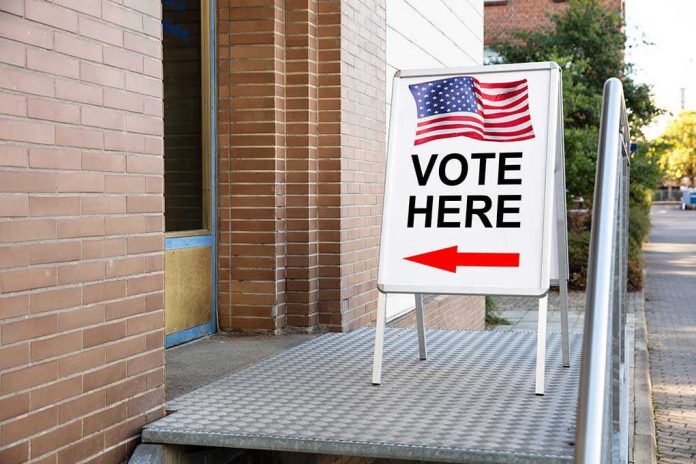
California volunteers shattered records by gathering 1.3 million signatures for voter ID in just five months, forcing a showdown with the state’s Democratic machine on the 2026 ballot.
Story Snapshot
- Reform California collected over 1.3 million signatures, exceeding the 874,641 valid needed for the November 2026 ballot.
- 18,000 volunteers drove the effort in 90 days to 1 million, submitted March 2, 2026, across 58 counties.
- Initiative mandates photo ID for voting, citizenship verification, and clean voter rolls to secure elections.
- Grassroots push contrasts paid efforts, ties to backlash against Prop 50 gerrymandering.
- Proponents like Carl DeMaio prepare lawyers for legal fights against expected opposition tricks.
Signature Drive Launch and Surge
Reform California filed the Voter ID Initiative with the Secretary of State pre-2025, entering circulation for constitutional changes. Late October 2025 saw 17,000 volunteers activate statewide. By December, signatures hit 750,000, prompting a December 31 internal deadline to buffer invalidations. January 2026 marked 1 million in 90 days, a pace unmatched in state history. Proponents targeted 1.2 million for safety, fueling momentum amid election distrust.
Key Leaders Driving the Campaign
Carl DeMaio, Reform California Chairman and ex-Assemblymember, rallied 18,000 volunteers and readied legal teams. State Senator Tony Strickland called it critical for counting legal votes only. Julie Luckey of Californians for Voter ID pushed voter say on the reform. Spokesperson David Tangipa highlighted unprecedented speed signaling integrity demands. Their bus tours and events built bipartisan appeal against the establishment.
Submission and Validation Process
On March 2, 2026, teams submitted 1.3 million signatures from 58 counties, with rallies in five major markets. County registrars now verify each, due by May for November 2026 placement. Secretary of State Shirley Weber oversees, amid predictions of delays or blocks. This volunteer scale outpaced paid firms, proving grassroots power in blue California. Common sense demands such checks; facts show rapid collection aligns with restoring trust.
Historical Context and Motivations
California skips statewide voter ID, using signature matching for mail ballots. Prop 50’s 2024 passage axed nonpartisan redistricting, sparking gerrymandering claims and a Justice Department lawsuit. Reform California, with prior wins against supermajorities, channeled 2024-2025 concerns into this push. Nationally, 36 states require ID; here, failures in legislatures forced the ballot route. Motivations center on countering Democratic control eyeing 26 seat flips in 2026.
Potential Impacts if Passed
Short-term, counties bear validation costs; lawsuits loom from opponents. Long-term, photo ID and citizenship proofs reshape elections, burdening officials with new duties. Voters face ID needs, potentially hitting low-income groups per standard critiques, though broad support claims hold. Politically, it challenges one-party rule; socially, rebuilds confidence lost to lax rolls. This citizen-led model inspires reforms elsewhere, aligning with conservative values of secure, fair processes.
Sources:
CA Voter ID Initiative Surpasses 1 Million Signatures – Headed for November 2026 Ballot
Voter ID Initiative Surpasses One Million Signatures, Headed for November 2026 Ballot
California Voter ID Initiative Gains Momentum with Over 1 Million Signatures
CA Voter ID Initiative Proponents to Officially Submit Over 1.3M Signatures This Week
CA Voter ID Petition Reaches 750K Signatures – Dec 31 Set as Deadline