

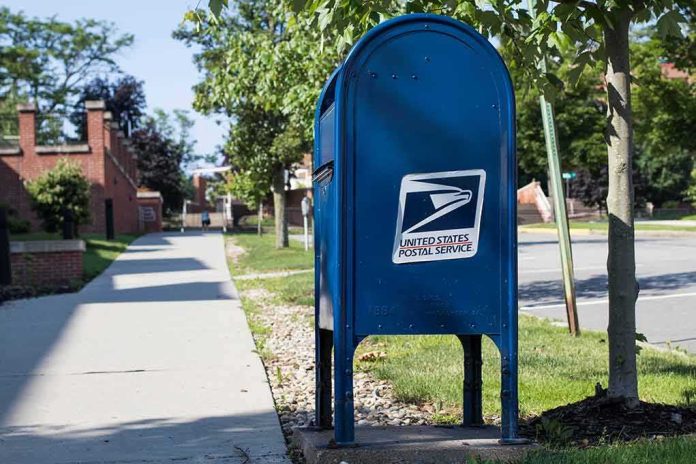
Federal prosecutors say a Fresno County mail carrier kept more than 8,500 pieces of mail, including tax, medical, and financial records, instead of delivering them.
Story Snapshot
- Prosecutors charged 53-year-old former carrier Ronald Juckno with failing to deliver mail.
- Investigators say they recovered more than 8,500 undelivered items from August–September 2024.
- The stash allegedly included tax, medical, insurance, and benefit documents.
- The U.S. Postal Service Office of Inspector General led the probe; Juckno resigned.
Prosecutors say a carrier hoarded thousands of sensitive letters
Federal prosecutors charged Ronald Juckno, a 53-year-old former Fresno County mail carrier, with keeping and failing to deliver the mail. Reporting that cites court records says authorities recovered more than 8,500 pieces between August and September 2024. The mail allegedly included California Employment Development Department letters, tax records, medical and insurance correspondence, financial documents, and utility bills. The U.S. Attorney’s Office identified the case and named assigned prosecutors. The charge reflects a core duty breach that touches privacy and pocketbook concerns.
The U.S. Postal Service Office of Inspector General led the investigation, which fits the office’s mandate to police employee misconduct and protect the mail stream. Reports say Juckno was placed on leave during the inquiry and later resigned. That internal sequence matches common practice when managers suspect route-level diversion. Prosecutors now carry the burden to prove the elements in court. Until a verdict or plea, the allegation remains a charge, not a conviction.
What the numbers signal about risk and harm
Eight thousand five hundred pieces in roughly two months points to a system-level failure on one route, not a stray bundle missed on a busy day. That volume likely spans first-class letters, agency notices, and bills that trigger deadlines. Missed delivery can cause late fees, lost benefits, and tax headaches. Medical letters can include appointment notices or lab results. People plan their lives around these envelopes. When a carrier holds them, the fallout can land on families who did nothing wrong.
Sensitive categories also raise identity and fraud exposure. Tax records and insurance statements contain personal data that bad actors covet. Prosecutors did not claim theft or data abuse in the charging summaries cited by local outlets, but the mere delay magnifies risk. Common sense says government and financial mail must move on time, every time. That is the deal Americans make with the Postal Service. When it breaks, trust erodes fast.
How this case fits a national enforcement pattern
The oversight record shows these cases are uncommon but recurring. The U.S. Postal Service Office of Inspector General reported 773 closed mail-theft investigations and 258 arrests in a six‑month window in 2024, underscoring constant pressure on the system. A follow-up oversight review said the Postal Inspection Service logged more than 800,000 mail theft complaints over three fiscal years, even with some year-to-year shifts. Those numbers explain why investigators move quickly when a route’s mail volume goes missing.
Past cases also show scale can run far higher. New York cases in the last decade involved tens of thousands of pieces stockpiled over years, drawing criminal charges and discipline. Those episodes became cautionary tales for postal managers and unions alike, because every stash not only breaks the law but also breaks public patience. The Fresno case, if proven, fits that pattern on a smaller timeline but with the same core breach.
Accountability, deterrence, and basic service standards
The law protects the sanctity of the mail because it carries the country’s civic and financial heartbeat. No fancy talk is needed: deliver the mail, period. Conservative instincts align with that bright line. People earn a living, pay bills, and meet obligations. Government must enforce clear rules, target real harm, and deter future abuse without drama. When prosecutors bring a case with named facts, the message is simple: public trust is not optional.
Ronald Juckno — former Fresno USPS mail carrier indicted for keeping 8,500+ pieces of undelivered mail, including tax and medical records; placed on leave and resigned. Story: https://t.co/YSnVj1lf61
— CancelPeople.com (@cancelpeoplenow) September 15, 2026
Real fixes extend beyond one indictment. Managers need route scans, stronger arrow key control, better monitoring of holds and undelivered volumes, and fast audits when patterns spike. Oversight bodies have urged tougher controls and better response playbooks. The goal is narrow and practical: find problems early, act fast, and keep Americans’ mail moving. Most carriers serve with pride. Catching the rare breach protects their reputation and the public’s day-to-day life.
Sources:
nypost.com, kmph.com, abc30.com, fresno.courts.ca.gov, justice.gov