Foreign visitors are turning away from the United States under Trump, and the numbers suggest this is not a blip but a political and economic backlash with real costs for American communities.
Story Snapshot
- Foreign tourism to the U.S. has fallen sharply under Trump, with losses estimated in the tens of billions of dollars.
- Canadian travel, the single largest foreign visitor stream, is down more than 20%, driven by tariffs and hostile rhetoric.
- Polls show many Canadians and other foreigners now see the U.S. as unwelcoming or risky, and are choosing other destinations instead.
- Economic and global factors matter, but Trump’s own words and policies line up directly with the steepest drops in visits.
Foreign tourism to the U.S. is shrinking fast
Foreign tourism to the United States has moved from quiet strength to open problem during Trump’s second term. International arrivals fell instead of growing, reversing the pre-Trump trend. Tourism Economics, a respected research firm, estimates the U.S. lost about $16.6 billion in visitor spending in 2025 and is heading toward a $21 billion shortfall in 2026 compared with its former market share. That is money not spent in hotels, restaurants, shops, and small attractions that rely on foreign guests.
The drop is not limited to one region. Media reports show fewer visitors from Europe, Canada, and other key partners, with some markets seeing double-digit declines. The World Travel and Tourism Council forecast a loss of about $12.5 billion in foreign visitor spending in 2025, tied to safety concerns and political tensions. When different data sources and forecasts start clustering around the same story—less travel, less spending—that signals a genuine structural slump, not just random noise in the numbers.
Canadian tourism collapse shows how politics hits the border
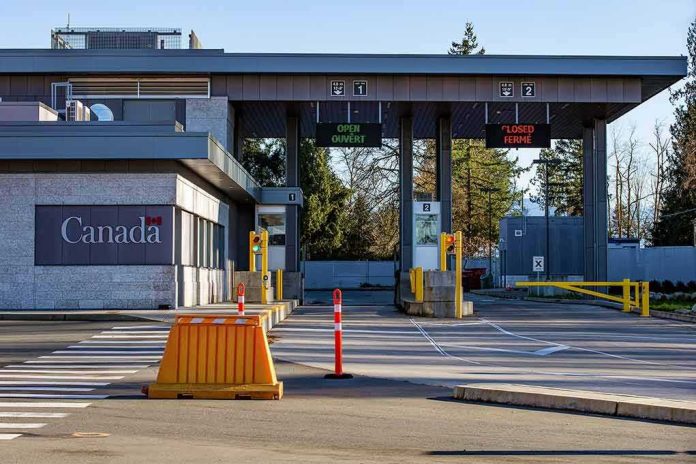
Canada is the clearest case, because Canadians used to be America’s most steady foreign tourists. Commerce Department data show foreign travel to the U.S. down 5.4% through November 2025, led by about 4 million fewer visits from Canadians—a 22% drop in just one year. Other reports put certain months even worse, with declines above 30% for Canadian trips to some U.S. regions. Research highlighted by Canadian and U.S. outlets ties this sharp fall directly to Trump’s tariffs and repeated comments about turning Canada into America’s “51st state.”
Surveys back this up with sentiment. Longwoods International questioned 1,000 Canadian adults and found around 60% said U.S. trade policies and political rhetoric made them less likely to visit. Separate polling showed most Canadians viewed the United States as a less dependable ally and believed Trump weakened relations. That mix of economic grievance and national pride is exactly the recipe for a travel boycott. When your neighbor’s leader talks about annexing you as a joke, people do not rush to spend vacation money there.
Tariffs, travel rules, and rhetoric create a chilling effect
Trump’s team did more than talk tough. They launched trade wars with tariffs at the highest levels since the 1930s, including on Canadian goods and other allies. Analysts link these tariffs, tougher border rules, and expanded travel bans under discussion to a “chilling effect” on foreign travel. Foreign policy outlets describe this as a “war on tourism,” noting that visitors now fear being treated like would-be migrants instead of welcomed guests. When governments start charging extra “visa integrity fees” in the hundreds of dollars, some travelers simply pick a different country.
It’s the economy stupid!
Trump’s Second Term:
Iran war
$40 Billion Travel Slump‼️Bloomberg Businessweek
TRUMP’S ⁰BILLIONTRAVEL SLUMP
How the US president’s policies are upending tourism worldwide. Nine charts show the impact on global travel.
By K Oanh Ha and Dorothy… pic.twitter.com/KT9JjI8s3w— Sean Curley (@SeanCur35382542) July 12, 2026
Global research supports the idea that politics can slam tourism quickly. Academic work on “travel boycotts” and political shocks finds that hostile rhetoric, travel warnings, and territorial disputes trigger sharp, asymmetric drops in trips. Tourists respond much more strongly to negative shocks than to positive ones. That pattern fits what we see under Trump: tariffs, threats, and harsh border language followed by sudden declines in visits from countries that once felt welcome.
Other factors matter, but timing favors policy as the main driver
Any honest analysis has to admit that tourism never depends on politics alone. Exchange rates, inflation, and fuel prices all change the real cost of travel. Reports on Canadian behavior do note that a weaker Canadian dollar and higher travel costs made U.S. trips more expensive in 2025. Broader studies show global tourism is under pressure from nationalism, geopolitical tensions, and economic uncertainty. Some decline in visits would have happened anyway as tastes and budgets shifted.
Still, the sharpest drops line up closely with Trump’s most aggressive moves. Tourism Economics cut its U.S. forecast from an expected 8.8% increase in foreign visits to a 5.1% decline after Trump returned to “America First” policies and new trade fights. Bloomberg’s analysis quotes the firm’s director saying Trump’s policies and pronouncements are the primary contributor to the travel slump. That kind of timing, combined with survey data that directly name tariffs and rhetoric as reasons for staying away, makes it hard to argue this is just random global change.
Why this matters for American communities and conservative common sense
For many border towns, resort areas, and big cities, foreign visitors are not a luxury—they are a key part of local jobs and tax revenue. Reports show places like Las Vegas saw tourism numbers sag, Canadian-heavy regions around Niagara had steep drops, and businesses along the northern border felt the loss of cross-border shoppers and vacationers. A slump in visitors hits hotel staff, restaurant servers, tour guides, and small shop owners first. Those are often working- and middle-class Americans who have no say in trade negotiations but live with the fallout.
From a conservative, common-sense view, this raises a simple question: are we trading away real private-sector income for symbolic fights that do not fix core economic problems? Strong borders and fair trade are important, but so is welcoming paying guests who follow the rules and go home after spending money in our communities. The data suggest foreign tourism is one area where Trump’s mix of tariffs and rhetoric has imposed clear costs, with no clear gain that offsets billions in lost visitor spending and a strained image abroad.
Sources:
ttra.com, forbes.com, usatoday.com, cbc.ca, finance.yahoo.com, cnbc.com, nytimes.com, youtube.com, cepr.org, publications.gc.ca, facebook.com, tandfonline.com, jec.senate.gov, visahq.com