
Political theater in Washington has turned airport security checkpoints into three-hour endurance tests, forcing unpaid federal workers to choose between their patriotic duty and their mortgage payments while Congress plays immigration policy chicken during spring break.
Story Snapshot
- Over 100,000 Department of Homeland Security employees working without full paychecks since mid-February 2026
- Airport security lines exceeding three hours at major hubs; over 300 TSA agents have quit amid the crisis
- Senate voting deadlock persists after five failed attempts, with neither Republicans nor Democrats securing the 60 votes needed
- Democrats demand immigration enforcement reforms following a fatal shooting; Republicans refuse conditions on ICE and Border Patrol funding
- TSA administrator warns airport closures may become necessary if staffing hemorrhage continues
When Political Leverage Costs Real People Real Money
The Department of Homeland Security entered its second month without appropriated funding on March 21, marking an institutional crisis that extends far beyond Washington’s marble corridors. TSA screeners received partial paychecks initially, then watched subsequent checks zero out entirely while full tax deductions continued. More than 260,000 federal workers face this reality daily, with a small percentage furloughed completely. This represents the second major DHS shutdown in six months, following a 43-day funding lapse in fall 2025 that apparently taught lawmakers nothing about consequences.
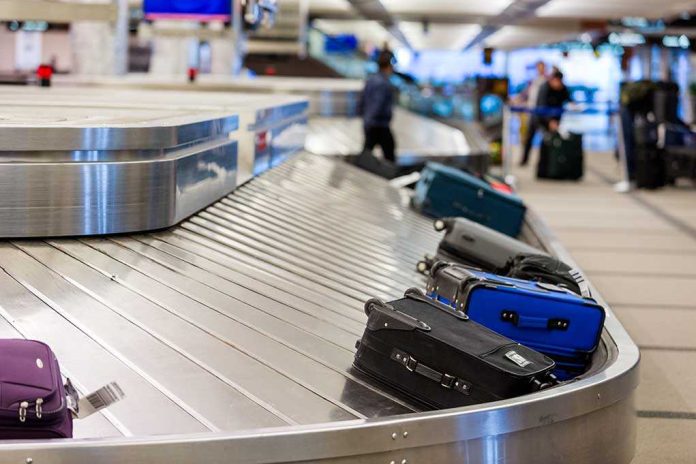
The timing amplifies the damage exponentially. Spring break travel season compounds operational stress precisely when TSA staffing reaches crisis levels. Houston’s secondary airport logged consistent three-hour security waits throughout early March weekends. New Orleans and Atlanta passengers faced waits exceeding one hour regularly. Airlines mobilized lobbying efforts as customer complaints mounted and operational costs spiraled. The U.S. Chamber of Commerce publicly called the situation economically damaging, noting that blocking paychecks for those ensuring travel safety strains the entire air travel system unnecessarily.
The Immigration Enforcement Stalemate Nobody Will Blink On
Senate Republicans and Democrats constructed a textbook symmetric standoff where neither party possesses unilateral authority to advance legislation. Republicans control the Senate floor but cannot reach the 60-vote threshold required for passage. Democrats wield enough votes to block full DHS funding bills but lack numbers to pass their alternative proposals. Five separate Senate votes have failed since mid-February, with the most recent Republican omnibus bill garnering only 47 votes against 37 in mid-March, falling 13 votes short of the procedural requirement.
The substantive dispute centers on accountability conditions for Immigration and Customs Enforcement and Customs and Border Protection. A bipartisan deal negotiated earlier in 2026 included modest reforms: twenty million dollars for body-worn cameras and additional de-escalation training for immigration enforcement agents. That agreement collapsed after DHS law enforcement personnel fatally shot Alex Pretti in Minnesota during January 2026. Democrats subsequently announced non-negotiable demands for basic accountability measures before funding ICE and CBP, characterizing the requirements as fundamental oversight following the shooting incident.
Senate Majority Leader John Thune accused Democrats of refusing to negotiate, noting the White House made an offer nearly two weeks prior with no Democratic response. Senator Patty Murray countered that she has pushed accountability measures for months and will not retreat following the Pretti shooting. Representative Rosa DeLauro urged Republicans to stop partisan games and pass House Democratic legislation funding TSA, FEMA, Coast Guard, Secret Service, and the Cybersecurity and Infrastructure Security Agency while negotiations continue separately on immigration enforcement agencies. Republicans blocked that proposal, maintaining that full DHS funding without conditions represents the only acceptable path forward.
When Security Theater Becomes Security Crisis
The operational deterioration follows predictable trajectories that should alarm anyone concerned with both border security and transportation safety. Over 300 TSA agents quit outright since the shutdown began, recognizing that working indefinitely without paychecks while bills accumulate makes no financial sense regardless of public service commitments. The acting TSA administrator issued warnings that airport closures may become operationally necessary if callouts continue escalating at current rates. Recruitment efforts stalled completely as prospective employees witness the federal government’s willingness to use essential security personnel as political bargaining chips.
White House Press Secretary Karolien Leavitt stated publicly that President Trump wants DHS, TSA, FEMA, and Coast Guard personnel to receive full paychecks and funding, encouraging Americans frustrated with airport delays to contact Democratic lawmakers directly. The administration fired DHS Secretary Kristi Noem amid the impasse, though that personnel change accomplished nothing toward resolving the underlying appropriations deadlock. Both parties claim the mantle of reasonableness while pointing accusatory fingers across the aisle, a performance that rings hollow to travelers missing flights and federal workers checking empty bank accounts.
The Democratic position raises legitimate accountability questions following a fatal shooting by federal law enforcement. Body-worn cameras and de-escalation training represent modest, common-sense reforms already standard in many state and local police departments. Demanding basic oversight before appropriating billions for immigration enforcement agencies reflects responsible stewardship, not partisan obstruction. Republicans counter that Democrats weaponize tragedy to impose restrictions on agencies executing lawful immigration enforcement during a border security crisis. That argument holds weight if Democrats expanded demands beyond previously negotiated terms, though available evidence suggests the accountability measures remained consistent with earlier bipartisan agreements before the Pretti shooting catalyzed renewed urgency.
The institutional precedent established here threatens consequences extending far beyond this particular shutdown. Congress demonstrated twice within six months that DHS funding can be held hostage to immigration policy disputes, signaling to future appropriators that essential security agencies represent acceptable leverage in partisan negotiations. Federal worker morale and retention suffer damage that persists long after paychecks eventually resume. Security professionals considering careers in homeland security now understand the federal government may demand they work without compensation during political standoffs, a recruitment obstacle that compounds existing staffing challenges across multiple agencies.
Sources:
White House, Democrats Trade Blame for Missed Paychecks and Airport Delays
Lawmakers Vent Frustration Over DHS Shutdown as Lines Grow at Nation’s Airports
Senate Fails to Advance DHS Funding Bill
Democrats Push Partial Funding for DHS as Thousands of Federal Workers Go Unpaid