
The most powerful room in America is now at the center of a fight over leaks, fear, and trust between a former president’s aides and two star reporters.
Story Snapshot
- Top Trump aides reportedly feared Maggie Haberman and Jonathan Swan had secret Situation Room recordings.
- The fear grew out of real past breaches, including an aide caught taping in the Situation Room.
- The reporters have not said they hold any such tapes; the claim is about aide paranoia, not proof.
- The episode exposes how national security, media power, and political panic collide in modern Washington.
How a rumor about tapes shook Trump’s inner circle
Axios reported that top Trump White House officials came to believe New York Times reporters Maggie Haberman and Jonathan Swan had obtained audio recordings of conversations inside the Situation Room.[5] Officials feared that “some of our most sensitive conversations were being recorded” and might surface in the reporters’ book about the Trump years, titled “Regime Change.”[5] No one in the report claimed to know which meetings, if any, were captured, which only fed the anxiety.
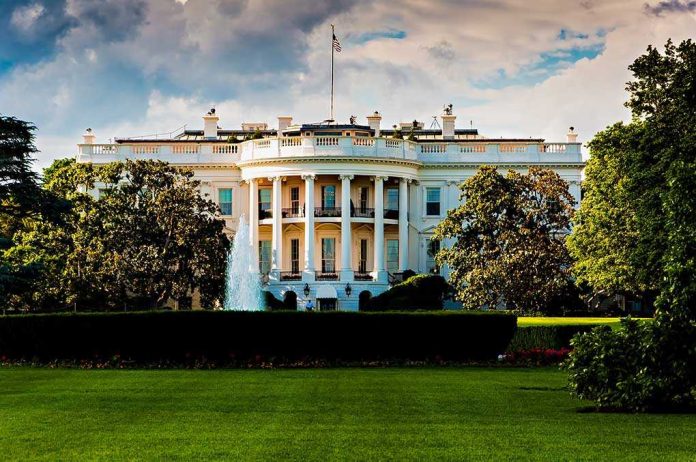
The Situation Room is supposed to be the most controlled space in the White House, reserved for war planning and real national security crises.[4] Under Trump, aides also used it to manage political damage, including the panic over the release of court records related to Jeffrey Epstein, which linked back to Trump’s social ties and raised new press scrutiny.[2][6] That political use of a secure room blurred lines between public relations, crisis control, and true national security work.[4][6]
The Omarosa precedent that made everyone jumpy
This fear did not start from nowhere. In 2018, former Trump aide Omarosa Manigault Newman revealed she had secretly recorded a conversation in the Situation Room and then played the audio on television.[1] That was a shocking breach of protocol. White House officials at the time explored legal options against her and worried she might release more tapes of private conversations from inside the secure facility.[1] That single act showed staff that a supposedly phone-free room could still be bugged by a determined insider.
National security officials and outside experts quickly warned that any secret recording in the Situation Room shows “blatant disregard for our national security,” because foreign governments would love that audio. Aides now knew it was possible for someone with clearance and access to sneak in a device and get away with it, at least long enough to walk out with sensitive material.[1] Once that kind of breach happens, common sense says you cannot just shrug and assume it will never happen again.
What Haberman and Swan actually did — and did not — reveal
Haberman and Swan did not publish any audio from the Situation Room, and they have not publicly claimed to hold such recordings.[1] What they did publish and promote was deep reporting on how Trump advisers met in the Situation Room, sometimes without the president, to manage political storms like the Epstein files or high-stakes foreign policy moves on Iran.[2][3][6] Social clips from their reporting highlighted that aides gathered “in secret…without him” as they tried to manage the Epstein fallout, which likely rattled the former president’s loyalists.[3][5]
Their work showed granular knowledge of who was in the room, who spoke up, and how they reacted to both legal and political risk.[3][6] For a paranoid team already stung by leaks, that level of detail could feel like someone had planted a microphone. Yet in Washington, detailed insider accounts often come from human sources, not gadgets. Staff with their own agendas regularly talk to reporters once they leave government, and sometimes while they still serve.
Fear, leaks, and the conservative concern about a two-tier system
From a conservative, common-sense view, the most serious part of this story is not media gossip. The real issue is that sensitive national security talks may have been recorded at all and then used as leverage in political and media fights. If independent devices are banned in the Situation Room, and yet senior staff still believe conversations were taped, that signals a breakdown in basic security culture.[5] Any administration, Republican or Democrat, should view that as unacceptable.
So is the book is accurate?
Scoop: Trump aides fear Haberman and Swan obtained Situation Room tapes for "Regime Change" https://t.co/WTawgxTQMf— ken benson Shah of Greater Idaho🤠🏁 (@borntoraisehogs) June 14, 2026
The other concern is selective outrage. Many on the right already believe there is a two-tier system: one standard for Trump and his orbit, and another for the political class and media that dislike him. When a former aide records a classified-space conversation and turns it into a book and television content, but the focus quickly shifts to whether reporters might have more tapes, it feeds that perception.[1] A consistent rule of law would punish the leaker first, then scrutinize anyone who knowingly uses tainted material.
Why this story matters beyond Trump and one book
This episode teaches three lessons that will outlast the Trump years. First, the modern White House now operates under the assumption that someone might always be recording, even in the most secure rooms. Second, the press will keep rewarding insiders who break ranks and spill details, which tempts future staff to do the same. Third, when political crises are run out of a national security facility, it becomes harder for the public to trust that serious tools are reserved for serious threats.[4][6]
Sources:
[1] Web – ‘We’re Afraid’: Top Trump Aides Reportedly Think Maggie Haberman and …
[2] Web – White House exploring legal options against Omarosa Manigault …
[3] YouTube – Situation Room FIASCO over obscene Trump-Epstein allegations
[4] YouTube – Trump Aides Meet in Situation Room to Discuss Epstein Crisis
[5] Web – The Situation Room is for national security crises, but the Trump …
[6] Web – Scoop: Trump aides fear Haberman and Swan obtained Situation …