
The United States just locked in a civilian nuclear deal with Saudi Arabia that could reshape both global energy markets and the nuclear balance in the Middle East.
Story Snapshot
- Washington and Riyadh completed negotiations on a major civil nuclear cooperation agreement.
- The deal positions American firms as Saudi Arabia’s preferred partners for nuclear power projects.
- Supporters call it a jobs-and-energy win; critics worry it weakens long-standing nonproliferation guardrails.
- The agreement now heads into legal and congressional scrutiny that will test U.S. nuclear policy standards.
A landmark civil nuclear partnership takes shape
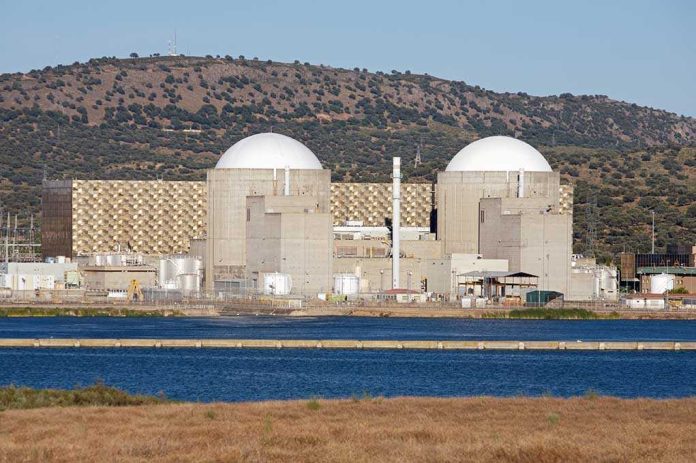
Saudi Arabia and the United States have finished negotiations on cooperation for the peaceful use of nuclear energy, clearing a key hurdle toward a formal nuclear cooperation agreement under U.S. law. A joint declaration, signed by U.S. Energy Secretary Chris Wright and Saudi Energy Minister Prince Abdulaziz bin Salman, lays out a strategic partnership focused on civil nuclear power, technology transfer, and long-term commercial projects. Both governments frame this as a cornerstone in their broader economic and security relationship.
6 AM Top-of-the-Hour News
President Trump will attend today's dignified transfer of the four U.S. service members who were recently killed in the war with Iran.: “I'll be going to Dover for something that I feel is, it's a great honor for me to do it. ”
18 service members have… pic.twitter.com/JECN6erXFo— Worldwide News Network (@WorldwideNNX) July 22, 2026
U.S. and Saudi statements describe the joint declaration as the legal foundation for a “decades-long, multi-billion-dollar nuclear energy partnership” and say American companies will be the Kingdom’s “civil nuclear cooperation partners of choice.” Saudi officials highlight access to advanced U.S. reactor technology, including large nuclear power plants, to support domestic electricity demand and industrial growth. The declaration is explicitly tied to jobs, investment, and a promise that cooperation will follow strong standards on safety and nonproliferation.
How the deal fits into U.S. nuclear law and global norms
Under Section 123 of the U.S. Atomic Energy Act, Washington cannot send key nuclear materials or equipment abroad without a congressionally approved “123 agreement.” The new joint declaration is designed as a step toward that formal agreement, which would enable exports of American reactors, fuel, and technology to Saudi Arabia on a large scale. This legal framework has been used for decades with other partners, tying market access to conditions intended to block the path to nuclear weapons and keep allies aligned with U.S. standards.
Past memorandums between the United States and Saudi Arabia stressed “environmentally sustainable, safe, and secure” civilian nuclear energy and cooperation in medicine, industry, and power generation. Today’s declaration extends that vision into a full commercial program built around American technology. At the same time, it drops into a global debate over how far civil nuclear deals can go without undercutting nonproliferation norms, especially when a partner sits in a tense region and holds large uranium resources.
Commercial gains and industrial strategy for both countries
The White House and many industry voices sell this deal first as an economic story. Saudi Arabia wants to diversify beyond oil, build high-tech energy infrastructure, and develop nuclear projects that create skilled jobs at home. For the United States, the agreement promises major contracts for reactor builders, fuel suppliers, and engineering firms at a time when the American nuclear industry is fighting to stay competitive against state-backed rivals from Russia and China.
Commentators who favor the deal argue that deep U.S. involvement in Saudi nuclear development is not only good business but also good policy: if American companies build and fuel the reactors, Washington keeps leverage and visibility over how nuclear technology is used. That view aligns with a common conservative instinct to pair economic strength with strategic influence, rather than leaving a vacuum for competitors who care far less about safety or transparency.
The guardrails question: enrichment, inspections, and risk
The sharpest controversy is not about reactors, but about what comes next. A report to Congress indicates that the proposed pact relaxes traditional U.S. demands on uranium enrichment and rapid inspections by United Nations watchdogs. Arms control advocates warn that allowing Saudi Arabia more freedom on enrichment and relying on bilateral safeguards, instead of the International Atomic Energy Agency, could make it easier for the Kingdom to move closer to weapons capability if it ever chooses that path.
Some analysts call the draft a “gilded sweetheart deal” that trims core nonproliferation standards in order to win a lucrative market and cement political ties. From an American conservative, common-sense view, this trade-off raises a hard question: does short-term commercial gain justify loosening rules that have helped keep nuclear weapons out of more hands for decades? If a friend today could become a rival tomorrow, weaker guardrails may look less like smart realism and more like wishful thinking.
Congress, regional politics, and what comes next
Members of Congress from both parties have already warned that any civil nuclear accord with Saudi Arabia must not spark a nuclear arms race in the Middle East. Under Section 123, they will have the chance to review, and potentially block, a final agreement once the administration submits it. Lawmakers will weigh Saudi energy needs, U.S. industry benefits, and the risk that Iran, Israel, and others respond to Riyadh’s new capabilities with their own nuclear moves, on paper or in practice.
Policy experts propose compromise paths, such as a clear moratorium on Saudi enrichment for a decade while U.S. firms build reactors and both sides revisit fuel-cycle questions later. That approach mirrors a broader principle many American conservatives support: secure the economic partnership, keep strong leverage, and insist on conditions that limit worst-case scenarios. The next phase of this story will reveal whether Washington still holds that line when real money and geopolitical pressure test its nuclear standards.
Sources:
mediaite.com, reuters.com, ans.org, armscontrol.org, thebreakthrough.org, wsj.com, energy.gov, brookings.edu, youtube.com, fdd.org, whitehouse.gov