

Archaeological discoveries during Czech highway construction reveal forgotten military history, igniting interest in historical preservation efforts.
Story Highlights
- Four mass graves uncovered during D11 motorway construction in Czech Republic.
- Remains from 1745 and 1866 conflicts reveal military history.
- Exceptional preservation of artifacts and personal items found.
- Discovery highlights importance of archaeological surveys in infrastructure projects.
Highway Construction Uncovers Historical Mass Graves
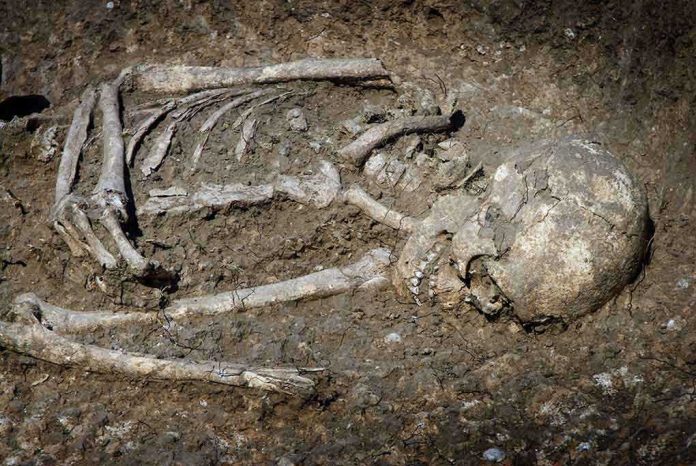
During the construction of the D11 motorway in the eastern Czech Republic, archaeologists discovered four mass graves. These graves contain the remains of over 40 soldiers from two major European conflicts, separated by 121 years. The graves were found along a 2.2-mile section of the planned highway, illustrating how infrastructure development can reveal significant historical sites.
The Archaeological Centre Olomouc conducted metal detector surveys and test trenches in the construction zone. This led to the discovery of clusters of bullets, shell fragments, and uniform parts, prompting further excavation. The research team continues to analyze the findings, with plans to rebury the remains after a thorough investigation.
Historical Context of the Graves
The graves represent casualties from the Battle of Zdar in 1745 and the Battle of Novy Rokytnik in 1866. The first grave, dating back to the Second Silesian War, contains 12 skeletal remains. The other graves are from the Austro-Prussian War, including two graves with Prussian soldiers and one with 23 Austrian soldiers. The location of these graves along the historical battle line adds to their significance.
These findings highlight the critical role of rescue archaeology in preserving historical evidence before it is lost to modern development. The route of the new motorway follows nearly exactly the historical battle line, underscoring the importance of archaeological oversight in infrastructure projects.
Exceptional Preservation and Research Opportunities
The excavation unearthed a wealth of artifacts, including textiles, buttons, weapons, and personal items. This exceptional preservation allows researchers to reconstruct aspects of 18th and 19th-century military life and burial practices. For instance, the Prussian graves contained more than 10 boxes of textile material, providing insight into the uniforms and personal belongings of soldiers.
Forensic analysis revealed gunshot wounds on several skulls, offering grim evidence of the soldiers’ fates. Such discoveries not only enrich historical knowledge but also emphasize the necessity for meticulous archaeological methodology in uncovering truths of the past.
The findings have broader implications for cultural heritage preservation, demonstrating how infrastructure projects can coexist with the preservation of historical sites. The coordination between researchers and the highway authority serves as a model for similar projects, ensuring that historical legacies are respected and documented.
Sources:
Popular Mechanics: Archaeologists Discover Four Mass Graves During D11 Motorway Construction
Earth.com: Grave Discovered Containing 12 Soldiers’ Bodies from 1745 and 1866
AOL News: Extraordinary Mass Graves Centuries Old Discovered