
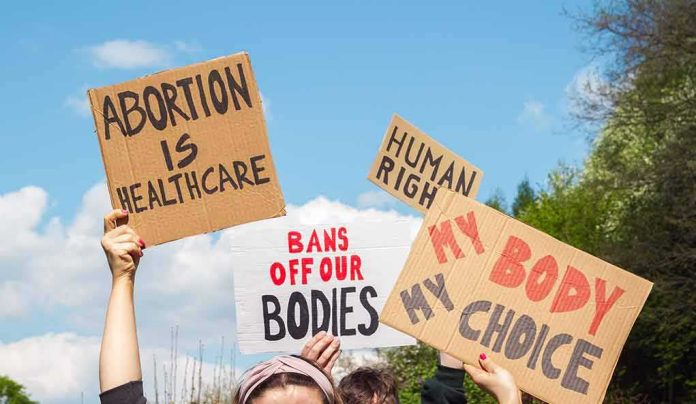
Voters in three states advanced abortion protections while one rejected expansion, turning a raw chant into a hard political signal of where this fight stands.
Story Snapshot
- Nevada and Virginia voters approved constitutional protections for abortion access.
- Missouri voters kept existing abortion rights by rejecting a repeal measure.
- Idaho voters declined to expand abortion access, bucking the trend.
- Ballot wins echoed a post-Dobbs pattern: issue support without a clean partisan sweep.
What Voters Actually Did On Abortion In 2026
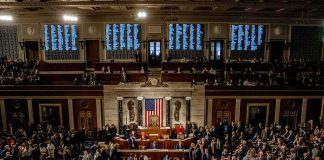
Ballot measures gave a clear picture. Nevada voters backed adding a right to abortion up to fetal viability to their state constitution, fixing the standard in law rather than statute alone. Virginia voters also endorsed a constitutional protection for abortion access, extending a policy shield in a politically divided state. Missouri voters turned down a proposal to strip existing protections, leaving the current right in place. Idaho voters rejected broader abortion access, showing limits to the trend.
These results track the post-Dobbs pattern. Since the Supreme Court ended Roe’s federal standard, abortion rights have usually won when presented as a direct question to voters. In 2024, seven of ten abortion-rights measures passed nationwide, a hit rate that shocked both parties and forced new strategies in red, blue, and purple states. The 2026 map did not break that streak. It showed that many voters want to set guardrails themselves instead of leaving the issue only to lawmakers.
The Viral Chant And The Real Signal Beneath It
A clip of young women shouting “Abortion is so back, baby!” after Democrats’ midterm gains fueled outrage on social media and conservative sites. Commentators argued it revealed a culture that celebrates a grave act as if it were a sport. The chant did not decide any law. But it did reflect a mood among abortion-rights supporters who saw the ballot box as their lever. The lever mattered more than the chant because it changed state constitutions, not just timelines.
The louder claim from opponents is moral, not procedural: they say life begins at conception and laws should defend the unborn first. That view aligns with conservative values that respect life, family, and community duty. Ballot outcomes do not settle that moral debate. They do show that many voters, including some who split their tickets, prefer exceptions, viability standards, and medical judgment built into law over blanket bans. That is a practical coalition, not a cultural consensus.
Issue Wins Do Not Equal Party Sweeps
Political scientists found that abortion ballot measures affect elections differently than candidate races. After Dobbs, such measures often boosted Democrats in 2022, but in 2024 their net effect tilted toward Republicans, likely by clarifying choices and reducing cross-pressures for some voters. That research supports what we saw again in 2026: abortion can win as a standalone choice while voters still pick mixed party slates for Congress or state offices. Parties that assume automatic coattails risk misreading the room.
Culture Wars Won’t Save the GOP
Abortion has lost most of its political salience. That will never happen to economic issues.
The problem with culture wars is that someone eventually wins. That is among the biggest challenges facing Republicans after Tuesday’s midterm… pic.twitter.com/OkxJsnZWxL
— American Politic (@rosewdc) November 6, 2026
Campaigns learned two lessons. First, plain language on viability and medical exceptions beats abstract rhetoric. Voters reward clarity and guardrails. Second, mobilizing around health privacy and government overreach convinces moderates, even in states that lean right. For pro-life groups, the counter is also clear: focus on humane support for mothers, early prenatal care, and adoption access while making the case for fetal protections rooted in science and compassion. Wins on policy follow trust, not just volume.
What Changes Next In These States
Nevada and Virginia must now codify procedures that match their new constitutional texts. That means defining viability in clinical terms, setting pathways for late-term exceptions when a mother’s health is at risk, and aligning provider rules with malpractice and licensing boards. Missouri’s status quo stays, but legislative fights over funding, telemedicine, and parental notice will continue. Idaho lawmakers have a voter mandate to hold the line, yet they will face pressure to refine medical emergency exceptions and shield doctors acting in good faith.
The national picture stays split. Congress remains unlikely to pass a sweeping federal standard. States will keep acting, one ballot box and one courtroom at a time. Citizens seem to favor control close to home, precision over slogans, and language that respects both women’s health and clear limits. That is why a chant grabs attention but statutes and constitutions decide outcomes. If parties want durable gains, they must persuade beyond their base and write laws that people can read and accept without a decoder ring.
Sources:
lifesitenews.com, wusf.org, thecut.com, nbcnews.com