
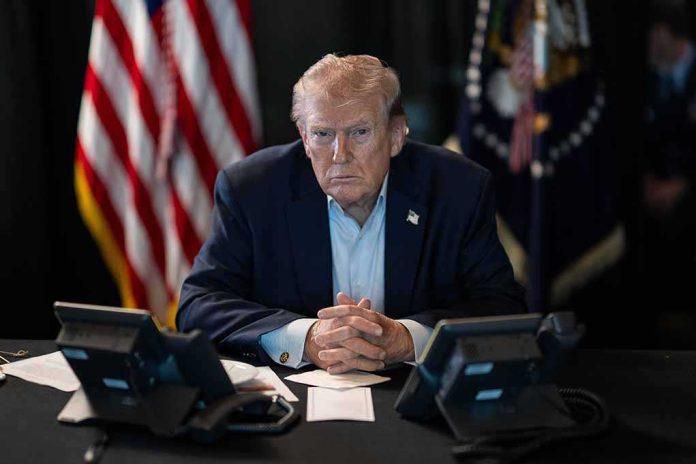
A federal judge just told President Trump to answer questions under oath about a BBC edit the broadcaster admits gave viewers the wrong idea about his January 6 speech.
Story Snapshot
- The judge set a December 11 deadline for Trump’s deposition in his $10 billion suit.
- The BBC apologized for an edit it said created a mistaken impression of a direct call to violence.
- The broadcaster says the error is not defamation and denies malice or harm.
- The case now turns on what discovery shows about intent, impact, and damages.
The Order That Forces Answers
A federal judge ordered Trump to sit for a deposition by December 11, moving his defamation case into high-stakes discovery. The order puts a clock on both sides and sets clear consequences if deadlines slip. Trump alleges the BBC’s Panorama program spliced lines from separate parts of his January 6 speech to make it look like one call to violent action. The BBC admits the edit created a wrong impression but rejects legal fault and says the program did not harm Trump.
The court’s order matters because defamation law for public figures is demanding. Trump must prove the broadcast conveyed a false and defamatory meaning, that the BBC published it with knowledge of falsity or reckless disregard, and that he suffered real damages. A deposition locks in sworn testimony on harm, causation, and how the sequence was understood. The judge’s schedule also signals this is not a press skirmish; it is a live dispute with real discovery pressure.
What The BBC Conceded — And What It Denies
The BBC issued an apology that did not mince words. It accepted that its edit unintentionally made the speech look like one continuous segment and gave the mistaken impression of a direct call to violent action. The network called the choice an error of judgment and its chair sent Trump a personal note of regret. Yet the BBC says that mistake does not meet the legal test for defamation and that there was no malice behind the edit.
The broadcaster also points to outcome-based context. It argues Trump was not harmed, noting he won re-election after the program aired. It further claims the program was not made available on its United States platforms. Those defenses, if credited, cut at damages and jurisdiction. Still, the apology puts a stake in the ground: the sequence misled viewers about a core and reputational point, even if the BBC frames it as unintentional and non-actionable.
Splicing, Meaning, And The Actual-Malice Hurdle
Reports describe the broadcast as stitching clips from different parts of Trump’s January 6 remarks, separated by a large gap in time, to look seamless. Trump says that edit flipped the meaning and painted him as urging violence, a claim he argues strikes at the heart of his reputation. The BBC answers that the edit aimed to convey the broader message, not a literal continuous quote, and that its context made that clear to viewers.
American law sets a high bar for public officials. Trump must show actual malice with clear and convincing evidence. That means proof that the broadcaster knew the impression was false or had serious doubts and ran it anyway. An apology helps on falsity and meaning, but it does not prove state of mind. Emails, edit decision lists, producer notes, and legal review records could. That is why depositions of editors and executives will be critical in the next phase.
Discovery Will Decide The Shape Of The Fight
The next steps are straightforward and brutal. Trump’s team will seek the raw footage, the program master, the edit timeline, scripts, and any legal or editorial review. They will compare the sequence to the official speech line by line. They will press for internal discussions that show who knew what and when. The BBC will probe Trump’s damages case, ask how viewers actually understood the program, and highlight the absence of measurable loss tied to the broadcast.
The news article from the Associated Press reports that a federal judge has ordered Donald Trump to sit for a deposition in his defamation lawsuit against the BBC by December 11.
— Ric Ball 🌈✌️🤟🏼 🕎🌻🚫fascism. (@ricball) October 22, 2026
Two outcomes loom. If discovery uncovers warnings, rejections, or doubts inside the BBC that were brushed aside, Trump’s case gets oxygen under the actual-malice standard. If discovery shows sloppy judgment but no knowing or reckless falsehood, the case likely narrows or fails. American conservative values favor free speech but also fair dealing. Editing that changes meaning crosses a line; the law asks whether it crossed that line with intent or reckless disregard. The judge’s order ensures we now get the evidence.
Sources:
cbsnews.com, nbcnews.com, bbc.com, yakimaherald.com