

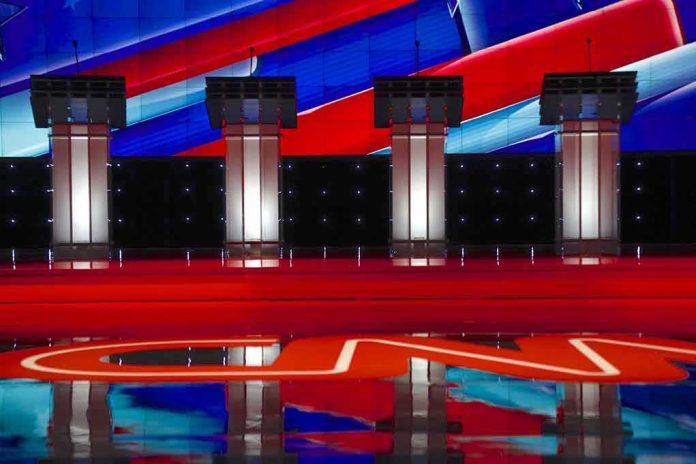
Two Michigan Democrats spent their final Senate debate accusing each other of being bought, out of touch, and unfit to represent working families, and neither one landed a clean knockout.
Story Snapshot
- Abdul El-Sayed and Haley Stevens clashed repeatedly over corporate cash, AIPAC-linked spending, and immigration enforcement in their final primary debate before the August 4 vote.
- El-Sayed claims he takes no corporate money, while pointing to over 40 million dollars in outside spending backing Stevens, much of it tied to pro-Israel groups.
- Stevens fired back by calling El-Sayed’s campaign GOP-funded and questioning his financial transparency and temperament.
- The race has topped 70 million dollars in total spending, drowning out Michigan-specific issues like affordability and healthcare.
A Debate Built On Money Accusations, Not Solutions
El-Sayed used the debate stage to repeat a line he has delivered for months. He says he is the only candidate who refuses corporate money and never sought AIPAC’s backing. He pressed Stevens directly, asking why she allowed roughly 40 million dollars in outside spending, much of it from AIPAC-aligned sources, to flow into the race on her behalf.
Stevens did not sit quietly through the attacks. She accused El-Sayed’s candidacy of being propped up by Republican-aligned money, turning his signature argument back on him during the same exchange. That counterpunch matters because it shows Stevens understood the debate’s central battlefield was money, not policy, and she chose to fight there instead of retreating to her legislative resume.
Real Numbers Behind The Rhetoric
The financial contrast is not just talk. Reporting shows El-Sayed raised more than 15 million dollars from individual donors and unions like the United Auto Workers and National Nurses United, while Stevens benefited from 41 to 50 million dollars in outside super PAC spending. Total spending in the race has now blown past 70 million dollars, an eye-popping sum for a single Senate primary in one state.
That scale of outside money should trouble any voter who values accountability over access. When tens of millions of dollars pour in from groups with their own agendas, voters lose the ability to know whose interests actually get served after election day. El-Sayed’s core argument, whatever else is debatable about his platform, taps into a legitimate conservative instinct: distrust of big money buying influence in Washington.
Stevens Leans On Experience And Endorsements
Stevens countered by branding herself a “workhorse” with a real legislative record, including flipping a Republican-held seat and helping secure funding tied to the Chips and Science Act. She also carries endorsements from Governor Gretchen Whitmer and Attorney General Dana Nessel, giving her a institutional stamp of approval that El-Sayed simply cannot match.
Those endorsements cut both ways. They prove Stevens has establishment muscle behind her, but they also hand El-Sayed a ready-made argument that she represents the same insider network voters keep saying they want to break from. Stevens denies taking corporate money directly and calls herself transparent, but she has not released documents that fully answer where the outside spending backing her actually comes from.
Personal Attacks Overshadow Policy Substance
Beyond the money fight, the debate turned personal fast. Coverage notes Stevens referenced a leaked call in which El-Sayed allegedly said he would not focus on policy during his first two years in the Senate, a claim that undercuts his image as a substance-first candidate if accurate. An “ogre” jab also made headlines, showing how quickly policy debates can slide into schoolyard insults.
El-Sayed also pushed hard on immigration, accusing Stevens of taking money from lobbyists tied to Immigration and Customs Enforcement contractors while voting to thank the agency. Whether that charge sticks with voters remains unclear, but it fits his broader strategy of tying every vote back to a dollar sign.
What Michigan Voters Actually Get From This
Neither candidate emerged from this debate looking like a clear standard-bearer. El-Sayed offers a cleaner money story but leans on policies like abolishing the filibuster, the Electoral College, and Immigration and Customs Enforcement that may not fit Michigan’s mixed electorate. Stevens offers experience and party backing but has not fully answered where her financial support really originates.
Stevens vs. El-Sayed: final Michigan Senate debate pits pragmatism against bold progressivism, spotlighting outside spending, electability, and Israel policy shaping August's showdown. The clash of visions could redefine Michigan’s path to the Senate.
https://t.co/lIVYQYu1Lx— Azat TV (@azattelevision) July 28, 2026
Michigan voters deserve straight answers about who funds their potential senator and why. Instead, this primary has produced dueling accusations, a leaked call, an insult about ogres, and very little clarity on how either Democrat would actually govern for working families once the cameras stop rolling.
Sources:
redstate.com, youtube.com, nytimes.com, cnn.com, thehill.com, detroitnews.com, freep.com