

The most shocking part of Jamal Parker’s case is not just the dismembered body in a Georgia lake, but how little the public really knows about how and why it happened.
Story Snapshot
- A 37-year-old Atlanta bartender, Jamal Parker, was found dismembered in Dog River Reservoir.
- Georgia investigators charged Brittany Amber Baker and Mario Andre Barber with murder and are holding them without bond.
- Media reports describe a searched home, a reciprocating saw, and cleaning supplies, but no public motive or detailed affidavit.
- The case shows how sensational coverage can race far ahead of what has actually been tested in court.
A body in a reservoir and a family left with pieces
Workers at Dog River Reservoir in Douglas County, Georgia, found a man’s body in the water on May 15, lying in a place meant to serve families their drinking water and weekend fishing trips.[3] Deputies could not even identify him by sight. They turned to tattoos first, then to DNA testing through the Georgia Bureau of Investigation, which confirmed the victim as 37-year-old Atlanta bartender Jamal Parker weeks later.[3] His own family learned the truth in slow, painful steps.
Local television crews soon focused on what made the case impossible to look away from: the dismemberment. Parker’s father and uncle told reporters they were informed that his body had been cut up, with some parts still missing, making a normal burial impossible.[1] That detail, once spoken on camera, locked in public memory. The image of a severed body in a suburban reservoir tells people something evil happened, even before they hear one word about evidence or motive.
From a quiet house to murder charges without bond
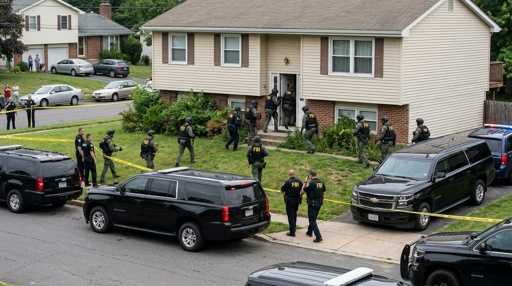
Deputies traced the anonymous body in the lake back to a quiet home in an upscale Douglasville neighborhood on Langdale Chase.[1] Investigators searched the house for four days, carrying out a reciprocating saw, cleaning supplies, and air fresheners in full view of the cameras.[1] The home was less than a mile and a half from the reservoir. To anyone watching the footage, the message felt clear: this was the crime scene, and these were the tools of a cover-up.
Not long after, the Douglas County Sheriff’s Office announced murder charges against two people tied to that address, 42-year-old Brittany Amber Baker and 46-year-old Mario Andre Barber.[1][3] They were already known locally for an alleged fraud and forgery scheme, so the narrative shifted quickly from “mystery body” to “dangerous couple.”[1][4] Both appeared in court, pleaded not guilty, and were ordered held without bond, a move that signals the court sees them as either a serious danger, a flight risk, or both.[1]
What we know, what we do not, and why that gap matters
Media reports agree on the basics: Parker’s body was recovered from Dog River Reservoir, identified by DNA, and linked to Baker and Barber’s nearby home.[1][3][4] Deputies believe he was killed in that house and later dismembered, with at least some remains dumped in the water.[1] The case fits a pattern seen in other Georgia dismemberment murders, where law enforcement builds an early theory around body recovery, a suspected scene, and forensic identification.[7][8] The public hears the outline long before any jury sees the full record.
Yet the public record has striking gaps. Reporters note that investigators have not disclosed how Parker was killed, what the exact cause of death was, or what specific forensic results came from the saw and cleaning items seized at the home.[3][4] No probable-cause affidavit has been widely shared, and no eyewitness has stepped forward in the coverage to say they saw the killing or the dismemberment. There is not even a confirmed public statement about whether Parker knew the suspects or how they first crossed paths.[3]
Crime, media, and conservative skepticism of quick narratives
These missing pieces matter a great deal if you care about both justice for victims and the presumption of innocence. American conservative values emphasize clear personal responsibility, but they also value due process and distrust of government overreach. Georgia has a history of wrongful convictions built on thin or sloppy investigations, including cases where the Georgia Bureau of Investigation had to revisit old evidence after decades in prison for the wrong person.[6] A gruesome fact pattern does not excuse cutting corners.
Georgia Couple Charged with Murder After Bartender's Dismembered Remains Found in Reservoir
Mario Andre Barber, 46, and Brittany Amber Baker, 42, were arrested Monday on murder charges in the death of 37-year-old Atlanta bartender Jamal Rashad Parker, whose remains were… pic.twitter.com/Xn9tbRrrXC
— Unbiased Headlines (@UnbiasedHdlns) June 22, 2026
When television coverage leans hard on words like “dismembered remains” and zooms in on a reciprocating saw, it shapes public opinion before a trial ever starts.[1] Viewers walk away assuming guilt is already proven because the story feels so extreme. That emotional framing can drown out later details about chain of custody, lab testing, or the lack of a clear motive. If later hearings reveal flaws in evidence handling, the same public may feel “duped,” even though they never saw the full case in the first place.
What serious citizens should watch for next
Smart citizens do not have to pick a side based only on a headline. They can wait for real documents: the arrest warrants, the medical examiner’s report, and the forensic lab results tying any blood, tissue, or trace evidence to that saw or that house. They can pay attention to whether prosecutors ever explain why Jamal Parker was targeted and what role each defendant supposedly played, step by step. In a system that belongs to the people, that level of proof is not a luxury; it is a duty.
Sources:
[1] Web – Georgia pair charged with murder after bartender’s dismembered remains …
[3] YouTube – Man Charged in Kidnapping, Murder of Atlanta Bartender
[4] Web – Suspect indicted on 9 counts related to Atlanta bartender’s murder
[6] Web – Georgia man released after nearly 20 years for wrongful conviction; …
[7] Web – Georgia pair charged with murder after bartender’s dismembered remains …
[8] Web – 80-count indictment returned in 2007 dismemberment killing cold case