
DHS said ICE was not raiding Kansas worksites even as cattle country scrambled to keep plants running.
Story Snapshot
- DHS denied worksite raids in Kansas while confirming enforcement in the state.
- Cattle and meatpacking groups warned of worker absences and delayed shifts.
- Reuters said agents fanned out across southwest Kansas near feedlots and plants.
- Senator Jerry Moran said Secretary Mullin described criminal-targeted warrants, not workplace sweeps.
What DHS Said And Why It Lit A Fire
The Department of Homeland Security said plainly that Immigration and Customs Enforcement was not doing worksite operations in Kansas. The agency said agents focused on violent offenders and people with final removal orders. That single line shaped the whole week. Supporters heard targeted law enforcement. Critics heard a carve-out for big agriculture. The statement came as southwest Kansas saw a visible federal presence and jittery plants shifting schedules and slowing lines.
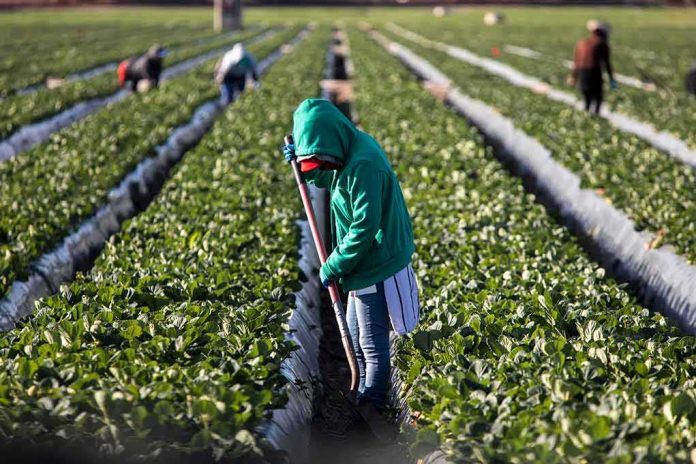
Trade groups filled the vacuum. The Kansas Livestock Association, Oklahoma Cattlemen’s Association, and Texas Cattle Feeders Association said the activity created a massive chilling effect on workers and threatened the beef supply chain. They pointed to feedlots, dairies, processors, and rural trucking. They did not claim mass arrests at plant floors. They warned about no-shows, production delays, and ripple effects that start in Dodge City and end at your grocery meat case.
On The Ground In Beef Country
Local outlets reported schools warning families and plants delaying shifts in southwest Kansas. Those are the towns that live on cattle: Garden City, Holcomb, Liberal, and Dodge City. Reuters summarized the picture: agents fanned out across the region, with fast effects on processing and community routines. That is the classic worksite-adjacent shock. A few unmarked SUVs near a plant can empty a shift faster than a formal raid. Labor vanishes first; explanations arrive later.
Lawmakers pressed for clarity. Senator Jerry Moran said he spoke with Secretary Markwayne Mullin. Moran said Mullin described warrants for people charged with crimes, not blanket workplace sweeps. Moran also said the goal was to keep Kansans safe, and he urged coordination with local law enforcement. That message tracks with DHS’s line: focus on criminals and final-order cases, not broad plant raids.
Is This Enforcement, Or A Quiet Carve-Out?
The record shows pressure from industry and a denial of worksite raids, not a signed exemption. The joint cattle statement spells out real disruption concerns but also clear self-interest. Their sector runs on thin margins and steady labor. They want predictability. Conservatives value the rule of law and secure borders. They also value food security and local business. On the facts we have, DHS pursued criminal targets while avoiding plant-floor sweeps. That is a policy choice, not proof of an industry veto.
First it was “targeted enforcement.” That was de facto amnesty with better branding. Now it’s the lobbyist version. Industry complains, and suddenly ICE “isn’t doing worksite operations” in Kansas.
Voters asked for enforcement.
Mullin is serving the groups that need the labor… https://t.co/qTZbOmYh8R
— Gregory K Bovino (@GregoryKBovino) September 26, 2026
Past practice muddies the water. Worksite actions have happened in Kansas before. Agents conducted a worksite enforcement action at a Kansas restaurant in early 2025. That history shows the tool exists and can be used. The current controversy is about where and when to use it in the beef belt. Without arrest logs and site data, claims about who was spared or targeted remain more heat than light.
What To Watch Next
Two numbers will settle this: how many arrests tied to criminal warrants, and how many at or from worksites. If the totals skew almost all to violent felons and final-order fugitives, DHS’s story holds. If logs show plant-linked detentions that stopped at the parking lot, the “no worksite ops” line becomes a fine print distinction. Either way, Kansas ranchers and plant managers will react to what they see, not what D.C. says they saw.
The Stakes For Beef, Workers, And Voters
Southwest Kansas is where law, labor, and dinner collide. A missed shift today can delay thousands of head and pinch retail prices next month. A soft line at worksites can invite more illegal hiring tomorrow. The durable answer is simple to say and hard to do: raise legal labor supply, punish illegal hiring, and remove violent offenders fast. Until that balance lands, every marked cruiser near a feedlot will spark the same chain reaction.
Sources:
thegatewaypundit.com, kfor.com, audacy.com, dtnpf.com, ice.gov, agproud.com, kansascity.com, msn.com