

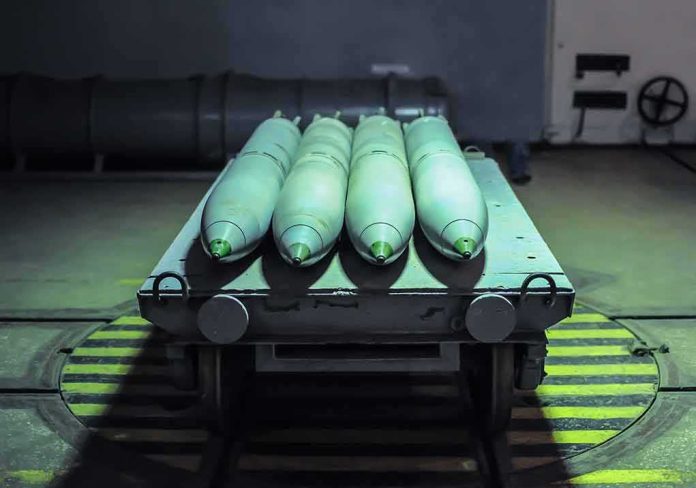
Federal regulators signed off on blowing up toxic, unstable explosives because waiting could be worse.
Story Snapshot
- Environmental Protection Agency issued an emergency permit to detonate degraded lead azide at an Army plant.
- The agency declared an “imminent and substantial” threat to health and the environment.
- A federal appeals court paused the permit after a lawsuit from environmental groups.
- The Department of Justice told the court the Army could still act under a separate emergency exception.
What the government authorized and why it matters
The Environmental Protection Agency approved an emergency permit on November 13, 2026 to let the Army store and treat lead azide by intentional detonation at the Iowa Army Ammunition Plant. The permit lasts until February 11, 2027 and frames detonation as treatment done on-site. The material is dangerous in two ways: it can explode, and it contains toxic lead. The Environmental Protection Agency later said degraded lead azide at the site created an imminent and substantial threat.
Lead azide is a primary explosive. It can detonate from friction, shock, or heat if it degrades or dries out. The Environmental Protection Agency’s site summary cites 68 drums on the plant grounds and says the emergency order requires the Army to take steps before, during, and after the blast to protect people and the environment. The Iowa Department of Health and Human Services told the public to expect two controlled detonations within the November 23 window described in state guidance.
The plan hits a legal wall and a political storm
A federal appeals court in the Eighth Circuit put the permit on hold after environmental groups sued to stop the operation. The stay does not decide the science, but it blocks the permit while the case moves. The Department of Justice then told the court the Army could invoke a separate emergency explosives exception and proceed to prevent a worse, uncontrolled blast, and that it intended to act by November 24. That stance set up a fight between emergency action and judicial review.
Illinois officials warned that modeling showed airborne lead dust could reach across the state line into Mercer County, Illinois, under the forecast. Their health and environmental agencies flagged risks tied to a potential plume and called for better notice and more information from federal officials. National coverage amplified those warnings and highlighted the court’s pause, which shaped public opinion toward the lead-exposure risk rather than the Army’s risk-reduction plan.
What we know, what we don’t, and what common sense demands
The record shows hard facts that are not in dispute. The permit exists, the hazard is real, and the drums number in the dozens. Yet the public file does not show a side-by-side, quantified comparison of options. There is no released analysis that weighs monitored storage, off-site removal, chemical neutralization, or detonation and ranks them by risk and time to failure. The permit window runs for months, which invites fair questions about the push to act within days.
Several assertions deserve tight proof. Illinois agencies said the blast would likely make lead dust airborne and could affect parts of western and central Illinois under certain weather. That claim rests on dispersion modeling and particle-size assumptions that have not been fully released to the public. A credible plan should publish the source term, weather inputs, and expected concentrations, then commit to soil and air sampling with clear cleanup triggers. Taxpayers deserve that transparency, and so do nearby farms and towns.
How to align urgency with accountability
Public safety calls for two tracks at once. First, disclose the March inspection records, photos, and lab data for all 68 drums, so people can see why officials deemed the risk immediate. Second, release the Army’s alternatives analysis and plume modeling—inputs and outputs, not just summaries—so independent experts can validate or challenge the predictions. If the government already has a robust monitoring plan, post the exact locations, methods, detection limits, and reporting deadlines before any action begins.
Courts exist to keep emergency power honest. If the Army wants to use the explosives exception while a stay is in place, it should put its technical case on the record in full. That means a sworn engineering declaration that explains why delay increases the chance of an uncontrolled blast and compares that risk to each non-blast option with numbers and error bars. Common sense favors fast action when danger grows by the day, but consent from the public follows facts laid bare, not trust demanded on a deadline.
Sources:
washingtontimes.com, epa.gov, edition.cnn.com, response.epa.gov, hhs.iowa.gov, nbcchicago.com, apnews.com