
A North Carolina state senate candidate live-posted his own police chase before officers took him into custody after a tense, hours-long standoff in Cary.
Story Snapshot
- Police took Libertarian candidate Jonathan D. Miller into custody around 3 p.m. after a long standoff in Cary.
- Officers responded to a welfare check tied to alarming social-media posts earlier that morning.
- Police say Miller had a firearm and fled into nearby woods; no shots were fired.
- Miller posted about the pursuit in real time, drawing wide online attention.
From Welfare Check To Hours-Long Police Standoff
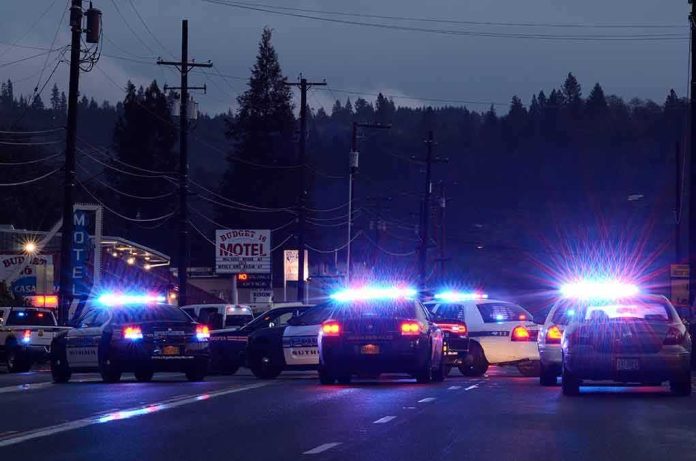
Cary officers went to the Lochmere area near Glen Echo Lane after reports of alarming posts on social media at about 8:26 a.m. Police said they encountered Jonathan D. Miller, a Libertarian candidate for North Carolina Senate District 16, with a firearm. Officers say they told him not to touch it. He ran, and the situation moved into nearby woods behind or near his apartment complex. Police described a standoff that stretched for hours and drew a large response.
Reporters on the scene said police used loudspeakers and worked to contain the area. Local outlets described road closures and a heavy presence near a neighborhood pond and wooded trails. The focus stayed on avoiding harm and getting Miller to surrender. Officials emphasized that despite the tense scene, no gunfire broke out. Police reported no injuries to officers, residents, or Miller by the time it ended.
Custody At 3 p.m., No Shots Fired, No Injuries
Officers took Miller into custody at about 3 p.m., ending more than six hours of uncertainty for nearby residents. Multiple outlets independently reported the timing and described the location as the 300 block of Glen Echo Lane or woods behind his residence. Those consistent timestamps and places anchored the public timeline. Police did not report any shots fired or injuries during the operation, a key outcome given the size and length of the response.
Officials and local outlets said the case began with posts that raised fears of self-harm or a deadly confrontation. That trigger shaped the initial police response as a welfare check, not a standard criminal call. In practice, welfare checks can turn fast when a firearm appears, which is what police say happened here. The department’s aim appeared to be containment and time. That approach helped close the incident without bloodshed.
Candidate’s Live Posts Fueled The Real-Time Drama
While police worked the scene, Miller posted updates that drew online attention. One post at 9:38 a.m. read, “The whole police department is chasing me with guns drawn,” according to local reporting. Those messages put the unfolding chase directly into public view. The live commentary also raised the stakes for responders managing both safety and a fast-spreading narrative on phones across the region.
Per @Grok: **Jonathan D. Miller (Libertarian candidate for NC State Senate District 16 in Wake County, covering parts of Cary) was involved in an hours-long armed standoff with Cary police after a welfare check related to his suicidal posts. He live-tweeted much of it, was taken…
— Rick (@RickCampbell17) October 26, 2026
Coverage differed on the exact list of charges, but reports commonly cited communicating threats, resisting officers, and going armed to the terror of the people. Some outlets mentioned a potential felon-in-possession count or debate over whether the gun was an antique, which can matter under state law. Those details will sort themselves out in court. The central through-line remains clear: police responded to alarming posts, encountered a gun, and secured custody without gunfire.
Crisis Response, Speech Online, And Public Safety
Police across the country face more calls that begin with online posts hinting at harm. Researchers have tracked the tension here: officers must weigh speech, risk, and speed while trying to keep everyone safe. Agencies also monitor social media to spot near-term threats, but they must judge context and intent in real time. That is a tough task under pressure and with a gun in play. The Cary response shows why time, perimeter control, and clear commands matter.
What Matters Next
Cary Police and Wake County prosecutors will clarify the formal charges and the firearm’s status. Courts will test evidence about the chase, the gun, and the posts. Voters will weigh a candidate’s judgment under stress. Public safety leaders will review what worked: early containment, communication, and patience. The headline is firm and simple enough to travel: hours of fear, no shots fired, custody without injury, and a modern twist—an alleged standoff narrated by the person at its center.
Sources:
pjmedia.com, wral.com, bnonews.com, carolinajournal.com, buzzytimes.com, newsminimalist.com, hmicfrs.justiceinspectorates.gov.uk, safetyreimagined.org, brennancenter.org